

Duurzaam Sportkleding: Merken die daadwerkelijk presteren en hoe je ze kunt vinden
Je sportkleding is gemaakt van plastic. Elke keer dat je ze wast, laat dat plastic los in het watersysteem. Zeg nee tegen zweten in petrochemicaliën. Ontdek duurzame sportkleding die daadwerkelijk presteert, afkomstig van een marktplaats die het verifiëren al voor je heeft gedaan: Shop Like You Give A Damn (SLYGAD).
🌿 Natuurlijke vezels die presteren — biologisch katoen, TENCEL, hennep en natuurlijk rubber ter vervanging van synthetische materialen op basis van aardolie
🚫 Geen PFAS, geen afgifte van microplastics kledingstukken van natuurlijke vezels geven geen synthetische deeltjes af aan waterwegen wanneer ze worden gewassen
🧪 GOTS, Oeko-Tex, Fair Wear, B Corp — elk merk in de sportkledingsectie van SLYGAD is geverifieerd aan de hand van onafhankelijke certificeringsnormen, niet op basis van zelfverklaring
🏭 Eerlijk geproduceerd in eigen land — verschillende merken, waaronder Boldwill en ORGANICATION, produceren binnen Europa onder gecontroleerde arbeidsomstandigheden, waardoor de transportemissies worden verlaagd
🐄 100% veganistisch — Het platformvereiste van SLYGAD; geen van dieren afkomstige materialen bij geen enkel vermeld merk
♻️ Beschikbare opties voor gerecycled materiaal — GRS-gecertificeerd gerecycled polyester voor formaten waar natuurlijke rek nog een technische uitdaging is
Het probleem met conventionele sportkleding
De sportkledingindustrie heeft haar identiteit op één idee gebouwd: functionele stoffen. Polyester, nylon, lycra, elastaan. Materialen die zijn ontworpen voor rekbaarheid, zweetregulatie, compressie en vochtregulatie. De marketing is geavanceerd. De milieukosten worden minder besproken.
Ongeveer Volgens het UNEP bestaat 60% van alle materialen die in de mode-industrie worden gebruikt uit plastic, en de sportkledingsector, met zijn bijna totale afhankelijkheid van synthetische vezels, bevindt zich aan het uiterste uiteinde van die verdeling.
Wanneer je een synthetisch kledingstuk wast, komen er microscopische plastic fragmenten, microplastics, los van de stof en stromen deze via afvalwaterzuiveringssystemen naar rivieren, meren en de oceaan. Het Europees Milieuagentschap schat dat elk jaar wordt tot 500.000 ton aan synthetische microvezels in de oceaan geloosd, het equivalent van 50 miljard plastic flessen. Sportkleding, die vaker wordt gewassen dan andere kledingstukken vanwege zweet, draagt hier onevenredigveel aan bij.
Dan zijn er nog de chemische behandelingen. De meeste conventionele vochtafvoerende sportkleding verkrijgt haar waterafstotende en zweetregulerende eigenschappen door chemische afwerkingsprocessen. Veel merken gebruikten in het verleden PFAS, de “eeuwige chemicaliën”, als duurzame waterafstotende (DWR) behandelingen. PFAS breken niet af in het milieu. Ze hopen zich op in menselijk weefsel.
De Het Europees Chemicals Agency beperkt het gebruik ervan actief, maar bestaande kledingstukken en niet-conforme import blijven circuleren. Onafhankelijke tests door Bluesign, Oeko-Tex en consumentenbeschermingsorganisaties hebben PFAS aangetroffen in sportkleding van grote merken in concentraties die de opkomende veiligheidsdrempels overschrijden.
Je transpire in deze kledingstukken. Je huid is de meest direct absorberende barrière van je lichaam tijdens het sporten, wanneer de poriën open staan en de bloedstroom naar het huidoppervlak verhoogd is. De “prestatiegerichte stof” die je lichaam raakt tijdens je meest fysiek open staat, is in de conventionele versie voornamelijk afgeleid van aardolie en vaak chemisch behandeld.
Hoe sportkleding van natuurlijke vezels actually werkt
Het standardbezwaar tegen natuurlijke materialen in sportkleding is prestatie: katoen houdt vocht vast, wol kriebelt en natuurlijke vezels rekken niet. Dit was grotendeels juist voor de versies van deze materialen die in de 20e eeuw werden gebruikt. Het is niet langer een juiste beschrijving van waarmee de beste duurzame sportkledingmerken werken.
Biologisch katoen
Conventioneel katoen gebruikt ongeveer 10% van de wereldwijde omzet aan insecticiden en 4,7% van de wereldwijde omzet aan bestrijdingsmiddelen ondanks dat het slechts 2,51 TP3T aan landbouwgrond beslaat. GOTS-gecertificeerd biologisch katoen maakt geen gebruik van synthetische bestrijdingsmiddelen en meststoffen, vereist onafhankelijke controles van de toeleveringsketen – van vezel tot afgewerkt kledingstuk – en verbiedt gevaarlijke chemische behandelingen tijdens de verwerking.
Voor sportkleding ligt het prestatievoordeel van biologisch katoen in het huidcontact. Katoen is hydrofiel, wat betekent dat het vocht in de vezel opneemt in plaats van dit naar het oppervlak af te voeren. Dit betekent dat het niet klam aanvoelt op de huid op dezelfde manier als synthetische vochtafvoerende stoffen dat doen. In plaats daarvan absorbeert het zweet en houdt het dit weg van het huidoppervlak in de stof. Voor activiteiten met een lagere intensiteit, zoals yoga, wandelen, fietsen en fitness, is dit comfortabel en effectief. Voor duursporten met een hoge intensiteit en langdurige blootstelling aan zweet is een blendstrategie vereist.
TENCEL™ Lyocell
TENCEL is een merkgebonden lyocellvezel geproduceerd door Lenzing AG van gecertificeerde houtpulp, voornamelijk eucalyptus uit duurzaam beheerde bossen in Oostenrijk. Het productieproces maakt gebruik van een gesloten-lussysteem met oplosmiddelen waarin meer dan 99% van het oplosmiddel wordt teruggewonnen en hergebruikt, waarbij geen giftig afvalwater wordt geproduceerd.
Door zijn fysieke eigenschappen is TENCEL bijzonder geschikt voor sportkleding: op vezelniveau is het gladder dan katoen, wat zorgt voor minder wrijving tegen de huid tijdens het bewegen. De vochtregulering is aanzienlijk beter dan bij conventioneel katoen; het neemt tot 50% meer vocht op dan katoen. Het vocht wordt sneller afgevoerd, waardoor het bij dynamische activiteiten effectiever is in het reguleren van zweet. Het is bovendien van nature bestand tegen de vorming van bacteriële geurtjes, omdat het gladde vezeloppervlak geen even gunstige omgeving voor bacteriën biedt als ruwe natuurlijke vezels.
TENCEL stoot geen microplastics af. Het is volledig biologisch afbreekbaar.
Hennep
Hennep is een van de meest veerkrachtige natuurlijke vezels die er zijn en een van de minst verwerkte. Het groeit zonder pesticiden (de natuurlijke resistentie tegen plagen maakt deze overbodig), vereist aanzienlijk minder water dan katoen en verbetert de bodemgezondheid in plaats de grond uit te putten door vruchtwisseling. Hennepvezel is van nature antimicrobieel; het remt de groei van bacteriën zonder chemische behandeling, waardoor het echt geurbestand is voor sportkleding.
Historisch gezien was de beperking stijfheid: ruwe hennepvezel is aanzienlijk grover dan katoen. Moderne verwerkingstechnieken en het mengen van hennep met TENCEL of biologisch katoen hebben dit aanzienlijk verholpen. Het resultaat is een vezel die sterk, snel drogend, antimicrobieel en geproduceerd is zonder de chemische voetafdruk van conventioneel katoen of synthetische vezels.
Natuurrubber Elastaan
De elasticiteit in conventionele sportkleding is afkomstig van elastaan (ook verkocht als Lycra of spandex), een uit aardolie verkregen synthetisch polymeer. Het is wat een broek met je lichaam laat meebewegen. Zonder dit materiaal werken de meeste sportkledingmodellen niet.
De meest vooruitstrevende merken voor duurzame sportkleding beginnen synthetisch elastaan te vervangen door natuurlijk rubber, met name FSC-gecertificeerd rubber van duurzaam beheerde plantages. Natuurlijk rubber biedt vergelijkbare rek- en hersteleigenschappen als synthetisch elastaan, is biologisch afbreekbaar aan het einde van de levensduur en wordt geproduceerd uit een hernieuwbare bron op basis van bomen. Het is nog niet de standaard in de industrie, maar het vertegenwoordigt de meest betekenisvolle innovatie om sportkleding echt plasticvrij te maken.
De Eerlijke Ruil
Voor extreem prestatiegerichte toepassingen zoals hardloopwedstrijden, buitensporten op grote hoogte en technisch wielrennen, biedt de techniek van synthetische stoffen nog steeds aanzienlijke voordelen op het gebied van gewicht, compressieconsistentie en duurzaamheid onder langdurige, intensieve belasting. Een marathonloper die kiest tussen een TENCEL-blend en een technische polyester short, maakt een legitieme prestatieoverweging.
Voor de meeste mensen die aan krachttraining, yoga, wielrennen, wandelen, wandelen, pilates en algemene fitness doen, is het prestatieverschil tussen goed ontworpen sportkleding van natuurlijke vezels en synthetische sportkleding niet significant. Het comfortverschil, in termen van huidgevoel en de afwezigheid van chemische behandelingen, valt vaak gunstig uit voor natuurlijke materialen. En het milieuverschil is aanzienlijk, ongeacht de prestatiecontext.
Duurzame Sportkledingmerken op SLYGAD
SLYGAD’s sportswear section has been verified against its 32-point ethical and environmental criteria. Every brand featured carries at least some certification: GOTS, Oeko-Tex, Fair Wear Foundation, PETA, or B Corp. Below are three brands whose material philosophy is worth understanding in detail, and a broader overview of the full range.
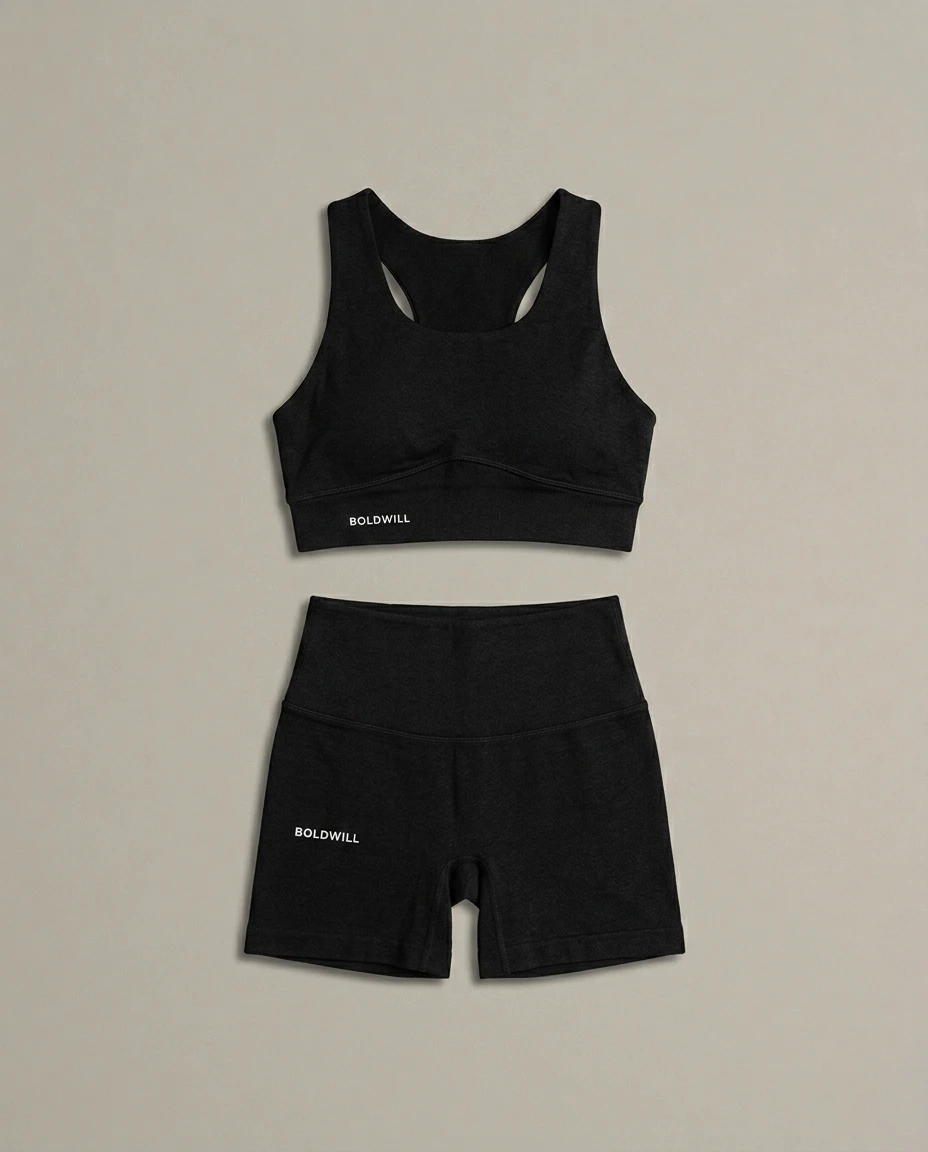
Boldwill: The Most Ambitious Natural Materials Approach
Designed in the Netherlands. Produced in Europe. 90%+ plant-based. Working toward fully plastic-free.
Boldwill was born from a specific question: can the light, functional feel of sportswear be achieved with natural materials? Their answer is yes, and they set out to prove it with a collection that is over 90% rooted in nature, using hemp, TENCEL, and organic cotton as their primary materials.
What sets Boldwill apart from most “sustainable sportswear” brands is their treatment of leggings specifically. Leggings are the format where almost every brand defaults to recycled polyester because natural fibres alone don’t provide the stretch needed. Boldwill has tested with combinations of organic cotton and TENCEL to achieve a fabric that is light, strong, and reportedly softer than cotton alone without synthetic content in the main fabric body.
For stretch elements like waistbands and elastic components, they use FSC-certified natural rubber from Malaysia rather than synthetic elastane. This is the innovation that matters most: replacing the petroleum-derived elastic with a certified renewable alternative is the hardest problem in natural sportswear, and Boldwill is one of the very few brands working on it seriously.
Their organic cotton is GOTS-certified and sourced from Greece and Turkey. Hemp comes from Lithuania. Production happens within Europe, a deliberate choice to maintain supply chain oversight and reduce transport emissions, in contrast to the industry norm of spreading production across multiple continents.
The factories they work with operate under strict European labour laws, with wages above the legal minimum, designed to constitute a genuine living wage.
Their stated goal, the “Road to Plastic Free”, is the complete elimination of synthetic content across the full product range. They are not there yet. They are transparent about where they still use synthetic elements and why, which places them in a different category from brands that greenwash around material complexity.
Best for: yoga, gym training, cycling, everyday fitness | Leggings, sports tops, shorts | Women and men
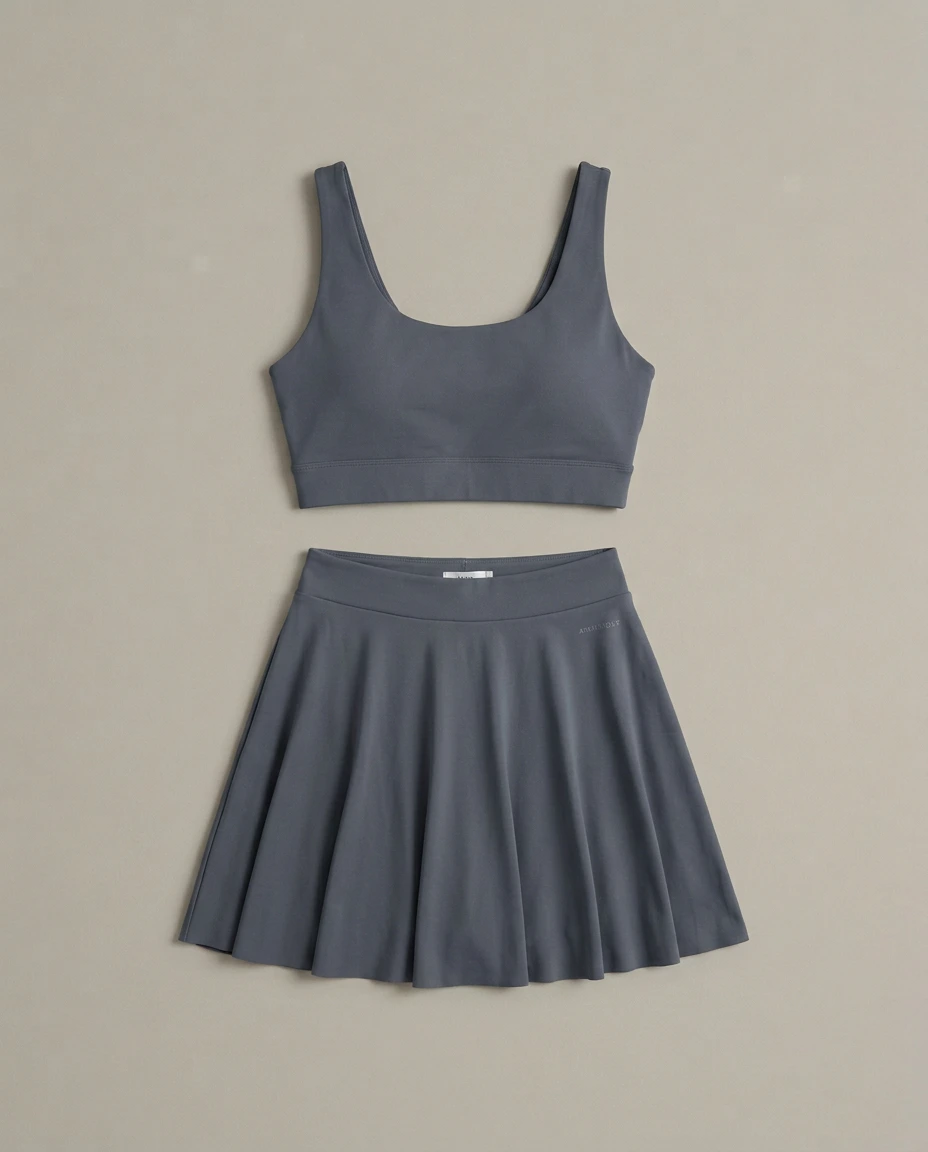
ORGANICATION: The GOTS-Certified Own-Factory Model (Women Only)
GOTS certified from fibre to finished garment. Own factory. PETA vegan. Affordable price point.
ORGANICATION produces its clothing in its own factory in Izmir, Turkey, which is itself GOTS certified, meaning the certification covers not just the fabric but the entire production facility. The materials used include GOTS-certified organic cotton, linen, TENCEL, and recycled polyester (REPREVE). The brand is PETA-approved vegan.
ORGANICATION’s stated concern is that clothing should have a positive effect on the lives of everyone involved: workers, the environment, and the customer. Organic cotton is specifically noted for its skin-friendly properties, making it appropriate for allergy-prone users as well as general sportswear.
Owning the production facility is a meaningful distinction in ethical fashion. Most brands contract manufacturing across multiple factories and rely on audits to verify conditions. ORGANICATION’s vertically integrated model means they can enforce standards directly rather than through a contractual chain.
Their sportswear range covers biker shorts, cycling leggings, sport skorts, jogging pants, sweatpants, and sport tops, at price points (€24.90–€59.90) that are significantly more accessible than many comparable certified-organic brands. The inclusion of recycled polyester (REPREVE, certified by the Global Recycled Standard) in some pieces is a pragmatic acknowledgement that eliminating synthetic stretch entirely is not yet viable across all formats, while REPREVE at least diverts post-consumer plastic from landfill rather than producing new petroleum-derived fibre.
Best for: cycling, running, yoga, gym | Full sport kit including leggings, shorts, tops | Women primarily, some unisex
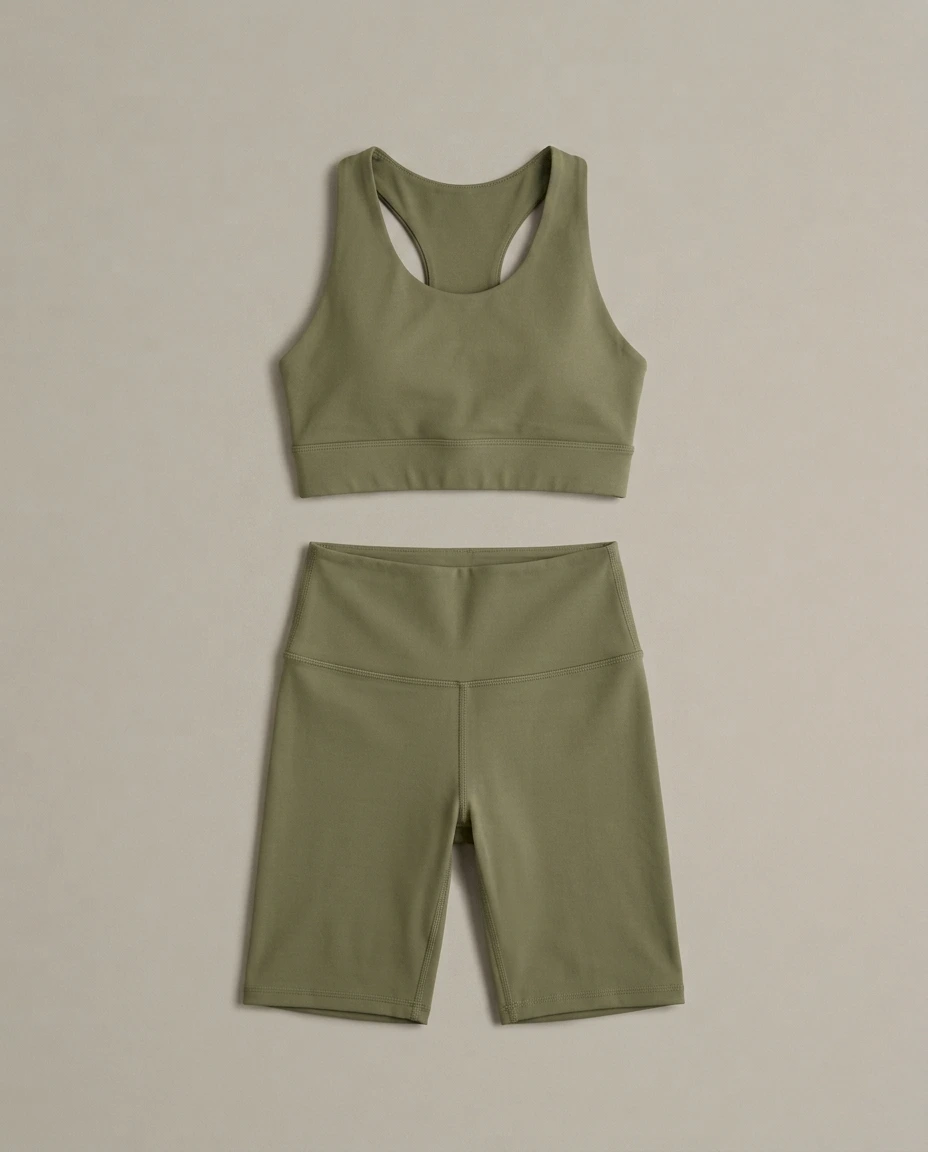
True North: The Athleisure-to-Street Bridge
Owned by Albero and Leela Cotton, with 25+ years of organic textile expertise. GRS recycled polyester, TENCEL, GOTS organic cotton. Functional design that transitions from sport to everyday.
True North is an athleisure brand with a specific focus on sustainability, owned by Albero and Leela Cotton, German companies with more than 25 years of experience in organic textiles. Their material approach uses three certified inputs: GRS-certified recycled polyester (produced from post-consumer PET bottles), TENCEL Lyocell from closed-loop wood pulp processing, and GOTS-certified organic cotton.
True North’s product positioning is explicitly transitional, designed for sport, outdoor use, and everyday life. The pieces are intended to be worn to the gym and then to a coffee meeting, reducing the total number of garments needed and the associated production footprint.
The GRS recycled polyester is worth noting: it does not eliminate microplastic shedding (recycled polyester sheds microplastics identically to virgin polyester), but it removes petroleum extraction from the supply chain for that input. For stretch performance in leggings and fitted tops, this remains the most common compromise position across the sustainable sportswear sector, one True North makes transparently rather than obscuring.
Best for: yoga, running, outdoor, everyday athleisure | Leggings, running shorts, sports tops, fleece layers | Women and men
Other Sustainable Sportswear Brands Worth Exploring on SLYGAD
The sportswear section on SLYGAD carries verified brands across multiple material approaches and price points. A selection worth filtering for:
- MANDALA — Specialises in yoga and movement wear, often using natural and organic fibres, with an emphasis on comfort and freedom of movement. Strong women’s range.
- The View Yoga — Yoga-focused brand. Natural materials, mindful design. Available for both women and men on SLYGAD.
- People Tree — Fair Trade pioneer, one of the longest-running ethical fashion brands globally, with organic cotton sportswear and activewear basics. Available in extended sizes.
- Girlfriend Collective — Uses recycled ocean plastics (ECONYL and similar certified recycled synthetics) rather than natural fibres. A legitimate recycled-material option if you need maximum performance stretch. Not natural-fibre based, but recycled and certified.
- CALAMOON — Women’s activewear focused on a minimal environmental footprint. GOTS and Oeko-Tex certified materials.
- DEDICATED — Swedish brand known for graphic organic cotton basics, including casual sport and athleisure. GOTS certified, wide size range.
- JAN ‘N JUNE — German brand using GOTS organic cotton and TENCEL, with a broad women’s range including sport-adjacent styles.
- KOMODO — UK brand using bamboo, organic cotton, and TENCEL. Fair trade certified, PETA vegan, certified B Corp. Sport and yoga range available.
- nice to meet me — Available in both women’s and men’s sportswear on SLYGAD. Sustainable materials, European production.
- DIRTS — Dutch brand with a men’s sport and outdoor focus, using sustainable materials including organic cotton and recycled fibres.
How to Filter on SLYGAD for Sportswear
SLYGAD’s filter system is the fastest way to narrow results to what matters to you:
By certification: GOTS (organic from field to garment), Oeko-Tex (tested for 100+ harmful substances), Fair Wear Foundation (labour standards), PETA Vegan, Recycled Claim Standard (verified recycled content)
By material: Organic cotton, TENCEL/Lyocell, hemp, linen, recycled polyester
By price: The sportswear range runs from approximately €20 for True North basics to €150+ for premium certified pieces
By activity: Use the sub-categories (leggings, sport tops, shorts, yoga pants) rather than browsing the full range. Sportswear on SLYGAD has 773 women’s items; sub-category filtering is the practical approach
What to Do With Activewear That You Already Own
If you currently own synthetic sportswear, which most people do, the most responsible immediate action is not to throw it away and replace it. That accelerates the waste problem rather than addressing it. The more responsible sequence:
- Use what you have. Wear it until it genuinely needs replacing.
- Wash it less frequently. Microplastic shedding happens during washing. Airing out sportswear after light use rather than washing after every session reduces shedding and extends garment life.
- Use a microplastic filter bag. Brands like Guppyfriend make wash bags that capture synthetic microfibres shed during machine washing. Not a perfect solution, but a meaningful reduction in what reaches the water system. For more eco-friendly washing solutions, check out our laundry page.
- When replacing, choose natural fibre alternatives. SLYGAD’s verified sportswear section is where to go.
Ons Oordeel
Sustainable sportswear is harder than sustainable T-shirts. The technical requirements of clothing designed for movement create legitimate challenges for natural fibre alternatives, and the brands doing this honestly, like Boldwill, ORGANICATION, and True North, acknowledge where compromises still exist rather than claiming perfect solutions that don’t yet exist.
The honest position: for yoga, gym training, cycling, hiking, and most forms of general fitness, well-designed organic cotton, TENCEL, and hemp sportswear perform comparably to synthetic alternatives. You will not notice the difference during a vinyasa flow or a spin class. You may notice that you sweat slightly differently, that the fabric feels softer against your skin, and that washing it doesn’t release plastic into the water system.
For high-intensity endurance sports like marathon running, competitive cycling, and triathlons, the performance gap is real and worth acknowledging. The best honest answer for that use case remains recycled-content synthetic (GRS-certified), which keeps petroleum out of the production chain while acknowledging that synthetic microplastics remain an unresolved issue.
SLYGAD’s verification framework means every brand in the sections above has been assessed against real criteria rather than self-declared sustainability claims. Filter by what matters to you, read the brand descriptions, and check the certification icons. The information is there.
Shop Sustainable Sportswear
Women’s Sportswear
| Category | Shop |
|---|---|
| Sport Tops | Shop Women → |
| Sport Bras | Shop Women → |
| Sport Leggings | Shop Women → |
| Yoga Leggings & Pants | Shop Women → |
| Sport Shorts | Shop Women → |
| All Women’s Sportswear | Browse All → |
Men’s Sportswear
| Category | Shop |
|---|---|
| Sport Tops | Shop Men → |
| Sport Trousers | Shop Men → |
| Yoga Leggings & Pants | Shop Men → |
| All Men’s Sportswear | Browse All → |
Green Goods Gallery earns a small commission if you purchase through these links, at no extra cost to you. We only recommend marketplaces and brands we genuinely believe in, and the slow fashion principle from our sustainable fashion page still applies here: buy only what you need, and look second-hand first.