
Organic Bedding: Eco-Friendly & Non-Toxic Sheets, Blankets, and Covers
You spend a third of your life in bed. The sheets touching your skin all night are probably made with pesticides, synthetic dyes, and petrochemical fibres. This page features the best organic bedding: sheets, throws, blankets, duvet & pillow covers. Made of organic cotton, linen, and artisan block-print bedding. All eco-friendly and non-toxic, available through Shop Like You Give A Damn (SLYGAD), an ethical marketplace.
🌿 Organic cotton and linen only — GOTS certified or OEKO-TEX, no synthetic fibres, no pesticide residues
🚫 No synthetic fibres, no formaldehyde treatments, no VOCs — conventional bedding is treated with wrinkle-resistant and easy-care finishes that include formaldehyde, a known carcinogen
💧 Less water and energy use for the production of organic cotton
🛏️ Three brands, three approaches — linen luxury (AmourLinen), accessible organic cotton (MELA), artisan blockprint (Jyoti Fair Works)
🐄 100% vegan — no wool, no down, no animal-derived fill
📐 81 items — bed sheets, duvet covers, pillow covers, throws and blankets
The Problem With Conventional Bedding
Bedding is the most intimate textile category in most households. It touches your skin for eight hours a night, roughly 2,900 hours a year. It is also one of the least scrutinised.
Conventional bed sheets are most commonly made from one of two materials: conventional cotton or synthetic polyester blends, both with significant and largely undisclosed environmental and health implications.
Conventional cotton is the same story as in every other textile category on this site, but worth restating specifically for bedding: cotton accounts for 4.7% of global pesticide sales and 10% of insecticide sales, despite covering just 2.4% of cultivated land. The pesticide residues do not fully wash out during textile processing. They persist in the finished fabric at concentrations that, while considered safe in isolation, represent a sustained low-level exposure across years of skin contact.
Synthetic polyester bedding is petroleum-derived, non-biodegradable, and sheds microplastics with every wash, up to 700,000 synthetic fibres per average wash load. It is not breathable, traps heat and moisture, and creates conditions that favour dust mites and bacterial growth. The “easy care” finish on many polyester-blend sheets is achieved with formaldehyde-based treatments, a chemical classified as a Group 1 human carcinogen by the International Agency for Research on Cancer, present in textiles that then sit against your face for eight hours.
Chemical finishing more broadly: even conventional cotton sheets are routinely treated with wrinkle-resistant, colour-fastening, and antimicrobial finishes that include formaldehyde, optical brighteners (fluorescent synthetic chemicals), and azo dyes, a class of synthetic colourant where some variants are restricted in the EU due to proven carcinogenicity. None of this is disclosed on the label of a conventional bed linen set.
The solution is not complicated. GOTS-certified organic cotton is grown without synthetic pesticides, processed without harmful chemical finishing agents, dyed with reactive dyes that meet strict toxicological standards, and produces a fabric that has been tested and confirmed safe for sustained skin contact. Linen from certified European flax adds the performance advantages — durability, breathability, natural antimicrobial properties, improvement with use — to a category where both matter significantly.
The Materials: What the Certifications Mean for Bedding
GOTS (Global Organic Textile Standard)
GOTS is the most comprehensive certification for organic textiles. It covers the entire supply chain from fibre to finished garment, organic farming standards (no synthetic pesticides or fertilisers), processing (no harmful chemical inputs), dyeing (only approved dyes without carcinogenic, allergenic, or toxic properties), and social standards (fair wages, safe conditions) at every stage. An OEKO-TEX label alone only tests the finished product for harmful substances; GOTS audits the process that produced it.
For bedding specifically, GOTS certification means the fabric touching your skin for a third of your life has been produced to a standard that covers every step from the cotton field to your bedroom.
OEKO-TEX Standard 100
Tests the finished textile for over 100 harmful substances, including PFAS, heavy metals, pesticide residues, formaldehyde, and restricted azo dyes. It does not certify the production process or supply chain conditions, but it does confirm the end product is free from detectable harmful substances. For linen and other natural fibres with complex supply chains, it is a meaningful safety assurance.
Fairtrade Cotton Standard
Certifies that the cotton was purchased at a minimum price that covers sustainable production costs, that farmers received a Fairtrade premium for community investment, and that the cooperative or producer organisation meets Fairtrade’s social and environmental standards. For bedding sourced from India, where the majority of global cotton is grown and processed, Fairtrade certification is the most direct assurance that the people who grew the raw material were paid fairly and worked safely.
What to Know Before You Buy
Thread count is a marketing metric, not a quality indicator. A higher thread count in conventional cotton does not mean a better or more durable sheet. It often means finer fibres that wear faster. A 200-thread-count GOTS-certified organic cotton sheet will probably outlast a 400-thread-count conventional one because the organic cotton fibre itself is stronger and processed without the chemical treatments that weaken conventional fibre over time. Do not use thread count to compare across organic and conventional bedding.
Linen and cotton feel different. Linen has a characteristically crisp, slightly textured hand that many people find takes a few washes to adjust to. It does not feel like cotton. If you have only ever slept in cotton, expect a different sensation, one that most linen converts describe as more temperature-regulating and fresher, particularly in the warmer months.
Organic does not mean indestructible. Natural fibres cared for correctly will significantly outlast synthetic or conventionally treated equivalents, but they do require attention. Wash at 30–40°C with a gentle unscented detergent, air dry where possible, and do not use fabric softener on linen — it coats the hollow fibres and reduces the breathability that makes the material worth buying.
Buy less, buy better. Bedding is one of the categories where this principle has the most measurable impact. A pair of €135 linen blankets that lasts ten years is a better investment, financially and environmentally, than three successive pairs of €50 polyester-blend alternatives bought over the same period. The certification costs, the fair wage premium, and the natural fibre cost are all present in the price. They are also all things that the cheap alternative is quietly not paying for.
How to Care for Sustainable Bedding
Wash at 30–40°C with a gentle, unscented detergent; the same laundry sheets from our laundry page work well. Air dry where possible. Do not use fabric softener on linen. It coats the hollow fibres and reduces the breathability, which makes the material worth buying. Do not tumble dry linen at high heat. Linen and quality organic cotton will shed some threads in the first few washes as excess fibre releases. This is normal and stops quickly.
If linen feels stiff initially, this is correct. It softens with every wash. By the third wash, the difference is noticeable. By the tenth, most people cannot imagine going back to cotton.
Bed Sheets
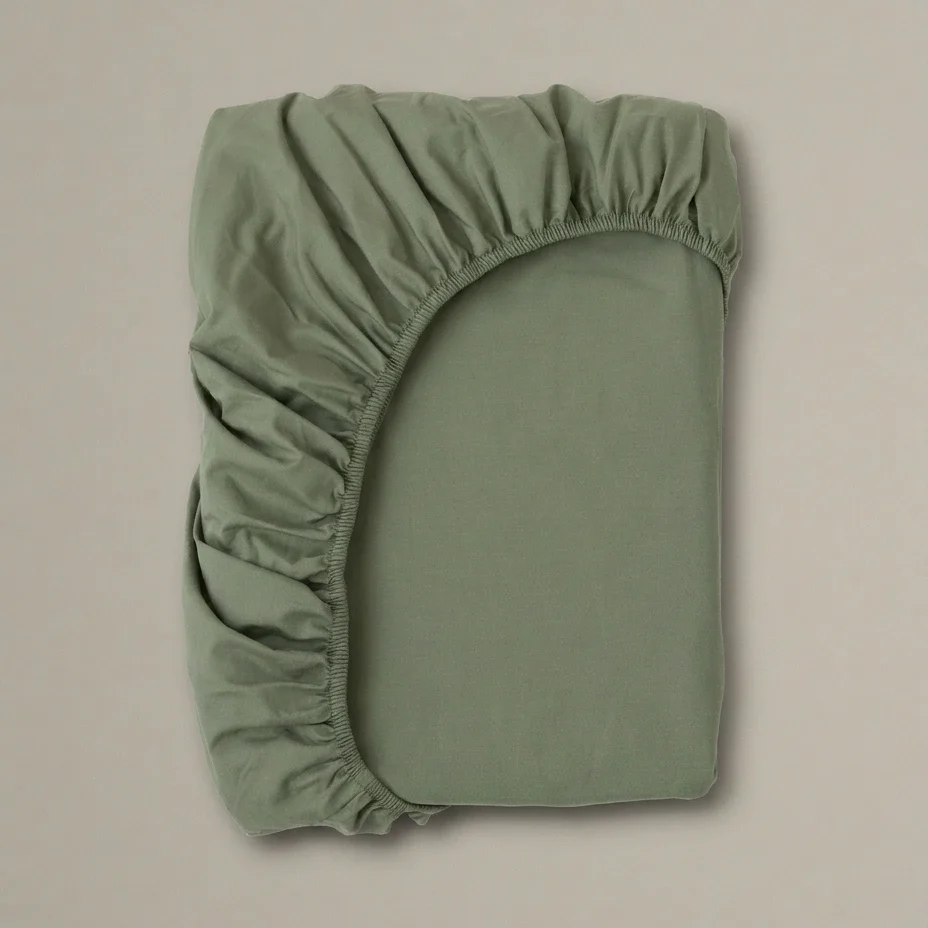
Bed sheets are the highest-contact item in this category. They sit directly against your skin all night, which makes the material and certification choice here the most consequential on the page.
Linen sheets are the strongest long-term option. Linen is more breathable than cotton, naturally antimicrobial without chemical treatment, and genuinely improves with every wash while maintaining its structural integrity for decades. It has a characteristically crisp, textured hand that differs noticeably from cotton — one that most converts describe as cooler and fresher, particularly in warmer months. AmourLinen’s linen sheet sets are OEKO-TEX certified, stonewashed for softness through a mechanical rather than chemical process, and handmade in Vilnius from flax grown within 200km of the workshop. Made to order, no overproduction, no deadstock.
Organic cotton sheets are the more familiar format for anyone switching from conventional bedding. MELA (by Melawear, Germany) produces GOTS, Fairtrade, and Grüner Knopf triple-certified organic cotton bedding sets from India, where dyeing is done only at facilities with effluent treatment plants, and all cotton is 100% organic, with no synthetic fibres, including in thread.
One important note on thread count: it is a marketing metric, not a quality indicator. A higher thread count in conventional cotton does not mean a more durable sheet; finer threads often wear faster. A GOTS-certified 200-thread-count organic cotton sheet will outlast a 400-thread-count conventional one, because organic cotton fibre is stronger and processed without the chemical treatments that weaken conventional fibre over time. Do not compare across organic and conventional bedding using thread count.
Throws & Blankets
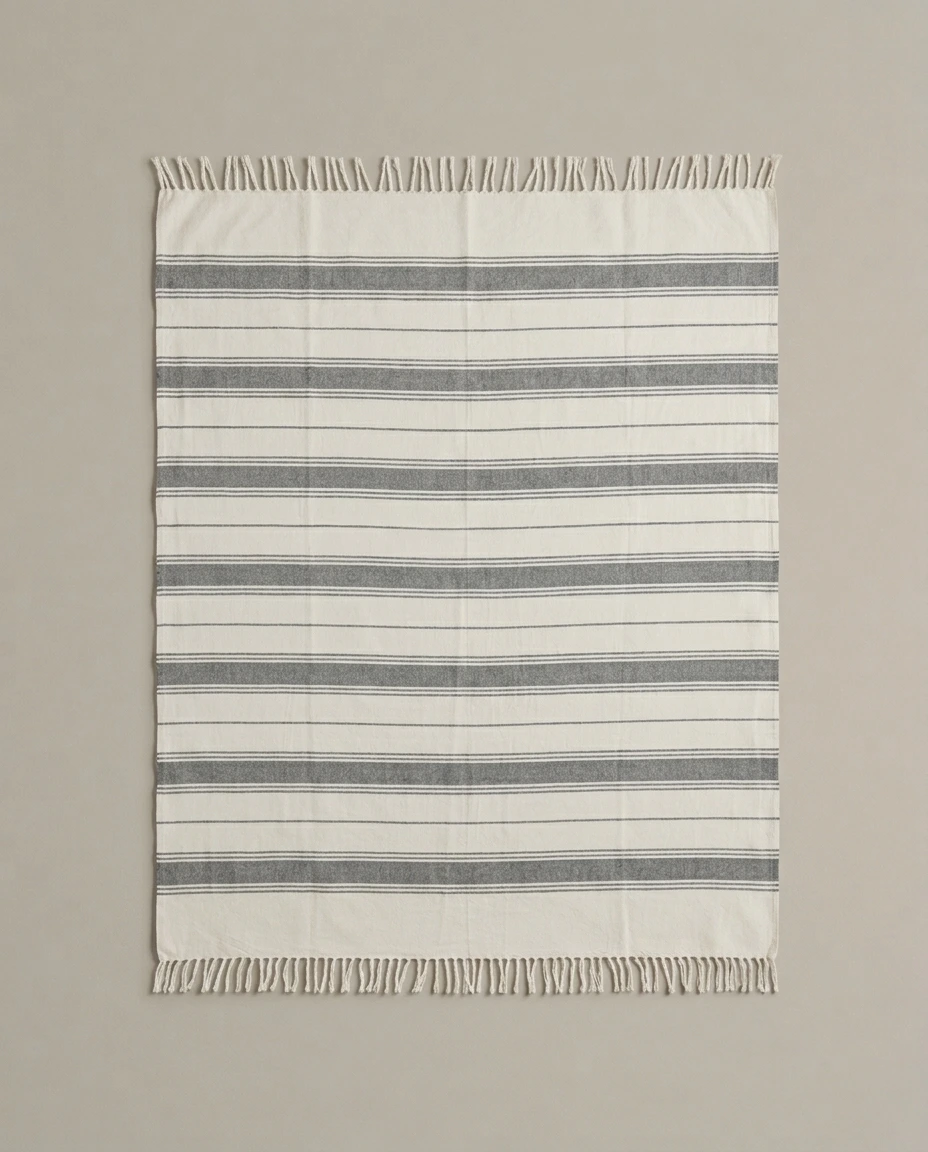
A throw is one of the easiest sustainable bedding purchases to make. It is a single piece with no fitted complexity, serves both functional and decorative purposes, and, in linen or organic cotton, lasts significantly longer than synthetic alternatives.
AmourLinen’s waffle blankets are the standout in this section. Waffle-woven European linen provides more surface contact per gram of material than flat-woven linen, combining the full performance advantages of the fibre: breathability, moisture management, antimicrobial properties, with a texture that works as both a bed layer and a sofa throw. OEKO-TEX certified, handmade in Vilnius.
For a decorative statement piece with artisan provenance, Jyoti Fair Works offers hand block-print bedspreads made from handwoven GOTS-certified organic cotton, block-printed using plant-based, non-toxic dyes by small family workshops in Rajasthan using techniques unchanged for centuries. Jyoti is a German-Indian social enterprise employing women from marginalised communities across three of its own workshops in India, providing fair wages, healthcare, and flexible working hours. Good On You rates them “Great” on both Planet and People dimensions. The Aakaar Blockprint Savanna bedspread is expensive because it is made by hand by people paid fairly to make it.
Duvet Covers & Pillow Covers
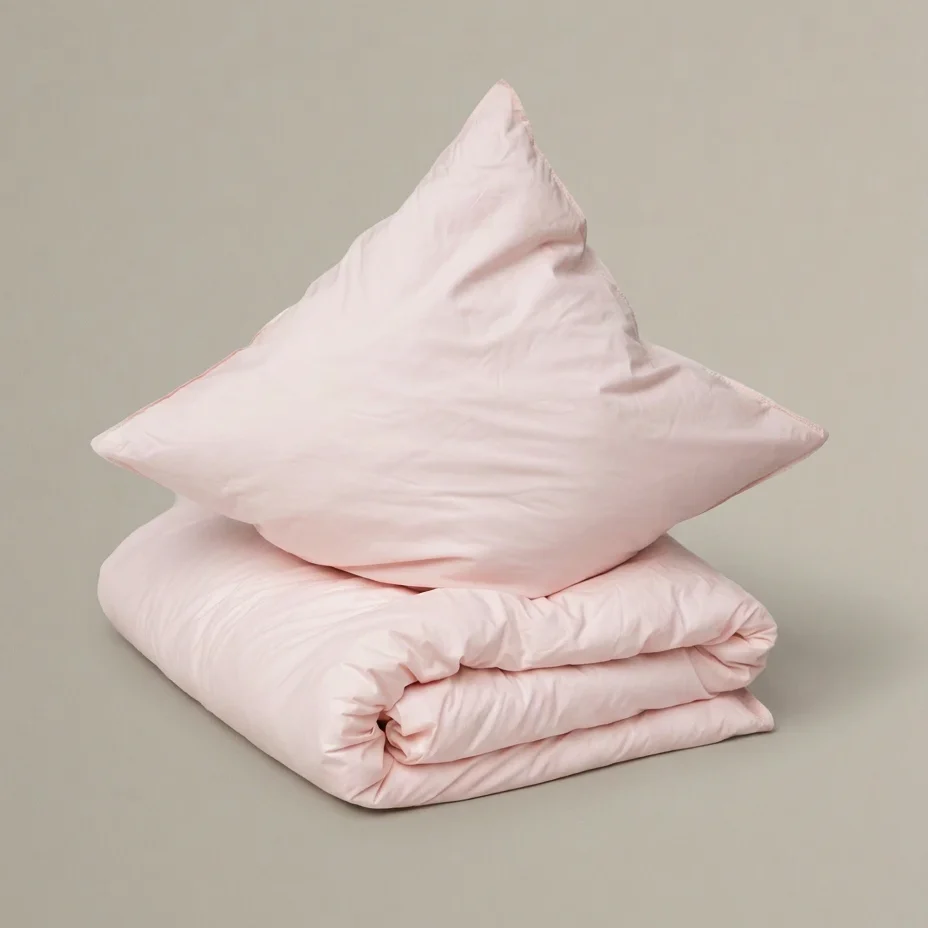
Duvet and pillow covers are replaced less frequently than sheets but cover a significant surface area and, for pillow covers in particular, have direct and prolonged face contact. The same material and certification logic applies, with an additional consideration: the pillow cover is the single piece of bedding most likely to absorb skin oils, sweat, and anything applied to the face before sleeping. A pillow cover made from certified organic cotton without chemical finishing agents is a more meaningful choice than it might first appear.
MELA’s bed linen sets each include a duvet cover and pillowcase in GOTS, Fairtrade, and Grüner Knopf certified organic cotton, making this the most practical starting point for anyone switching to certified bedding for the first time. The sets come in matcha green, berry blush, herb green, birch/beige, blue, and natural white. All dyeing at facilities with effluent treatment plants; all cotton 100% organic, including thread.
Our Verdict
The bedding category has a specific quality that makes it more urgent than most: sustained skin contact across thousands of hours, year after year. The argument for certified organic, chemical-free bedding is not primarily aesthetic; it is practical. What you sleep in touches your skin for a third of your life. The conventional alternative contains pesticide residues, synthetic finishing agents, and, in many cases, formaldehyde-based wrinkle treatments, none of which are required to appear on the label.
AmourLinen offers the strongest long-term value proposition: linen that improves with age, produced in a documented short supply chain in Lithuania, with OEKO-TEX certification and made-to-order production. It is an investment that compounds positively over time.
MELA offers the most rigorous certification stack at the most accessible price. Three certifications — GOTS, Fairtrade, and Grüner Knopf — simultaneously, in an organic cotton bed linen set available from €69.90. For a first switch to certified organic bedding, this is where to start.
Jyoti Fair Works offers something different from either: a textile object with a specific human story attached to it, made by hand using centuries-old techniques by women whose working conditions are documented and visited regularly.
Shop Sustainable Organic Bedding
Green Goods Gallery earns a small commission if you purchase through these links, at no extra cost to you. We only recommend products we genuinely believe in.