


Eco-Friendly Moisturiser: Natural Body & Face Creams
Most drugstore moisturisers do their job. They don’t mention everything else: oil-based ingredients, fragrance blends nobody explains, plastic jars that outlast us, and “natural” claims that fall apart once you read the ingredient list.
We picked three creams that hold up better, and checked their certifications, ingredient lists and marketing claims ourselves. One is a fragrance-free biotech cream from Denmark in a jar you can compost at home. One is a cult classic for very dry skin that has barely changed since 1926. One is a vegan daily moisturiser built around an upcycled ingredient. None of them is perfect, and we tell you exactly where each one falls short.

What an Eco-Friendly Moisturiser Needs to Do
Your skin constantly loses water through its outer layer. Dermatologists call this transepidermal water loss (TEWL). A moisturiser slows it down in up to three ways, and knowing them helps you tell a cream that works from one that only sounds nice.
Humectants pull water into the outer layer of the skin and hold it there. Common examples: glycerin, hyaluronic acid, aloe vera. In a 2002 double-blind study in Acta Dermato-Venereologica, a cream with 20% glycerin eased dry, eczema-prone skin as well as a urea and salt cream, and stung less. One thing labels rarely tell you: glycerin can be plant-based or made from petrochemicals, and most brands don’t say which.
Emollients fill the small gaps between skin cells, so the surface feels soft and smooth. Common examples: plant oils, shea butter, lanolin. They give a rich cream its cushioned feel.
Occlusives form a thin layer on top of the skin that stops water from escaping. Common examples: beeswax, shea butter, lanolin, plant waxes. Petroleum jelly is still the strongest occlusive there is. Plant-based ones are less powerful on their own, but in a well-made cream they do the job without fossil ingredients.
Most conventional moisturisers do all three. The problem isn’t that they don’t work. It’s what comes with them:
- Mineral oil, petrolatum and paraffin: effective, and considered safe in cosmetic grade, but made from crude oil.
- PEGs and some silicones: they improve texture and shelf life. PEGs are usually petrochemical, and several silicones last a long time in the environment, which is why the EU is restricting some of them.
- Synthetic fragrance: the EU’s scientific safety committee calls fragrance allergy frequent and potentially disabling, and the EU has expanded the list of fragrance allergens that must be named on the label.
- Parabens: less clear-cut than “paraben-free” labels suggest. The EU caps propylparaben and butylparaben at low levels, bans them from leave-on nappy-area products for children under three because of possible hormone effects, and banned five other parabens outright in 2014. The most common ones, methyl- and ethylparaben, are considered safe at permitted levels.
“Natural” doesn’t mean free of all of this either. Two of our three picks use essential oils that contain the same kind of allergens as perfume, and every water-based cream needs a preservative of some kind. So instead of chasing “free-from” labels, we looked for creams without mineral oil or petrolatum, with a full ingredient list published, honest packaging, and a brand whose claims survive a check. The details for each, good and bad, are in the reviews below.
Short on time? Jump to Our Verdict for who each cream is best for.
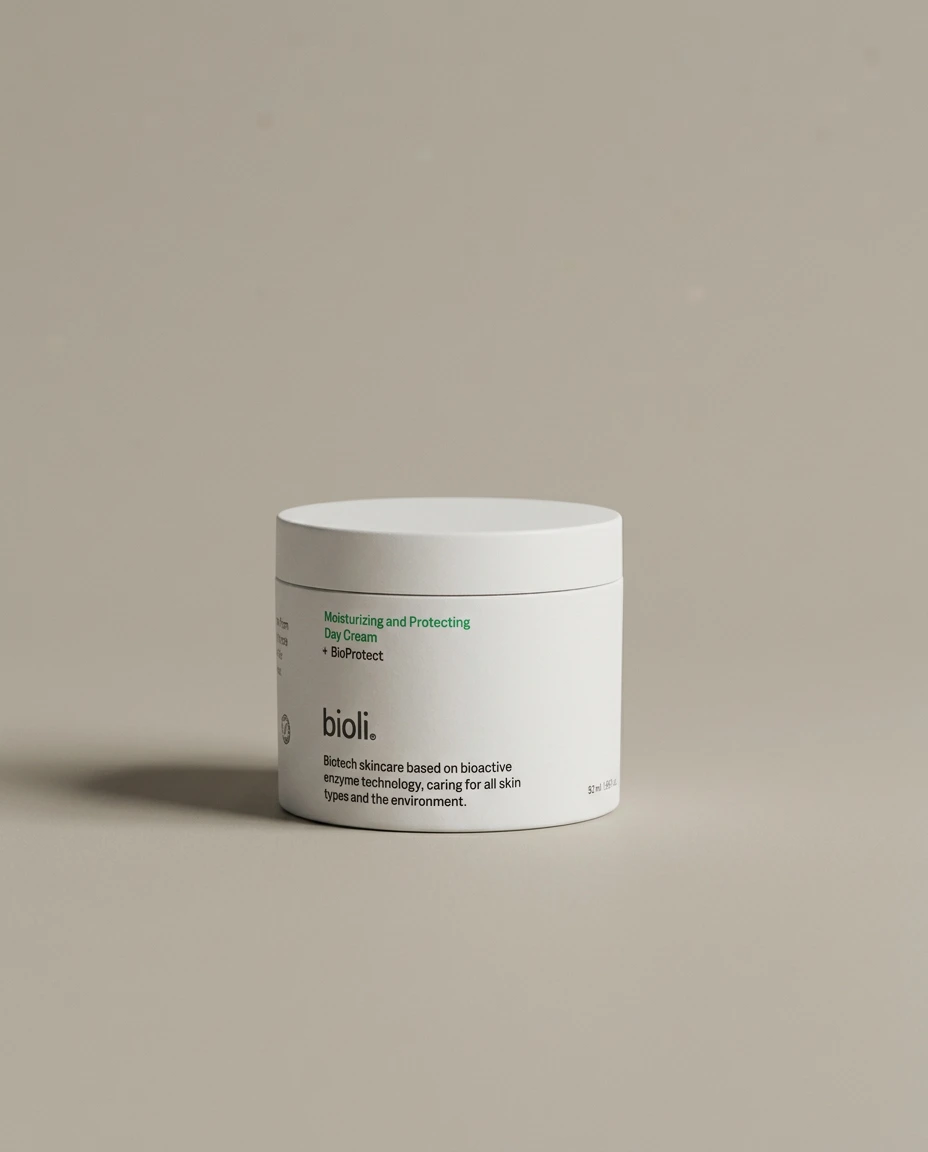
Bioli Moisturizing and Protecting Day Cream
A sensitive-skin day cream that delivers on plastic-free packaging, from a young Danish brand that answers hard questions openly.
🌱 Vegan (brand’s claim)
🐰 Cruelty-free (EU law, no Leaping Bunny)
🌍 Plastic-free packaging
♻️ Home-compostable jar
🧪 Fragrance-free
🧬 Biotech-made actives
🇩🇰 Made in Denmark
🎁 20% off with code GGG20
Best for: sensitive or reactive skin, and anyone who wants plastic-free skincare. Skip if: you want clinical proof of results, or you can’t home compost the jar.
What Is It
●●●●●●●●○○ 8/10
A unisex day cream made for sensitive skin, with a rich but airy texture. Its core is BioProtect, Bioli’s name for an antioxidant enzyme (superoxide dismutase) produced from yeast by fermentation. It is paired with biotech hyaluronic acid for hydration and biotech cellulose for texture. Bioli avoids botanical extracts, which it says can trigger reactions in sensitive skin, but uses a small amount of shea butter for softness. Bioli told us its shea butter is an organic raw material certified by an independent third party, and we checked that certification ourselves. The finished cream is not organic, and the brand doesn’t claim it is.
The full ingredient list is published: Aqua, Isononyl Isononanoate, Glycerin, Glyceryl Stearate Citrate, Cetearyl Alcohol, Glyceryl Laurate, Butyrospermum Parkii Butter, Superoxide Dismutase, Sodium Acetylated Hyaluronate, Cellulose, Sodium Benzoate, Potassium Sorbate, Pentylene Glycol, Tromethamine, Phenoxyethanol, Caprylyl Glycol, Sodium Hydroxide. There is no fragrance, no parabens, no silicones, no microplastics, no synthetic dyes and no palm oil. The brand states the formula is 100% vegan.
The jar is made from fermented microorganisms and, according to the brand, breaks down in about 52 weeks in home compost. The outer packaging is a single FSC-certified paper bag that doubles as the shipping bag, so there is no extra box, no glass and no plastic. The cream is also sold in a gift set with a facial towel.
Who Makes It
●●●●●●●●○○ 8/10
🇩🇰 Denmark
Bioli ApS is an independent Danish biotech skincare startup, founded in 2021 by Nina Wiberg Rosenquist and launched in 2025. It has no private equity backer and no corporate parent. According to the brand, it developed its products with scientists from a leading Danish university and the Novo Nordisk Foundation’s Centre for Biosustainability, with funding from Innovation Fund Denmark.
Our take: we rate Bioli 8/10 for how much it has built from first principles. The packaging is made from microorganisms, the actives are grown by fermentation, and every ingredient is disclosed. It also answers hard questions openly. Bioli shared additional documents with us that we can’t publish. We checked them ourselves, and they answered several of our open questions. That openness is what sets it apart, because many brands barely reply to hard questions.
Bioli doesn’t name its manufacturing partner, which isn’t unusual for a young brand. The certificate we reviewed covers specific types of medicines and doesn’t list creams, so it shows a regulator-inspected quality system but doesn’t directly cover this product. The partner is a small company without a formal ESG framework or sustainability report yet, something we’d like to see as Bioli grows.
Bioli says it doesn’t test on animals, as EU law requires, and we found nothing to suggest otherwise. It doesn’t hold Leaping Bunny. The brand has chosen not to pursue it, arguing that EU brands shouldn’t market what the law already requires. We understand that position for a young brand, though a certificate would add an independent check of the supply chain.
Bioli launched in 2025, and most of what’s missing is what a young brand hasn’t built yet: a published life cycle analysis, a B Corp application, an impact report, independent reviews and directory listings. We see these as points for improvement, not red flags.
How to Use
1. Apply a small amount to clean skin in the morning and smooth it over your face and neck.
2. When the jar is empty, rinse it and put it in your home compost.
What We Like
✅ Plastic-free from jar to bag: a jar made from fermented microorganisms and a single FSC-certified paper bag, with no glass and no extra box.
✅ The jar is made to break down in home compost, which is rare in skincare.
✅ Short, fully disclosed ingredient list, with no fragrance, parabens, silicones, microplastics or palm oil.
✅ Safety checked beyond the legal minimum: the AllergyCertified label means toxicologists review every ingredient for allergens and hormone disruptors.
✅ Biotech actives (yeast-derived enzyme, biotech hyaluronic acid, biotech cellulose) instead of plant extracts. Bioli says its lower water, energy and CO₂ claims rest on a preliminary life cycle analysis. The results aren’t published and we haven’t seen them, so we treat this as a credible claim, not a verified one.
✅ Shea butter is used sparingly, and it is an organic raw material.
✅ Tested under dermatological supervision on 25 volunteers with sensitive or allergy-prone skin, with no irritation reported, according to the brand.
✅ Independent Danish startup with no corporate parent, so no conflict with a bigger group’s less ethical portfolio.
What We Don’t Like
⚠️ Phenoxyethanol is in the formula. It is a permitted preservative, safe below the 1% EU limit, and it breaks down quickly in nature, but it is made from petrochemicals and some consumer apps flag it. Bioli says the preservative is needed for microbiological safety, which is fair, but it means the “No petrochemical-based ingredients” claim on its site isn’t accurate and should be reworded. The “100% biodegradable” claim is a separate issue: since 27 September 2026, EU rules ban broad claims like “biodegradable” unless they are backed by recognised proof.
⚠️ The consumer study behind the “calmer, less red skin” claims had 15 people, ran for 8 weeks and is self-reported. The brand itself says it isn’t clinical evidence.
⚠️ No independent reviews yet. The cream launched in 2025, and the testimonials on the brand’s own site are brand-curated.
⚠️ The jar needs a home compost. Most bio-waste bins don’t accept compostable packaging, as the brand says itself. If you can’t home compost, it goes in general waste.
⚠️ Organic certification doesn’t cover labour conditions, and we found no Fair Trade or social sourcing certification for the shea. The source of the glycerin isn’t specified either, so the vegan and palm-free claims rest on the brand’s word.
Why Trust It
🧪 AllergyCertified · 🏅 Tænk A-kolbe rating · ♻️ OK compost HOME · 🌲 FSC paper bag
AllergyCertified is confirmed with the certifier. The Tænk rating, OK compost HOME and FSC are the brand’s claims, which we haven’t checked in the certifiers’ own databases.
Our Experience
We tried this cream ourselves for 4 weeks. Both of us have sensitive skin, and we used it daily without any irritation. It doesn’t smell like perfume, which is what you want from a fragrance-free cream. It feels soothing when you put it on, and our skin stayed soft and moist for at least 12 hours afterwards. The texture feels premium. That is two people over 4 weeks, not a clinical trial, and everyone’s skin is different. Even with the caveats above, it’s a cream we’d recommend.
Disclosure: Bioli sent us a sample of this cream to try.
There are no independent reviews yet, because the brand launched in 2025. Besides our own experience, there is a 25-person dermatological test and a 15-person self-reported consumer study, both reported by the brand.
The Verdict
A sensitive-skin day cream that delivers on plastic-free packaging, from a young Danish brand that answers hard questions openly.
This is one of the more credible eco-skincare launches we’ve seen. The packaging earns its claims: a jar made from microorganisms, a single FSC paper bag, no plastic and no glass. The ingredient list is short, fully disclosed and free of fragrance, parabens, silicones, microplastics and palm oil. The safety checks go beyond the legal minimum, and the biotech actives are a real sustainability idea, not a label. Bioli also shared additional documents with us that we can’t publish. We checked them ourselves, and they answered several open questions.
It isn’t perfect. Phenoxyethanol sits in the formula while the brand’s site says “No petrochemical-based ingredients”, and that wording should change. The life cycle analysis is unpublished, the consumer study is small, and independent reviews don’t exist yet. None of this surprises us for a brand that launched in 2025, and we’d happily revisit our rating as Bioli publishes more.
Delivery:
🇩🇰 Denmark: 2 to 5 business days, DKK 30 to 55
🇩🇪 Germany: 3 to 8 business days, €7 (pick-up point) or €15 (home)
🇧🇪 🇳🇱 🇫🇷 🇱🇺 🇵🇱 🇸🇪 Belgium, Netherlands, France, Luxembourg, Poland, Sweden: 3 to 8 business days, €10
🇫🇮 🇬🇷 🇨🇿 🇮🇹 🇪🇸 🇵🇹 Finland, Greece, Czech Republic, Italy, Spain, Portugal: 3 to 8 business days, €10 (UPS)
🇬🇧 United Kingdom: 3 to 8 business days, £10 (UPS)
🇪🇺 Rest of Europe: €15
🇳🇴 Norway: DKK 150
🇺🇸 United States: 5 to 10 business days, $30
🇰🇷 South Korea: DKK 200
🇦🇺 Australia: AUD 45
🌍 Rest of the world: 7 to 20 business days, DKK 200
Free shipping across Europe via pick-up point on orders over €90. Outside the EU, you pay import duties and taxes yourself, and parcels to the US and China may be delayed by customs.
Don’t forget to enter the code GGG20 at checkout to get 20% off.
We earn a commission when you buy with the code GGG20.

Weleda Skin Food
A cult cream that actually earns its reputation for dry skin, best for anyone who isn’t vegan or fragrance-sensitive.
🌿 NATRUE-certified natural
🏅 B Corp brand (score 120.6)
♻️ 95% recycled aluminium tube
🐝 Not vegan (beeswax and lanolin)
🐰 Cruelty-free (NATRUE and brand policy, no Leaping Bunny)
⚠️ Natural fragrance with known allergens
🇨🇭 Swiss brand, made in Germany
Best for: very dry patches, hands, elbows, feet and winter skin. Skip if: you’re vegan, fragrance-sensitive or have oily, acne-prone skin.
What Is It
●●●●●●●●○○ 8/10
Skin Food is a thick, rich cream for dry and rough skin on the face and body. It has been around since 1926, with the same core formula, and it is still Weleda’s biggest seller. It works best as a targeted treatment: cracked hands, elbows, knees, heels, chapped lips, dry patches on the face, or as an overnight mask.
The base is organic sunflower oil, sweet almond oil, lanolin (from sheep’s wool) and beeswax, with extracts of wild pansy, organic calendula, organic chamomile and organic rosemary. The scent comes from natural essential oils (lavender, orange and benzoin).
Full ingredient list, as published by Weleda: Water (Aqua), Helianthus Annuus (Sunflower) Seed Oil*, Lanolin, Prunus Amygdalus Dulcis (Sweet Almond) Oil, Beeswax (Cera Alba), Alcohol*, Polyglyceryl-3 Polyricinoleate, Glycerin, Limonene, Viola Tricolor Extract, Hydrolyzed Beeswax, Sorbitan Olivate, Rosmarinus Officinalis (Rosemary) Leaf Extract*, Chamomilla Recutita (Matricaria) Flower Extract*, Calendula Officinalis Flower Extract*, Arginine, Zinc Sulfate, Fragrance (Parfum), Linalool, Geraniol, Citral, Coumarin. (*organic) Weleda updates its lists from time to time, so check the pack.
No synthetic preservatives, silicones, mineral oils, parabens or microplastics. Glycerin may come from palm kernel oil (Weleda says coconut or palm kernel); the brand reports a policy of RSPO-certified palm derivatives only.
Packaging: the tube is made from at least 95% post-consumer recycled aluminium. Weleda switched back to aluminium from a temporary recycled-plastic tube. The cap is plastic (polypropylene) and the outer box is cardboard.
Sizes: 30ml and 75ml. The wider Skin Food family includes Skin Food Light, Body Butter, Lip Balm and an Ultra-Light Dry Oil.
Who Makes It
●●●●●●●●●○ 9/10
🇨🇭 Switzerland
Weleda was founded in 1921 in Arlesheim, Switzerland, and has been making natural skincare and anthroposophic medicines ever since. Skin Food is made in Schwäbisch Gmünd, Germany. The brand is independent: its main shareholders are the General Anthroposophical Society and the Klinik Arlesheim, not a big beauty group or private equity.
The credentials are serious. Weleda has been a certified B Corp since 2021 and raised its score from 106.8 to 120.6 at recertification in 2024. Its whole personal care range carries the NATRUE seal. It reports that 99% of its production electricity is renewable and publishes an annual sustainability report with emissions figures. Ethical directories such as The Good Shopping Guide, Ethical Consumer and The Commons rate it well.
The gaps are real but modest for a brand this size. Weleda has no Leaping Bunny certification. Its supplier code of conduct exists but is not public, so its deeper supply chain is hard to check from outside. There is no refill model, and The Commons found no clear near-term emissions reduction targets. A 2017 US class action over “natural” labelling has been resolved, but it shows that “certified natural” is a technical standard, not a promise that nothing was processed.
How to Use
1. Use a small amount. It is thick, and a little goes a long way.
2. Warm it between your fingers and press it into dry or rough spots: hands, elbows, knees, heels, cuticles, lips.
3. On the face, use it on dry patches or as a thin overnight mask. Most people find it too heavy as an all-over day cream.
4. Patch test first if your skin reacts to fragrance.
5. To recycle, remove the cap and put the empty aluminium tube with your metal packaging.
What We Like
✅ It works: thousands of reviews agree it fixes cracked hands, heels and elbows fast, especially in winter.
✅ One tube does many jobs, so you can skip a separate hand cream, foot cream and lip balm.
✅ NATRUE certified: no synthetic fragrance, preservatives, silicones, mineral oils or microplastics.
✅ The recycled aluminium tube is a real upgrade from plastic and easy to recycle.
✅ Most plant ingredients are organic, and the full ingredient list is published.
✅ An independently owned brand with a strong, independently verified B Corp score.
What We Don’t Like
⚠️ Not vegan. It contains beeswax and lanolin. Vegan readers: UpCircle’s Face Moisturiser with Vitamin E and Bioli’s Moisturizing and Protecting Day Cream on this page are both vegan.
⚠️ Skin Food Light is not a vegan swap either; it also contains lanolin and beeswax.
⚠️ Weleda’s Dutch product page calls Skin Food “animal friendly”. That refers to no animal testing, not to animal-free ingredients, and it can mislead vegan shoppers.
⚠️ The natural fragrance includes limonene, linalool, geraniol, citral and coumarin, all known skin allergens. Not for you if you react to fragrance or essential oils.
⚠️ Too rich for oily or acne-prone skin; some users report clogged pores.
⚠️ The hydration figures on Weleda’s site (+52% after 28 days) are the brand’s own test results.
⚠️ Some recent buyers mention a musty smell in a new tube. A small number, but check yours on arrival.
Why Trust It
🏅 B Corp: certified since 2021, recertified in 2024 with a score of 120.6 (checked on B Lab’s directory)
🌿 NATRUE certified natural cosmetics: both Weleda and Skin Food itself are listed in NATRUE’s database
🌍 UEBT member since 2011 (checked on UEBT’s member list)
🌱 Climate Neutral (brand and retailer claim, not independently confirmed)
🐰 No animal testing: rests on the NATRUE standard, Weleda’s own policy and EU law, not Leaping Bunny
Reviews: 4.5/5 from 73 reviews on Weleda’s Dutch shop. 200 reviews at De Online Drogist, 166 of them five stars, though many recent ones were collected through brand promotions.
We checked the B Corp score in B Lab’s directory, the NATRUE listing in NATRUE’s database, UEBT membership on UEBT’s site, and the recycled aluminium tube on Weleda’s own product pages.
Our Experience
Mostly positive. Skin Food is much thicker than a normal moisturiser, and it takes some effort to spread. It also doesn’t sink in quickly: the spot you apply it to stays greasy for a good while. That’s what “rich” really means here, and it takes getting used to.
What felt awkward at first became a habit we didn’t want to drop. It handles the dry skin that cold Dutch winters give us very well, and the smell is lovely. We’d recommend it.
The Verdict
A cult cream that actually earns its reputation for dry skin, best for anyone who isn’t vegan or fragrance-sensitive.
Weleda Skin Food is one of the best-credentialed natural moisturisers you can buy in a regular drugstore. The formula is NATRUE certified, the tube is now recycled aluminium, and the brand behind it is independent, B Corp certified and open about its emissions. Most importantly, it works: it is a dependable fix for cracked hands, heels and winter-dry skin.
It is not for everyone. It is not vegan, and Weleda’s “animal friendly” wording doesn’t make that clear. The natural fragrance can irritate sensitive skin, and it is too heavy for oily skin. If none of that applies to you, it is a safe, honest pick.
We recommend buying it at De Online Drogist. If you prefer Amazon, it is available there too, and GGG may earn a commission on either link.
Delivery: 🇳🇱 🇧🇪 · next day when ordered before 21:30 (Belgium usually next day) · €3.95 (free over €25)
→ Shop at De Online Drogist
→ Or buy it on Amazon
Some of the links above are affiliate/referral links.

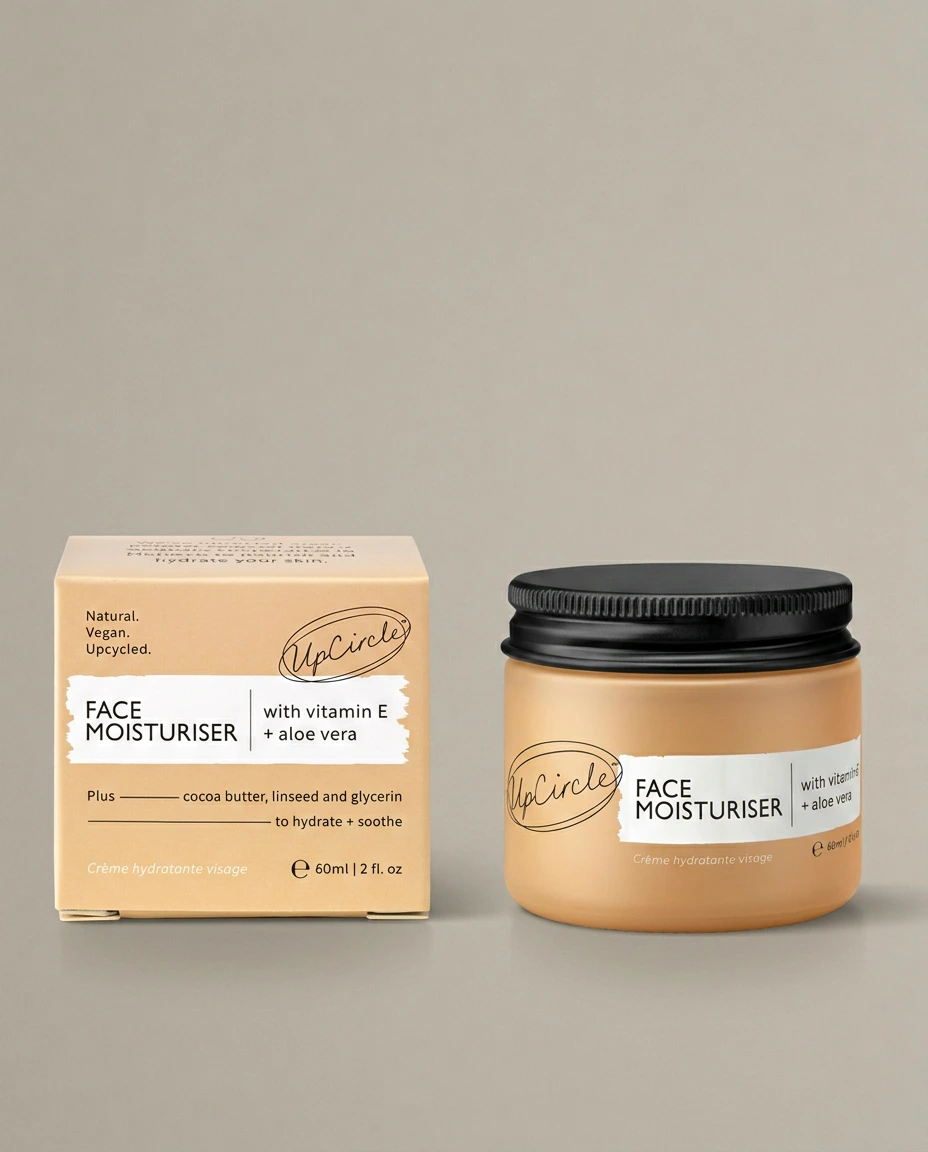
UpCircle Face Moisturiser with Vitamin E
A face moisturiser that actually backs up its upcycling story, best for normal to dry skin that gets on with essential oils.
🌱 Vegan (Vegan Society)
🐰 Cruelty-free (brand policy, no certification)
♻️ Upcycled argan shell powder
🫙 Glass jar, aluminium lid
🏅 B Corp brand (score 107.2)
⚠️ Many essential-oil allergens
🇬🇧 Made in the UK
Best for: normal to dry skin, daily use under make-up. Skip if: you’re fragrance-sensitive or have very oily skin.
What Is It
●●●●●●●●●○ 9/10
A daily face moisturiser for all skin types that absorbs quickly and works well under make-up. Its signature ingredient is upcycled: finely ground argan shell powder, a leftover from argan oil production in Morocco that would otherwise be thrown away.
The base is sunflower oil, shea butter, olive oil and linseed oil, with aloe vera, vitamin E (tocopherol) and a blend of essential oils (lemon, bitter orange, frankincense and clary sage). UpCircle says it is 99% natural.
Full ingredient list, as published by UpCircle: Aqua (Water), Helianthus Annuus (Sunflower) Seed Oil, Butyrospermum Parkii (Shea) Butter, Cetearyl Alcohol, Glyceryl Stearate SE, Citrus Aurantium Amara (Bitter Orange) Peel, Olea Europaea (Olive) Fruit Oil, Linum Usitatissimum (Linseed) Seed Oil, Aloe Barbadensis (Aloe Vera) Leaf Juice Powder, Citrus Limon (Lemon) Peel Oil, Boswellia Carterii (Frankincense) Oil, Salvia Sclarea (Clary Sage) Oil, Argania Spinosa (Argan Tree) Shell Powder, Citrus Aurantium Amara (Bitter Orange) Leaf/Twig Oil, Coco Glucoside, Sucrose Stearate, Sodium Stearoyl Glutamate, Xanthan Gum, Coconut Alcohol, Tocopherol, Glycerin, Lactic Acid, Salicylic Acid, Dehydroacetic Acid, Sorbic Acid, Benzyl Alcohol*, Limonene*, Pinene*, Linalyl Acetate*, Camphor*, Linalool*, Beta Caryophyllene*, Terpinolene*, Geranyl Acetate*, Geranial*, Terpineol*, Geraniol*, Alpha Terpinene*, Citral*.
No parabens, SLS, mineral oil, phthalates or synthetic fragrance. Palm oil status is not stated on the product page: several emulsifiers (such as cetearyl alcohol and the stearates) can come from palm or coconut, and UpCircle does not say which.
Packaging: a glass jar with an aluminium lid, both widely recyclable, in a cardboard box.
Sizes: 60ml and a 120ml “jumbo” jar.
Who Makes It
●●●●●●●●●○ 9/10
🇬🇧 United Kingdom
UpCircle was founded in London in 2016 by siblings Anna and William Brightman. It started by turning used coffee grounds from London cafés into a body scrub, and every product now builds on a named by-product from another industry. The legal entity is Optiat Ltd. The brand is independent: there is no parent company or private equity owner, only minority crowdfunding investors. Almost all products are made in the UK.
Its credentials mostly hold up. UpCircle has been a certified B Corp since 2022 and raised its score from 96.3 to 107.2. Its whole range carries the Vegan Society trademark. Its upcycled ingredients come from named waste streams, which is far more specific than most “sustainable” beauty claims. Its own 2026 impact page is unusually honest about what it can’t measure yet.
One claim doesn’t check out. UpCircle’s animal testing policy says the brand is Leaping Bunny approved, but we couldn’t find it in the Leaping Bunny database, and independent tracker Cruelty-Free Kitty lists it as having no cruelty-free certification. UpCircle does have a no-animal-testing policy covering its suppliers, so we treat it as cruelty-free by policy, not by certification.
Other gaps are worth knowing. UpCircle publishes no carbon emissions data, and says so itself. It doesn’t disclose where its shea butter comes from, and its manufacturing partner’s name is kept confidential. Its glass return-and-refill scheme is paused, and the replacement is only promised for “early next year”. Its plastic recovery work is reported for 2023 only.
How to Use
1. Apply a small amount to clean, dry skin, morning and/or evening.
2. Massage in until absorbed. It works as a base under make-up.
3. Patch test first if you react to essential oils.
4. Use sunscreen during the day as usual, since this moisturiser has no SPF.
5. When empty, rinse the jar and recycle the glass and the aluminium lid separately.
What We Like
✅ The upcycled argan shell powder is a real, named waste stream, not a vague green claim.
✅ Registered with the Vegan Society, so vegan status is independently confirmed.
✅ Glass and aluminium packaging, so no plastic jar or lid to bin.
✅ Light enough for daily use and under make-up, according to most reviewers.
✅ A full ingredient list is published.
✅ The jumbo 120ml jar means fewer orders and less packaging over time.
What We Don’t Like
⚠️ UpCircle says it is Leaping Bunny approved, but we couldn’t confirm that in the Leaping Bunny database. Its cruelty-free status rests on its own policy and UK/EU law.
⚠️ The ingredient list has 14 ingredients marked with an asterisk, almost all of them essential-oil compounds known to irritate sensitive skin (limonene, linalool, citral, camphor and more). “Suitable for all skin types” doesn’t say this. Not for you if you react to fragrance or essential oils.
⚠️ Some reviewers find it too rich for oily or combination skin.
⚠️ Palm oil status isn’t clear for this product. Several emulsifiers can be palm- or coconut-derived, and UpCircle doesn’t say which.
⚠️ Shea butter is a main ingredient, but its source and fair-trade status are not disclosed.
⚠️ “99% natural” includes ingredients like xanthan gum, salicylic acid and the preservatives, which are nature-identical rather than strictly natural.
Why Trust It
🏅 B Corp: certified since 2022, now scoring 107.2 (checked on B Lab’s directory)
🌱 Vegan Society trademark: this moisturiser is listed (checked on the Vegan Society’s trademark search)
🐰 No animal testing: brand policy only. UpCircle claims Leaping Bunny approval, but it is not in the Leaping Bunny database
🌊 Ocean-bound plastic recovery: 2,636kg funded in 2023 (brand’s own figure, no newer data published)
Reviews: UpCircle reports more than 25,000 five-star reviews across its range (brand’s own figure). On its UK shop, this moisturiser has 4.8/5 from over 3,000 reviews, and Holland & Barrett shows 4.7/5 from 187 reviews (reported in our assessment, not shown on the EU shop).
We checked the B Corp score on B Lab’s directory, vegan status on the Vegan Society’s trademark search, Leaping Bunny status in its database and on Cruelty-Free Kitty, and the ingredient list, packaging and shipping terms on UpCircle’s EU shop.
The Verdict
A face moisturiser that actually backs up its upcycling story, best for normal to dry skin that gets on with essential oils.
This is one of the more honest products in sustainable skincare. The upcycled ingredient is real, the formula is certified vegan, the packaging is glass and aluminium, and the brand behind it is independent with a strong, verified B Corp score.
There are two catches. The essential-oil blend is a real risk for reactive skin, so patch test first or pick something fragrance-free. And UpCircle’s Leaping Bunny claim doesn’t match the Leaping Bunny database, which we’d like the brand to fix or explain. Shea sourcing, palm-derived emulsifiers and missing emissions data are further gaps, but none of them change our recommendation.
Buy it directly from UpCircle’s EU shop. If you prefer Amazon, it is available there too, and GGG may earn a commission on that link.
Delivery: 🇳🇱 🇧🇪 · ships from Ireland the same day if ordered before 12:00, no EU duties, transit time unconfirmed · €6.99 (free from €50)
→ Shop at UpCircle
→ Or buy it on Amazon
Some of the links above are affiliate/referral links.
Our Verdict
Most conventional moisturisers work fine. The problem is what comes with them: plastic jars that outlive us, fragrance blends nobody can name, and “natural” claims that fall apart once you read the ingredient list.
All three creams on this page take a different route, and all three hold up when we check their claims. None of them is perfect, and the honest trade-offs are in each review above, not in the fine print. They are also not three versions of the same product. Each one suits a different skin and a different priority.
Who each one is for
Bioli Moisturizing and Protecting Day Cream is our pick for sensitive or reactive skin. It is fragrance-free, vegan, AllergyCertified, and comes in a plastic-free jar you can compost at home. It is also the youngest brand here, with less of a track record, and its “no petrochemicals” claim needs fixing. Choose it if your skin reacts to fragrance and you want the lowest-waste packaging on this page.
Weleda Skin Food is our pick for very dry skin. It is a thick, rich cream that has barely changed since 1926, and it rescues cracked hands, elbows, heels and winter-dry patches better than anything else here. It is not vegan (beeswax and lanolin), and its natural fragrance can irritate sensitive skin. Choose it if you want one tube that does many jobs and you’re not vegan.
UpCircle Face Moisturiser with Vitamin E is our pick for an everyday face cream. It is light enough to wear under make-up, vegan, and packed in glass and aluminium, with an upcycled argan shell ingredient at its core. Its essential-oil blend is a risk for reactive skin, and its Leaping Bunny claim doesn’t check out. Choose it if your skin tolerates essential oils and you want a vegan daily moisturiser with a real circular story.
Quick guide
🌿 Sensitive or reactive skin: Bioli
❄️ Very dry skin, cold winters: Weleda
☀️ Daily face cream under make-up: UpCircle
🌱 Vegan: Bioli or UpCircle
🧪 Fragrance-free: Bioli only
Shop Eco-Friendly Moisturisers
- Bioli Moisturizing and Protecting Day Cream → (use code GGG20 for 20% off)
- Weleda Skin Food at De Online Drogist → or on Amazon
- UpCircle Face Moisturiser at UpCircle → or on Amazon
Green Goods Gallery earns a small commission when you buy through some of these links or with our code GGG20, at no extra cost to you. It never changes our ratings.