

Eco-Friendly Cleaners: Non-Toxic Products Using Less Plastic
Your kitchen cleaner contains chlorine, ammonia, and synthetic fragrance. Your kitchen surfaces touch your food. Discover two routes to a cleaner home without poisoning the drain. Pick your setup.
The Problem with the Spray Bottle Under the Sink
Walk down the household cleaning aisle of any supermarket and count the plastic. Not just the bottles; the individual spray triggers, the plastic film labels that jam the recycling process, the caps that don’t get separated from the bottles, the secondary packaging holding the multi-packs together.
Then look at what’s inside. Conventional all-purpose cleaners typically contain chlorine-based bleaching agents, ammonia, synthetic surfactants derived from petroleum, artificial dyes (because apparently the cleaning product needs to be blue), and preservatives including isothiazolinones, a preservative class flagged as a skin sensitiser at certain concentrations, yet still present in most mainstream formulas.
These things get sprayed onto kitchen counters, wiped off with a cloth, rinsed, and go down the drain into the same water system that eventually flows somewhere. The “clean” smell they leave behind is synthetic fragrance compounds, not cleanliness.
And then the bottle runs out in two weeks, and you buy another one. Because that is the business model.
There is no version of a spray bottle that can be infinitely refilled in the conventional cleaning world. The economics don’t work for the brand if you stop buying bottles. Which is exactly why the brands we’re featuring here have been quietly building a different system, one where the bottle is something you keep, and the cleaner is something you replenish in a format that uses a fraction of the plastic.
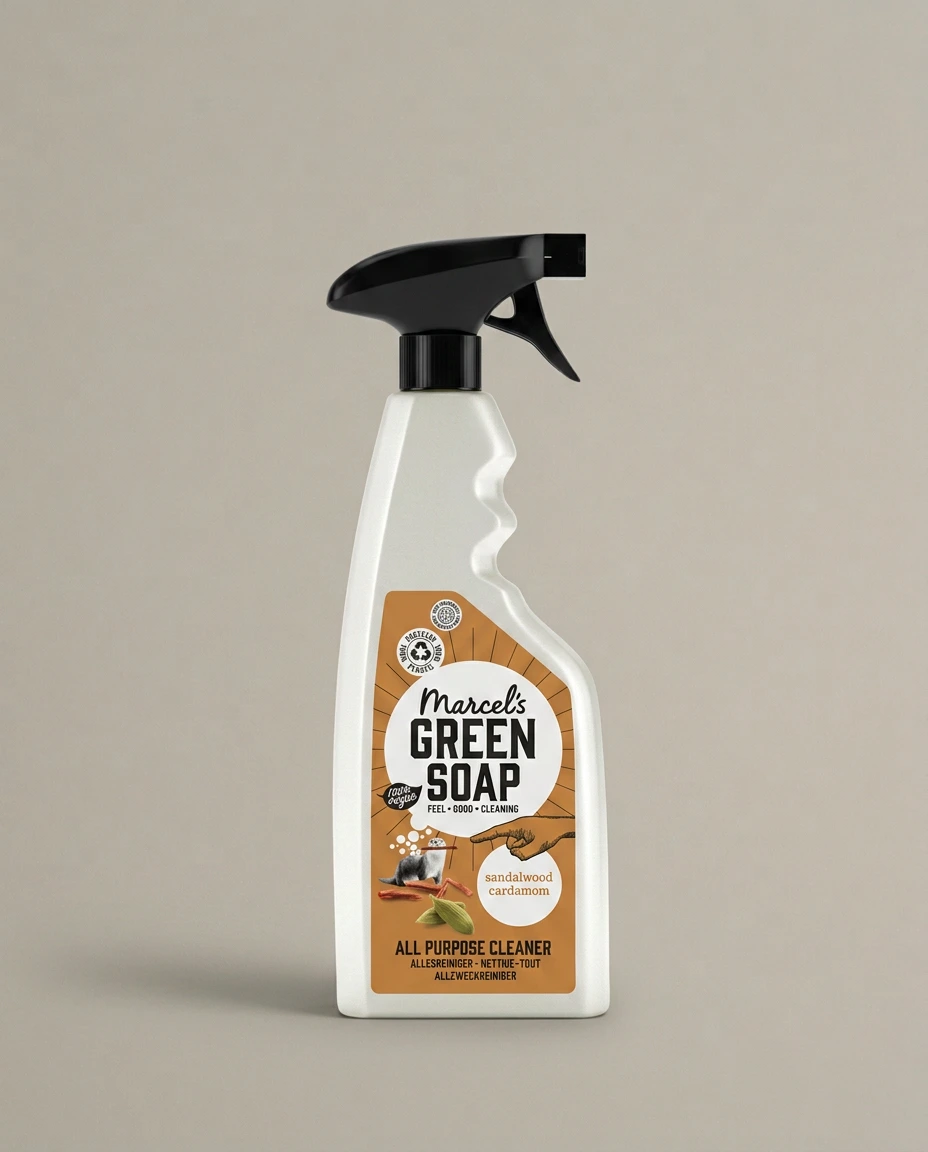
Option 1: Marcel’s Green Soap All-Purpose Cleaner
🌱 Plant-based formula — surfactants derived from renewable sources
🚫 No parabens, phosphates, chlorine, ammonia, acids, or dyes
♻️ Bottle made from 100% recycled Dutch plastic — and refillable
🧬 At least 97% biodegradable — OECD certified
🇳🇱 Made in the Netherlands — founded by Marcel Belt, a father of three, in 2016
✅ Available in Albert Heijn and Ekoplaza — or online with refills
What You’re Getting: A Refill System
A ready-to-use all-purpose cleaning spray in a 750ml bottle made from 100% recycled Dutch plastic. Works on kitchen surfaces, floors, tiles, parquet, and bathroom surfaces. The bottle is refillable, buy the refill, pour it in, done.
- All Purpose Cleaner Spray Refill — Basil & Vetiver
- All Purpose Cleaner Spray Refill — Sandalwood & Cardamom
Available scents (on Amazon NL and in stores): Lavender & Rosemary, Orange & Jasmine, Sandalwood & Cardamom, Basil & Vetiver, and a fragrance-free version developed with AllergyCertified for sensitive skin. These are not “cleaning product scents.” They are actually pleasant. This is relevant because you will use a cleaner more if you don’t dread picking it up.
Does not work on: natural stone or marble in the bathroom cleaner variant. The all-purpose version is generally safe on most surfaces, including parquet, but always test a small corner first on unfamiliar materials.
Check out Marcel’s Green Soap Amazon Store to discover more eco-friendly cleaning essentials, from laundry detergents and toilet cleaners to hand soaps and all-purpose sprays, all in heavenly natural scents.
Meet Marcel’s Green Soap
Marcel Belt spent years at Unilever watching perfectly good cleaning formulas get wrapped in unnecessary packaging and stuffed with unnecessary chemistry. In 2016, standing in his kitchen in Haarlem, he asked a direct question: why? Why the palm oil? Why the phosphates? Why the plastic bottle that can’t be made from recycled material?
He founded Marcel’s Green Soap with three promises: it smells good, it works well, and it’s better for the planet. Not “natural”. Marcel’s website is explicit that natural and sustainable are not the same thing, and that sometimes a synthetic ingredient requires 8x fewer raw materials than its supposedly greener alternative. Sustainable is the goal, not the aesthetic of naturalness.
The result is a brand sold in Albert Heijn and Ekoplaza across the Netherlands, made with recycled plastic packaging sourced locally, certified by Green Key and the EU A.I.S.E. Charter, and named Coolest Dutch Brand in 2021. The formula is at least 97% biodegradable, microplastic-free under the ECHA definition, vegan, and comes in refill formats so the bottle stays and the cleaning agent gets replenished.
One honest note: Marcel’s Green Soap contains SLES (Sodium Laureth Sulfate) and Sodium Benzoate as a preservative. These are not hazardous, but they are not “completely natural” either, which, again, the brand acknowledges openly. They also use RSPO-certified palm oil derivatives in some products where palm-free alternatives aren’t yet technically viable. That’s not a scandal; it’s an honest position in an imperfect supply chain.
The Ingredients, Explained
Sodium Laureth Sulfate (SLES) is the main surfactant — it breaks down grease and lifts dirt from surfaces. Marcel’s uses a mild SLES variant and compensates for any potential skin irritation with added glycerine. This is not the same as SLS, despite the similar name, and Marcel’s FAQ explains the distinction clearly. Replacing it with something that sounds greener would, in their words, require up to 8x more raw material. Sustainability over optics.
Cocamidopropyl Betaine is a secondary surfactant derived from coconut oil, mild enough to appear in baby products. It moderates foam and improves cleaning performance without aggression.
Tetrasodium Glutamate Diacetate is a chelating agent — it softens hard water minerals (calcium, magnesium) that would otherwise interfere with surfactant performance. It’s biodegradable and replaces older chelating agents like EDTA, which was not.
Glycerin keeps the formula gentle on hands and helps it rinse cleanly without leaving a film.
Citric Acid adjusts pH to a level that cleans effectively without being corrosive.
Sodium Benzoate is the preservative. It prevents microbial growth in the formula. It is effective at low concentrations and considerably gentler than the alternatives used in conventional cleaners.
How to Use Marcel’s Green Soap All-Purpose Cleaner
The learning curve is zero. Spray, wipe, done. A few tips to get the best out of it:
- On greasy kitchen surfaces: spray directly, leave for 30 seconds before wiping. The surfactants need brief contact time to break down grease.
- On floors: use the liquid variant (not the spray) in a bucket with warm water. The spray is for surfaces, not mopping.
- When the bottle runs out: buy the refill format and pour it in. Do not throw the bottle out.
- On marble or natural stone: test a small area first, regardless of any cleaner you use.
- Fragrance-free version: ideal for anyone with fragrance sensitivity, or for use in food prep areas where you don’t want any scent transfer.
What Real Customers Are Saying
“I really love these products — they clean well, don’t irritate my children’s sensitive skin and smell great! We have converted all of our cleaning products to Marcel’s.” — Verified buyer, Trustpilot
“Washing up liquid is amazing. Fragrances natural, makes me enjoy washing up. Found when visiting a friend in the Netherlands.” — Verified buyer, Trustpilot
“Very fresh and clean! Brilliant value for money as it’s so concentrated and cleans so well!” — A. F., Yeovil, via Big Green Smile
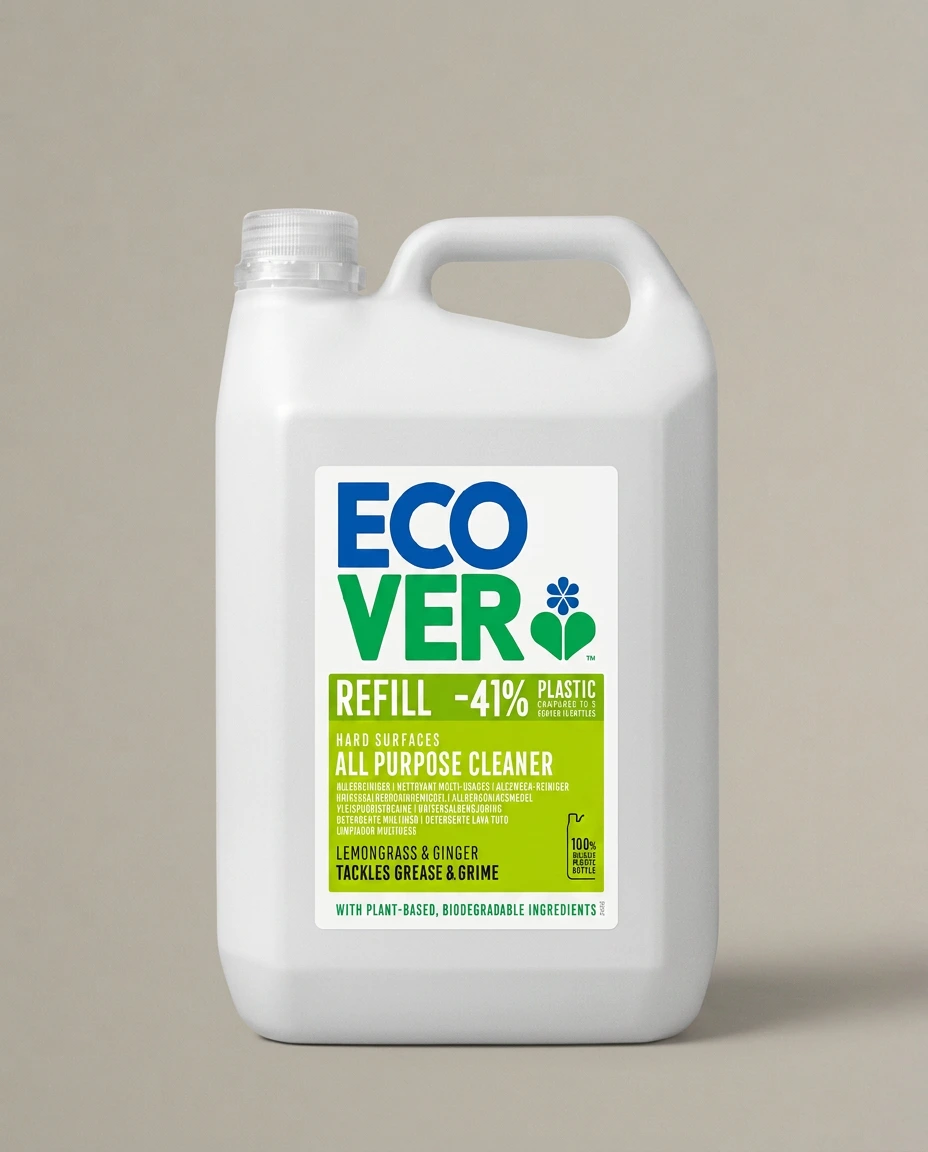
Option 2: Ecover All-Purpose Cleaner 5-Litre Refill + Glass Spray Bottle
🌱 Plant-based surfactants — including sugar-derived glucosides
🚫 No phosphates, chlorine, bleach, or optical brighteners
📦 5 litres replaces approximately 10–15 standard spray bottles — less plastic per clean
🏭 Made in Ecover’s Zero Waste certified factory in Belgium
💧 14% more concentrated than Ecover’s previous formula — fewer transport emissions per dose
🧬 Biodegradable ingredients — suitable for septic tanks
🍋 Lemongrass & Ginger scent — the one that actually smells like lemon rather than a chemical trying to smell like lemon
What You’re Getting and Why the Setup Matters
The Ecover 5-litre canister is a concentrate. You do not spray it directly from the canister. You dilute it: 25 ml in half a bucket of water for floors, or fill your spray bottle with a small amount of concentrate topped up with water for surface cleaning, and use it from a reusable spray bottle.
The maths on this setup: a standard 500ml cleaning spray contains roughly 20–30 surface washes. A 5-litre Ecover canister, used in spray bottle dilution, yields approximately 200–250 refills of a 500ml bottle. You buy the glass bottle once. You buy the canister when it runs out. The plastic footprint per clean drops dramatically.
What the glass bottle is not: completely leak-proof when held horizontally. This is a real limitation flagged by multiple buyers, and is worth knowing before you buy. Hold it upright when not in use, and store it standing. The pump mechanism on the trigger also requires the bottle to stay reasonably vertical to draw correctly. Minor and manageable, but real.
Meet Ecover
Ecover has been making plant-based cleaning products since 1980, which means they were doing this before “eco-friendly” was a marketing category. They opened the world’s first ecological factory in 1992, a building with a grass roof that people flew in to photograph. That factory is now Zero Waste certified.
Their all-purpose cleaner is made with sugar-derived surfactants, is phosphate-free, bleach-free, and suitable for septic tanks. The 5-litre format exists specifically to address the plastic-per-wash problem: instead of buying ten 500ml spray bottles over a year, you buy one 5-litre canister, dilute it yourself, and refill a spray bottle at home indefinitely.
The recent formula update made it 14% more concentrated than before — which means fewer litres transported per effective dose, and fewer grams of plastic per clean.
One honest note: Ecover’s formula contains phenoxyethanol, a preservative that some eco-purists flag. It is approved under EU cosmetic and cleaning product regulations, is biodegradable, and is considerably less problematic than the alternatives it replaces. It is not a reason not to buy the product, but it is worth knowing it’s there.
Important Note on Ecover’s Ownership
We featured it because the products genuinely work, the packaging story is real, and the brand has a legitimate 45-year history of trying to make cleaning less toxic for the planet. That part hasn’t changed. What has changed is who’s cashing the check.
Since 2017, Ecover (and its sister brand Method) has been owned by SC Johnson, the privately held US household goods giant. SC Johnson doesn’t just own Ecover. It also owns Glade, Pledge, Windex, Shout, and Duck — a lineup of conventional, chemical-heavy cleaning brands that Ecover was founded, in part, to be the alternative to. That’s the awkward bit. Buying Ecover doesn’t mean SC Johnson has quietly gone green everywhere else. It means the company now sells the “eco option” and the “not-eco option” on the same shelf, and profits either way.
A few things worth knowing:
- SC Johnson tests on animals where legally required. Ecover itself remains Leaping Bunny certified, but Naturewatch Foundation pulled its endorsement over this exact link.
- Ecover and Method have both quietly vanished from the B Corp directory as of late 2025, with no public explanation.
- SC Johnson paid $2.25M to settle a lawsuit over Method’s “non-toxic” marketing claims.
- Independent ethics trackers flag SC Johnson for political donations, weak workers’ rights transparency, and tax-haven subsidiaries.
None of this means the formulas are bad; the product itself still holds up. It means the profits now also bankroll a parent company that undercuts the whole point. We’re keeping Ecover listed, but flagging this plainly. If a parent company’s animal testing or politics is a line for you, that’s a fair reason to look elsewhere. This is still a relatively better option, but more eco-friendly options exist, and choosing them is a better stance.
The Ingredients, Explained
Caprylyl/Capryl Glucoside and Lauryl Glucoside are non-ionic surfactants derived from sugar (glucose) and plant-based fatty acids. They lift grease and grime without ionic surfactants, making them gentler and highly biodegradable. These are what replace the petrochemical surfactants in conventional cleaners.
Sodium Citrate acts as both a pH buffer and a water softener. Same function as in the laundry sheets, it manages hard water mineral interference and helps the surfactants do their job.
Tetrasodium Glutamate Diacetate — same biodegradable chelating agent as Marcel’s.
Lactic Acid adjusts the formula pH and contributes to grease-cutting performance. It’s a naturally occurring acid, the same compound produced during fermentation.
Phenoxyethanol is the preservative. It keeps the formula stable across the two-year shelf life of the canister. It is EU-approved for cleaning products, biodegradable, and replaces older preservative classes with worse environmental profiles. Some eco-minded consumers prefer to avoid it. We mention it because the ingredient list should not be something you have to dig for.
How to Use Ecover 5L + Glass Bottle Setup
First use:
- Fill your glass spray bottle approximately one-third with the Ecover concentrate.
- Top up with tap water to the 500ml mark.
- Gently swirl (don’t shake — the glucoside surfactants foam easily).
- Spray on surfaces, wipe clean with a cloth or sponge.
For floor cleaning: Measure 25ml into half a bucket of warm water and mop as normal. The formula is designed to clean without leaving residue that requires rinsing, so no second pass is needed on sealed floors.
For stubborn stains: Apply undiluted concentrate directly to the area on a damp cloth, leave for a minute, then wipe. If the stain involves limescale or mineral deposits, add white vinegar instead.
Storing the canister: Keep in a cool, dry place away from direct sunlight. The 5-litre canister has a shelf life of up to two years once opened, if stored correctly. The amber glass bottle can hold a prepared spray solution for several weeks without degradation.
What Real Customers Are Saying
“I absolutely love this all-purpose cleaner! It cuts through grease and grime effortlessly, saves me money buying in bulk and smells fresh, clean and non-toxic.” — A. L., Cambridge, verified buyer
“I use it in a spray bottle undiluted for cleaning the bath and diluted for cleaning everywhere else.” — J. H., Newton Stewart, verified buyer
“All these products smell great, are non-toxic and are far less impacting on the environment. For stubborn water stains you’ll need white vinegar too.” — Miss K. K., London, verified buyer
That last note is an honest one worth repeating here: neither of these products will remove hard water scale the way a dedicated descaler does. For limescale, white vinegar is still your friend and costs almost nothing. These cleaners handle grease, grime, everyday food residue, and surface bacteria. They are not doing three jobs at once, the way some multi-action conventional cleaners claim to, though the claims of most multi-action conventional cleaners are also worth interrogating.
Our Verdict
The conventional all-purpose cleaner category is one of the easiest in the household to upgrade. The products are simple, the switching cost is low, and in both cases here — Marcel’s Green Soap and Ecover — you are not being asked to accept worse results in exchange for better ethics. The formulas clean. The scents are good. The plastic footprint goes down, not sideways.
Marcel’s Green Soap is the right pick if you want something you can buy in a supermarket, spray directly, and hand to anyone in the household with zero explanation required. It is a plug-and-play upgrade — same format as what you’re replacing, better formula, refillable bottle, made in the Netherlands.
The Ecover 5L + glass bottle setup is the right pick if you want to go further: minimum plastic per clean, lower cost over time, and the satisfaction of a bottle you genuinely keep rather than a “recyclable” bottle you hope gets recycled. It requires buying the glass bottle once and spending 90 seconds diluting it. If that feels like a lot, it isn’t.
One honest caveat: Ecover has been owned by SC Johnson since 2017. Yes, the same company behind Glade and Windex — so your euros are also, indirectly, funding a parent that doesn’t share Ecover’s standards on animal testing. The products themselves still perform and still beat the conventional shelf. Just know what you’re buying into.
The only reason not to switch is not knowing either of these exists. You do now.
Ready to Make the Switch to Eco-Friendly Cleaners?
Option 1 — Quick switch, no faff:
Plant-based. Recycled plastic bottle. Refillable. Smells like something a human chose rather than a lab.
Option 2 — Minimum plastic, maximum sense:
One canister. One glass bottle. Hundreds of washes. Done.
Green Goods Gallery earns a small commission if you purchase through these links, at no extra cost to you. We only feature brands we genuinely believe in.