

Natural Body Loofah: The Plastic-Free Shower Sponge That Actually Works
The plastic puff in your shower is rubbing microplastics directly onto your skin every single day. Beewise’s natural Egyptian loofah is grown from a plant, compostable when done, and significantly better at its actual job.
The Problem in Your Shower
The colourful mesh puff hanging in your shower is almost certainly made of nylon or polyester, synthetic plastics derived from petroleum. Every time you lather up, the mechanical action of using it against your skin causes those fibres to break apart and shed. Those fragments are microplastics. They go down the drain, through the water system, and into waterways. Most wastewater treatment plants do not filter microplastics effectively at this scale.
You are, very literally, rubbing plastic against your skin and then washing it into the ocean.
The puff also cannot be composted, cannot be recycled (blended synthetic fibres are notoriously unrecyclable), and takes decades to break down in landfill, at which point it breaks into smaller plastic particles rather than decomposing. The average shower puff lasts a few weeks to a couple of months before it starts to harbour bacteria in its synthetic mesh structure and needs replacing. Then another one goes in the bin.
No version of this needed to happen. The loofah — the actual plant, Luffa Aegyptiaca — has been used for bathing since ancient Egypt. It exfoliates better than a plastic mesh puff. It biodegrades completely. It costs less. The only reason most people switched to a plastic puff is that the plastic puff was cheaper to produce, and someone put it on a shelf.
Beewise Amsterdam sources their loofahs from Egypt, where they are grown and sun-dried, then ships them from Amsterdam in entirely plastic-free packaging. There is genuinely nothing complicated about this product. It is a vegetable that you wash with.
What Actually Is a Loofah
Most people assume loofahs are a sea creature, some kind of dried coral or sea sponge. They are not. The loofah is the fibrous interior of the Luffa fruit, a vine-grown member of the cucumber, squash, and gourd family. The fruit is grown like a large courgette, left to fully mature and dry on the vine, then harvested, and the outer skin removed to reveal the fibrous interior, which is what you use in the shower.
There are two primary species:
Egyptian loofah (Luffa Aegyptiaca) — thicker fibres, firm when dry, becomes flexible and soft rapidly when wet. Higher resilience, longer-lasting, stronger exfoliation with gentler contact once hydrated. This is the one used by estheticians and in professional spa contexts, and the one Beewise sources.
Asian loofah (Luffa Acutangula) — softer fibre, less water-resistant, less resilient, weaker exfoliation. The species used in cheaper mass-market loofahs.
The distinction matters in practice: Egyptian loofah softens fully when wet to provide effective exfoliation without abrasion, and the thicker fibre structure means it dries faster and holds its shape longer than cheaper alternatives. It is not a minor quality difference.
Both species are 100% plant-derived, 100% biodegradable, and grow without the need for petroleum or synthetic processing.
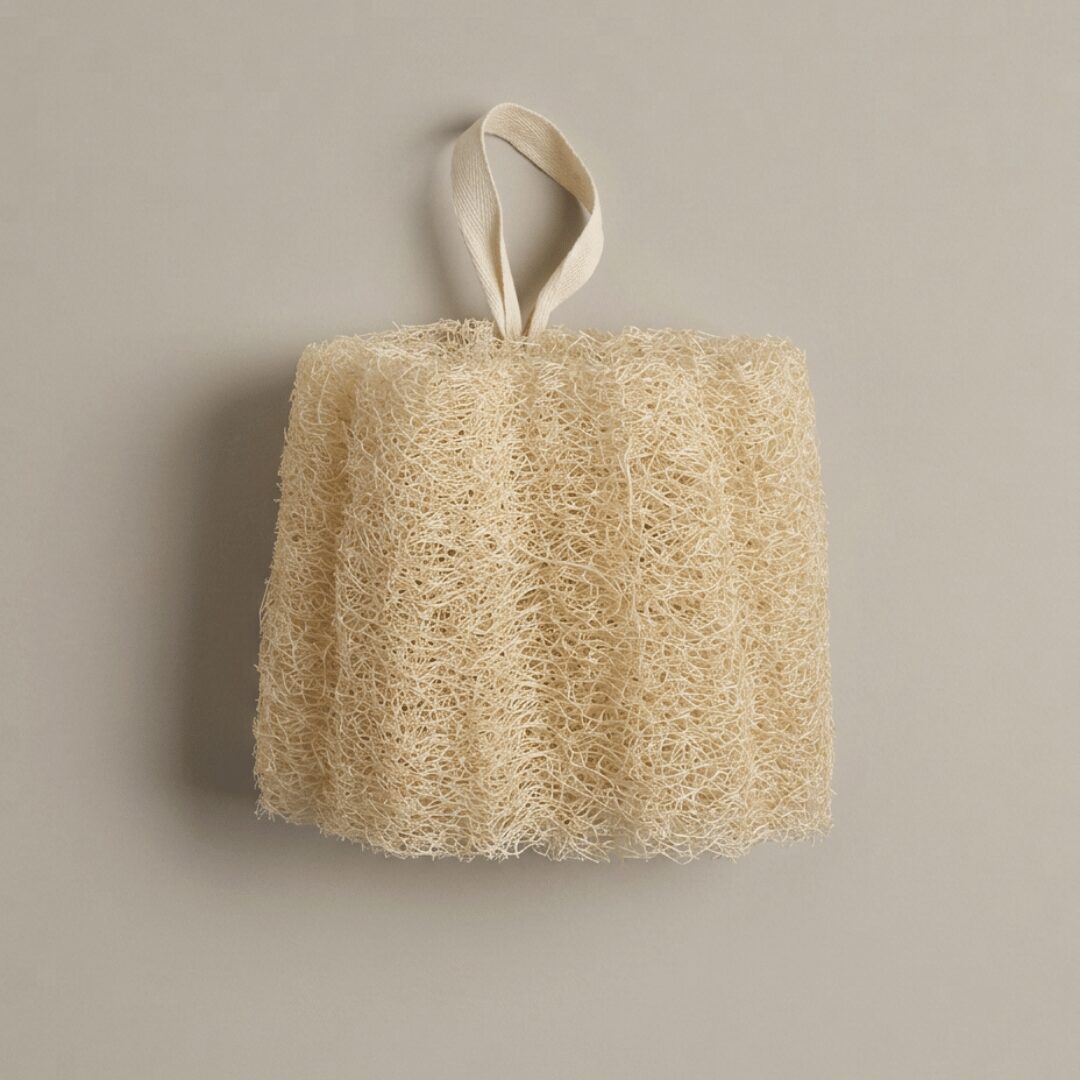
Loofah Body Sponge
Full-body lather, deep exfoliation, cotton hanging cord. The classic format.
🌿 100% natural Egyptian loofah — Luffa Aegyptiaca, the superior species
☀️ Sun-dried, not processed — no synthetic treatment, no additives
🧵 Cotton hanging cord included — hang to dry, extend the life
♻️ 100% home compostable — no landfill, no microplastics, no guilt
📐 ~11–12 cm — full-body use
What it actually is
A full cylinder of natural Egyptian loofah, approximately 11–12 cm long, with a cotton hanging cord. When dry, it is firm and slightly stiff. This is normal and not a quality issue. When wet, the fibre network softens and expands, creating a lathering and exfoliating surface that covers the body evenly and generates foam well with any body wash or soap.
The cotton cord serves a real function: hang the loofah after each use so air can circulate through the full cylinder. A loofah left sitting wet on a shelf will develop mould in the centre fibres faster than one that hangs and dries. This is the single most important maintenance instruction.
What it is genuinely good at
Full-body washing and exfoliation. The cylindrical format covers surface area efficiently, lathers thoroughly with any soap or gel, and provides consistent mechanical exfoliation that removes dead skin cells without abrasion, which is the correct description of what exfoliation should be. It is not scratching the skin; it is activating gentle friction with a soft, porous surface.
The loofah also expands slightly when wet, which means the contact surface increases during use. The foam generation is noticeably better than a flat cloth or a rough sponge because the open fibre network traps and distributes soap throughout its structure.
What it is not
It is not a gentle cleansing tool for very sensitive or irritated skin. If you have active eczema, rosacea, open wounds, or significant skin sensitivity, the exfoliating action of a loofah — even softened Egyptian loofah — may be too much for affected areas. Use the cotton side of the pad (below) or a plain flannel on those areas. For everyone else with normal to dry skin, it is appropriate for daily use.
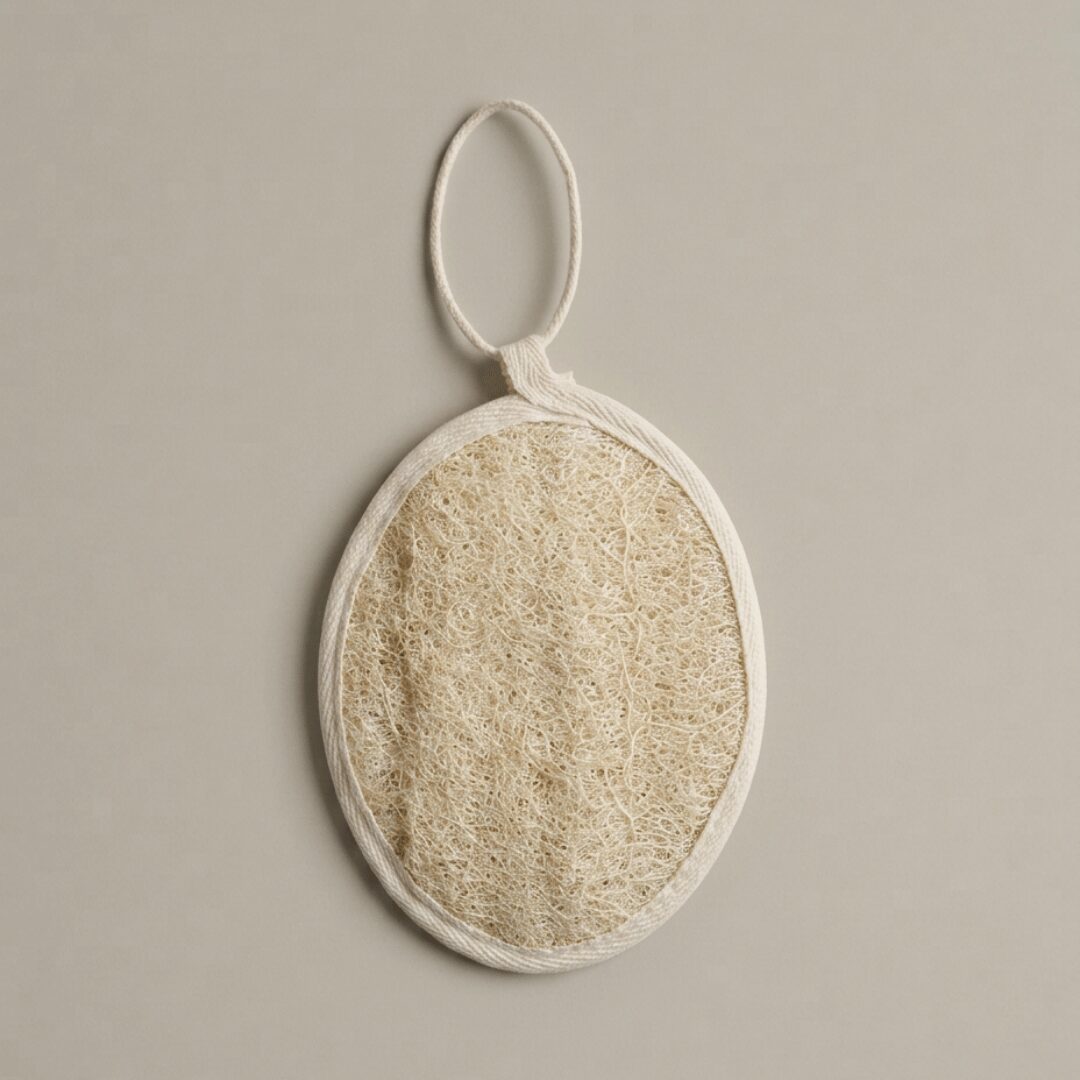
Loofah Sponge Pad
Loofah on one side, soft cotton terry cloth on the other. Built-in grip, gentler texture, travel-friendly.
🌿 Natural Egyptian loofah + pure cotton terry cloth — exfoliation on one side, gentle cleansing on the other
🤚 Cotton band for hand grip — stays put, no fumbling
🔁 Dual-sided — loofah side for exfoliating, cotton side for gentler daily washing or sensitive areas
🧳 Compact and flat — goes in a wash bag without drama
🪢 Hanging loop — dries properly between uses
♻️ Fully biodegradable — loofah plant fibres + natural cotton
📐 ~15 cm × 11 cm
What it actually is
A flat rectangular pad (~15 cm × 11 cm) with Egyptian loofah on one face, pure cotton terry cloth on the other, surrounded by a cotton trim. A cotton band across the back provides a hand grip so the pad stays in place during use. A hanging loop allows it to dry between uses.
The dual-sided construction makes this a more versatile product than the body sponge:
Loofah side: same Egyptian loofah material as the body sponge — exfoliating, lathering, stimulating circulation. Use this side on legs, arms, back, and areas where you want active exfoliation.
Cotton terry cloth side: soft, gentle, absorbent. Use this side on the face, on sensitive areas, on days when you want a lighter cleanse rather than full exfoliation, or on any skin that needs a break from abrasion.
When to choose this over the body sponge
The pad is the more considered tool of the two. The hand grip means control is better than with the cord-hung body sponge — useful for targeted areas, for facial cleansing, or for anyone who finds handling a full cylinder less convenient. Its compact flat format makes it a better travel companion: it fits in any wash bag without adding bulk, and the loofah material dries faster in flat form than a full cylinder.
The cotton side also means the pad functions as a face cloth, so if you are replacing both a shower sponge and a separate flannel in your routine, the pad does both jobs in one product.
The honest comparison
The body sponge provides more contact surface and more foam per stroke for full-body use. It is the better choice if your primary goal is efficient full-body lather and exfoliation. The pad provides better control, gentler options via the cotton side, and more travel practicality. It is a better choice if you also want facial cleansing, have sensitive zones to manage, or travel frequently.
Many people use both: the body sponge for the main shower wash, the pad for the face, and finishing.
Many people use both: the body sponge for the main shower wash, the pad for the face, and finishing.
What Real Customers Are Saying
“This is the best loofah sponge I’ve tried! It’s incredibly soft and provides a wonderfully soothing massage.” — Verified buyer, Beewise Amsterdam (Body Sponge)
“I’ve been using this loofah pad for a while now, and I really like it. It exfoliates gently without being too rough, and it lathers really well. Plus, it dries quickly and doesn’t get that weird smell like synthetic sponges. It is also compact for travels.” — Verified buyer, Beewise Amsterdam (Loofah Pad)
That last point is worth flagging independently: the “weird smell” from synthetic shower puffs is bacteria growing in the damp synthetic mesh, which traps moisture and doesn’t dry properly between uses. Natural loofah dries faster because its open fibre structure allows airflow. This is not a minor comfort issue; it is a hygiene one.
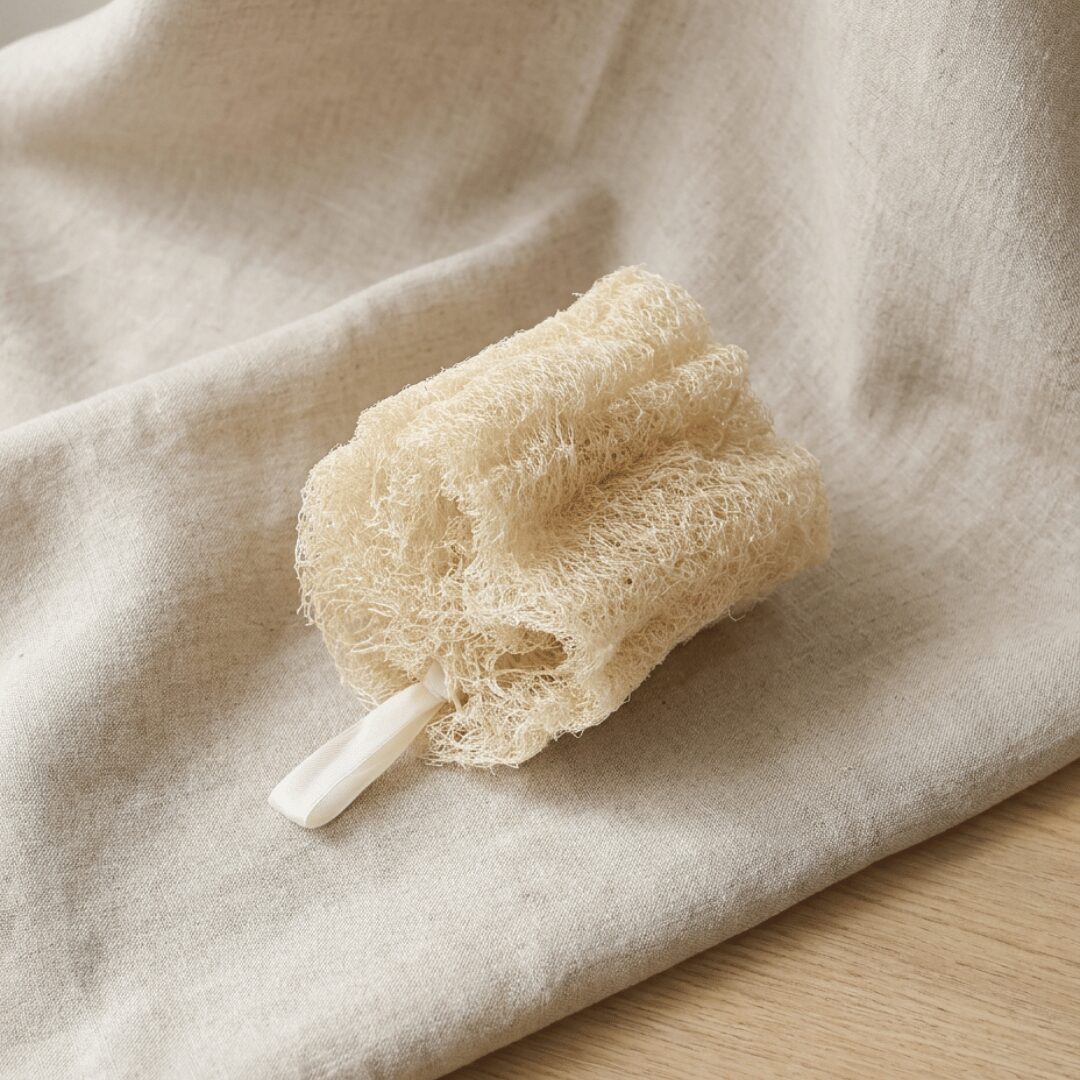
How to Use a Body Loofah and Make It Last
Both products: Wet the loofah under warm water for 20–30 seconds before first use. It will soften from firm and dry to a more flexible, slightly expanded texture. Apply your soap or body wash directly to the loofah or to your skin first; both work. Wash normally. Rinse thoroughly after use to remove soap residue and skin cells from the fibres.
After every use: Hang to dry. This is the single variable with the biggest impact on how long the loofah lasts and how hygienically it ages. A loofah that dries fully between uses will last three months or longer. One that sits wet on a shelf will develop mould within weeks.
Weekly: Rinse the loofah in warm water with a small amount of white vinegar, or soak briefly in water with a few drops of tea tree oil. Either will inhibit bacterial growth without affecting the loofah fibre. Squeeze gently; do not wring aggressively, which stresses the fibre structure.
When to replace: When the fibres begin to disintegrate, tear, or smell despite regular drying, the loofah is ready to retire. This typically happens at 2–3 months with normal use.
When to replace: When the fibres begin to disintegrate, tear, or smell despite regular drying, the loofah is ready to retire. This typically happens at 2–3 months with normal use.
End of life: Cut or tear into smaller pieces and add to a home compost bin or organic waste. The cotton elements (cord, trim, terry cloth) are also fully compostable. Nothing goes to landfill.
Meet Beewise
Beewise is an Amsterdam-based brand with a specific focus: replacing everyday plastic bathroom and kitchen products with plant-based, zero-waste alternatives. Their product range spans personal care and home, and every order ships plastic-free — reusing boxes and packing materials wherever possible.
The loofah body sponge and pad sit as examples of Beewise’s approach: find a conventional plastic product, identify the best natural material alternative, source it well, and sell it at an accessible price.
Our Verdict
There are very few product swaps that are simultaneously better for your skin, better for the environment, and cheaper over time than what they replace. The loofah is one of them.
Egyptian loofah exfoliates more effectively than a synthetic puff because its natural fibre network provides even, non-abrasive friction rather than the rougher mechanical scraping of woven mesh. It does not shed microplastics. It does not accumulate bacteria the way damp synthetic fibres do. It composts when it’s done.
Beewise sources its loofahs from Egypt, the provenance that matters for quality, and ships them from Amsterdam in entirely plastic-free packaging.
Buy the body sponge if you want the most efficient full-body lather and exfoliation, or if you simply want to replace your shower puff like-for-like in the most direct way possible.
Buy the loofah pad if you want dual-sided functionality, better control, gentler options for sensitive areas, or a compact format that works for travel as well as daily use.
Buy both if you want to cover every scenario. At these prices, it is not an extravagant suggestion.
Ready to Make the Switch?
One vegetable. Zero plastic. Compostable when done.
Green Goods Gallery earns a small commission if you purchase through these links, at no extra cost to you. We only feature products we genuinely believe in.