

Sustainable Sportswear: Brands That Actually Perform and How to Find Them
Your workout clothes are made of plastic. Every time you wash them, you’re releasing that plastic into the water system. Say no to sweating in petrochemicals. Discover sustainable sportswear that actually performs from a marketplace that’s done the verification, so you don’t have to: Shop Like You Give A Damn (SLYGAD).
🌿 Natural fibres that perform — organic cotton, TENCEL, hemp, and natural rubber replacing petroleum-derived synthetics
🚫 No PFAS, no microplastic shedding — natural fibre garments don’t release synthetic particles into waterways when washed
🧪 GOTS, Oeko-Tex, Fair Wear, B Corp — every brand on SLYGAD’s sportswear section is verified against independent certification standards, not self-declared
🏭 Fairly produced domestically — several brands, including Boldwill and ORGANICATION, manufacture within Europe under audited labour conditions, cutting transportation emissions
🐄 100% vegan — SLYGAD’s platform requirement; no animal-derived materials across any listed brand
♻️ Recycled content options available — GRS-certified recycled polyester for formats where natural stretch is still a technical challenge
The Problem With Conventional Sportswear
The activewear industry has built its identity around one idea: performance fabrics. Polyester, nylon, Lycra, elastane. Materials engineered for stretch, sweat-wicking, compression, and moisture management. The marketing is sophisticated. The environmental cost is less discussed.
Approximately 60% of all materials used by the fashion industry are made from plastic, according to UNEP, and the sportswear sector, with its near-total dependence on synthetic fibres, sits at the far end of that distribution.
When you wash a synthetic garment, microscopic plastic fragments, microplastics, are shed from the fabric and pass through wastewater treatment systems into rivers, lakes, and the ocean. The European Environment Agency estimates that up to 500,000 tonnes of synthetic microfibres are released into the ocean every year, the equivalent of 50 billion plastic bottles. Sportswear, washed more frequently than other garments because of sweat, contributes disproportionately to this figure.
Then there are the chemical treatments. Most conventional moisture-wicking sportswear achieves its water-repelling and sweat-management properties through chemical finishing processes. Many brands historically used PFAS, the “forever chemicals”, as durable water repellent (DWR) treatments. PFAS do not break down in the environment. They accumulate in human tissue.
The European Chemicals Agency is actively restricting their use, but existing garments and non-compliant imports continue to circulate. Independent testing by Bluesign, Oeko-Tex, and consumer protection organisations has found PFAS in sportswear from major brands at levels that exceed emerging safety thresholds.
You are sweating in these garments. Your skin is the most directly absorptive barrier in your body during exercise, when pores are open, and blood flow to the skin surface is elevated. The “performance fabric” touching your body during your most physically open state is, in the conventional version, primarily petroleum-derived and often chemically treated.
How Natural Fibre Sportswear Actually Works
The standard objection to natural materials in sportswear is performance: cotton holds moisture, wool is itchy, and natural fibres don’t stretch. This was largely accurate for the versions of these materials used in the 20th century. It is no longer an accurate description of what the best sustainable sportswear brands are working with.
Organic Cotton
Conventional cotton uses approximately 10% of global insecticides and 4.7% of global pesticide sales despite covering only 2.5% of arable land. GOTS-certified organic cotton eliminates synthetic pesticides and fertilisers, requires third-party supply chain auditing from fibre to finished garment, and prohibits hazardous chemical treatments in processing.
For sportswear, organic cotton’s performance advantage is in skin contact. Cotton is hydrophilic, meaning it absorbs moisture into the fibre rather than wicking it to the surface. This means it does not feel damp against the skin in the same way synthetic moisture-wicking fabrics do. Instead, it absorbs sweat and holds it away from the skin surface in the fabric. For lower-intensity activities such as yoga, walking, cycling, and gym training, this is comfortable and effective. For high-intensity endurance activities involving prolonged sweat exposure, a blend strategy is required.
TENCEL™ Lyocell
TENCEL is a branded lyocell fibre produced by Lenzing AG from certified wood pulp, primarily eucalyptus from sustainably managed forests in Austria. The production process uses a closed-loop solvent system in which over 99% of the solvent is recovered and reused, producing no toxic effluent.
The physical properties of TENCEL make it particularly suited to sportswear: it is smoother than cotton at the fibre level, which means less skin friction during movement. Its moisture management is significantly better than conventional cotton; it absorbs up to 50% more moisture than cotton. It releases it more rapidly, making it more effective at managing sweat in dynamic activity. It is also naturally resistant to bacterial odour formation because its smooth fibre surface does not provide the same hospitable environment for bacteria that rough natural fibres do.
TENCEL does not shed microplastics. It is fully biodegradable.
Hemp
Hemp is one of the most resilient natural fibres available and one of the least processed. It grows without pesticides (its natural pest resistance makes them unnecessary), requires significantly less water than cotton, and improves soil health rather than depleting it through crop rotation. Hemp fibre is naturally antimicrobial; it inhibits bacterial growth without chemical treatment, making it genuinely odour-resistant for sportswear use.
Historically, its limitation was stiffness: raw hemp fibre is considerably coarser than cotton. Modern processing techniques and blending hemp with TENCEL or organic cotton have substantially addressed this. The result is a fibre that is strong, fast-drying, antimicrobial, and produced without the chemical footprint of either conventional cotton or synthetic fibres.
Natural Rubber Elastane
The elasticity in conventional sportswear comes from elastane (also sold as Lycra or spandex), a petroleum-derived synthetic polymer. It is what makes a pair of leggings move with your body. Without it, most sportswear formats don’t work.
The most forward-thinking sustainable sportswear brands are beginning to replace synthetic elastane with natural rubber, specifically FSC-certified rubber from sustainably managed plantations. Natural rubber provides comparable stretch and recovery properties to synthetic elastane, biodegrades at the end of life, and is produced from a renewable tree-based source. It is not yet the standard in the industry, but it represents the most meaningful innovation in making sportswear genuinely plastic-free.
The Honest Trade-Off
For extreme-performance applications like competitive running, high-altitude outdoor sports, and technical cycling, the engineering of synthetic fabrics still has meaningful advantages in weight, compression consistency, and durability under sustained high-intensity stress. A marathon runner choosing between a TENCEL blend and a technical polyester short is making a legitimate performance trade-off.
For the majority of people exercising gym training, yoga, cycling, hiking, walking, pilates, and general fitness, the performance gap between well-designed natural fibre sportswear and synthetic sportswear is not meaningful. The comfort difference, in terms of skin feel and absence of chemical treatments, often favours natural materials. And the environmental difference is significant regardless of performance context.
Sustainable Sportswear Brands on SLYGAD
SLYGAD’s sportswear section has been verified against its 32-point ethical and environmental criteria. Every brand featured carries at least some certification: GOTS, Oeko-Tex, Fair Wear Foundation, PETA, or B Corp. Below are three brands whose material philosophy is worth understanding in detail, and a broader overview of the full range.
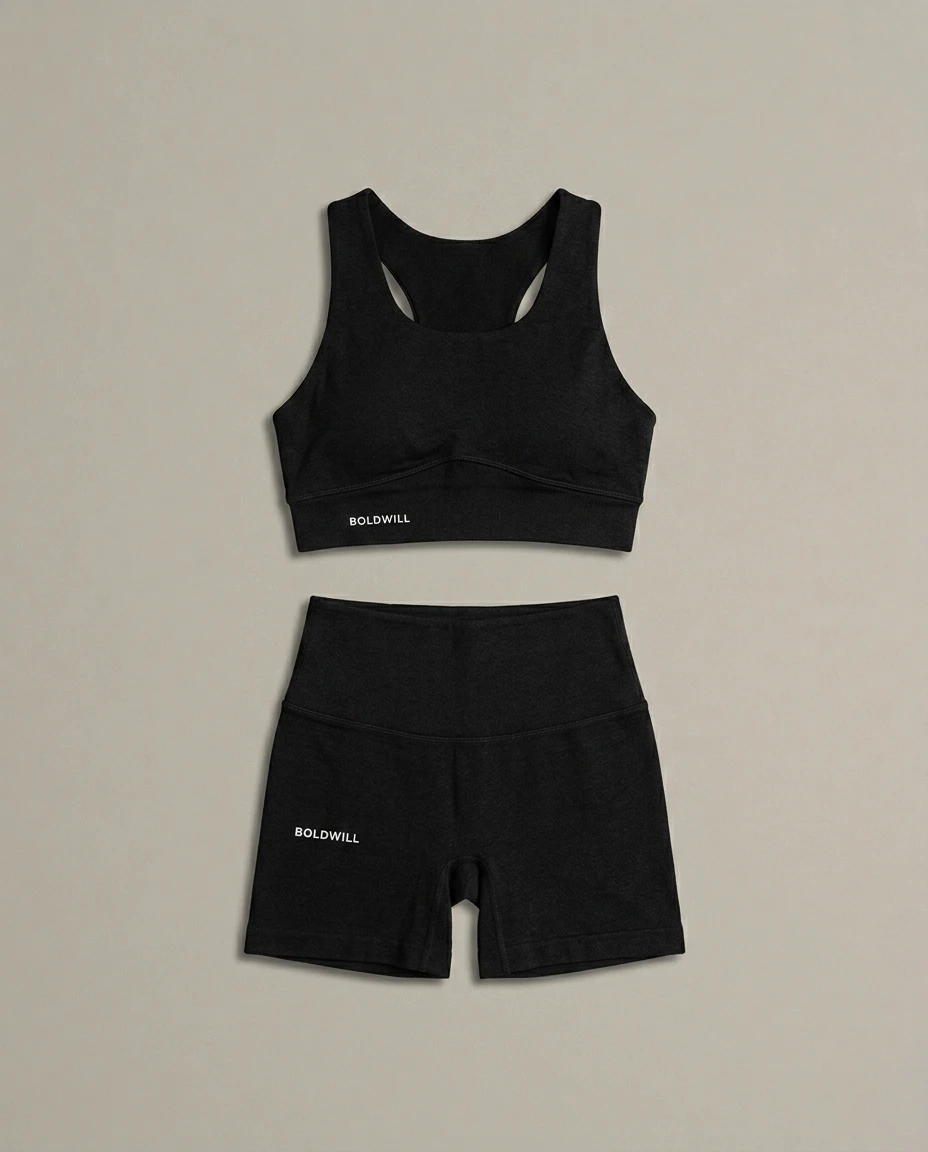
Boldwill: The Most Ambitious Natural Materials Approach
Designed in the Netherlands. Produced in Europe. 90%+ plant-based. Working toward fully plastic-free.
Boldwill was born from a specific question: can the light, functional feel of sportswear be achieved with natural materials? Their answer is yes, and they set out to prove it with a collection that is over 90% rooted in nature, using hemp, TENCEL, and organic cotton as their primary materials.
What sets Boldwill apart from most “sustainable sportswear” brands is their treatment of leggings specifically. Leggings are the format where almost every brand defaults to recycled polyester because natural fibres alone don’t provide the stretch needed. Boldwill has tested with combinations of organic cotton and TENCEL to achieve a fabric that is light, strong, and reportedly softer than cotton alone without synthetic content in the main fabric body.
For stretch elements like waistbands and elastic components, they use FSC-certified natural rubber from Malaysia rather than synthetic elastane. This is the innovation that matters most: replacing the petroleum-derived elastic with a certified renewable alternative is the hardest problem in natural sportswear, and Boldwill is one of the very few brands working on it seriously.
Their organic cotton is GOTS-certified and sourced from Greece and Turkey. Hemp comes from Lithuania. Production happens within Europe, a deliberate choice to maintain supply chain oversight and reduce transport emissions, in contrast to the industry norm of spreading production across multiple continents.
The factories they work with operate under strict European labour laws, with wages above the legal minimum, designed to constitute a genuine living wage.
Their stated goal, the “Road to Plastic Free”, is the complete elimination of synthetic content across the full product range. They are not there yet. They are transparent about where they still use synthetic elements and why, which places them in a different category from brands that greenwash around material complexity.
Best for: yoga, gym training, cycling, everyday fitness | Leggings, sports tops, shorts | Women and men
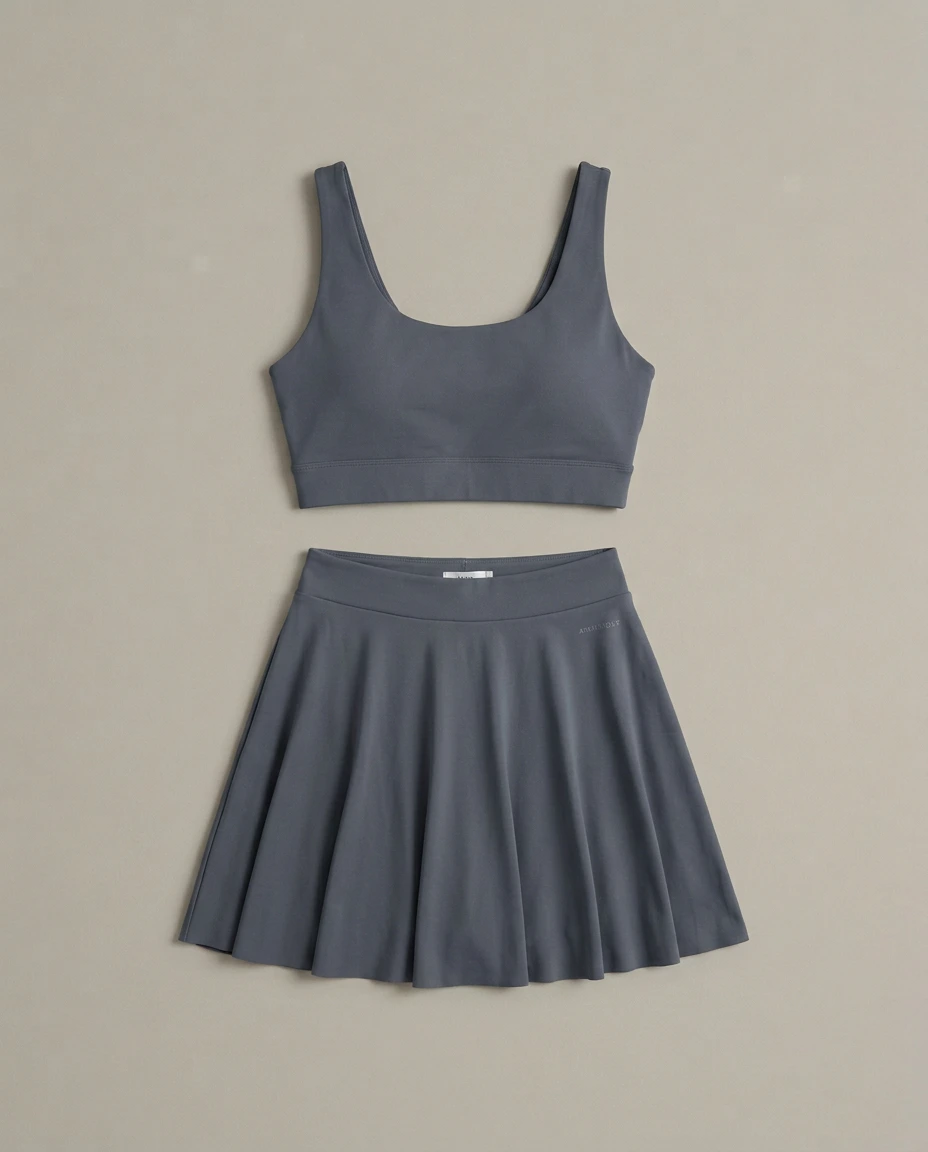
ORGANICATION: The GOTS-Certified Own-Factory Model (Women Only)
GOTS certified from fibre to finished garment. Own factory. PETA vegan. Affordable price point.
ORGANICATION produces its clothing in its own factory in Izmir, Turkey, which is itself GOTS certified, meaning the certification covers not just the fabric but the entire production facility. The materials used include GOTS-certified organic cotton, linen, TENCEL, and recycled polyester (REPREVE). The brand is PETA-approved vegan.
ORGANICATION’s stated concern is that clothing should have a positive effect on the lives of everyone involved: workers, the environment, and the customer. Organic cotton is specifically noted for its skin-friendly properties, making it appropriate for allergy-prone users as well as general sportswear.
Owning the production facility is a meaningful distinction in ethical fashion. Most brands contract manufacturing across multiple factories and rely on audits to verify conditions. ORGANICATION’s vertically integrated model means they can enforce standards directly rather than through a contractual chain.
Their sportswear range covers biker shorts, cycling leggings, sport skorts, jogging pants, sweatpants, and sport tops, at price points (€24.90–€59.90) that are significantly more accessible than many comparable certified-organic brands. The inclusion of recycled polyester (REPREVE, certified by the Global Recycled Standard) in some pieces is a pragmatic acknowledgement that eliminating synthetic stretch entirely is not yet viable across all formats, while REPREVE at least diverts post-consumer plastic from landfill rather than producing new petroleum-derived fibre.
Best for: cycling, running, yoga, gym | Full sport kit including leggings, shorts, tops | Women primarily, some unisex
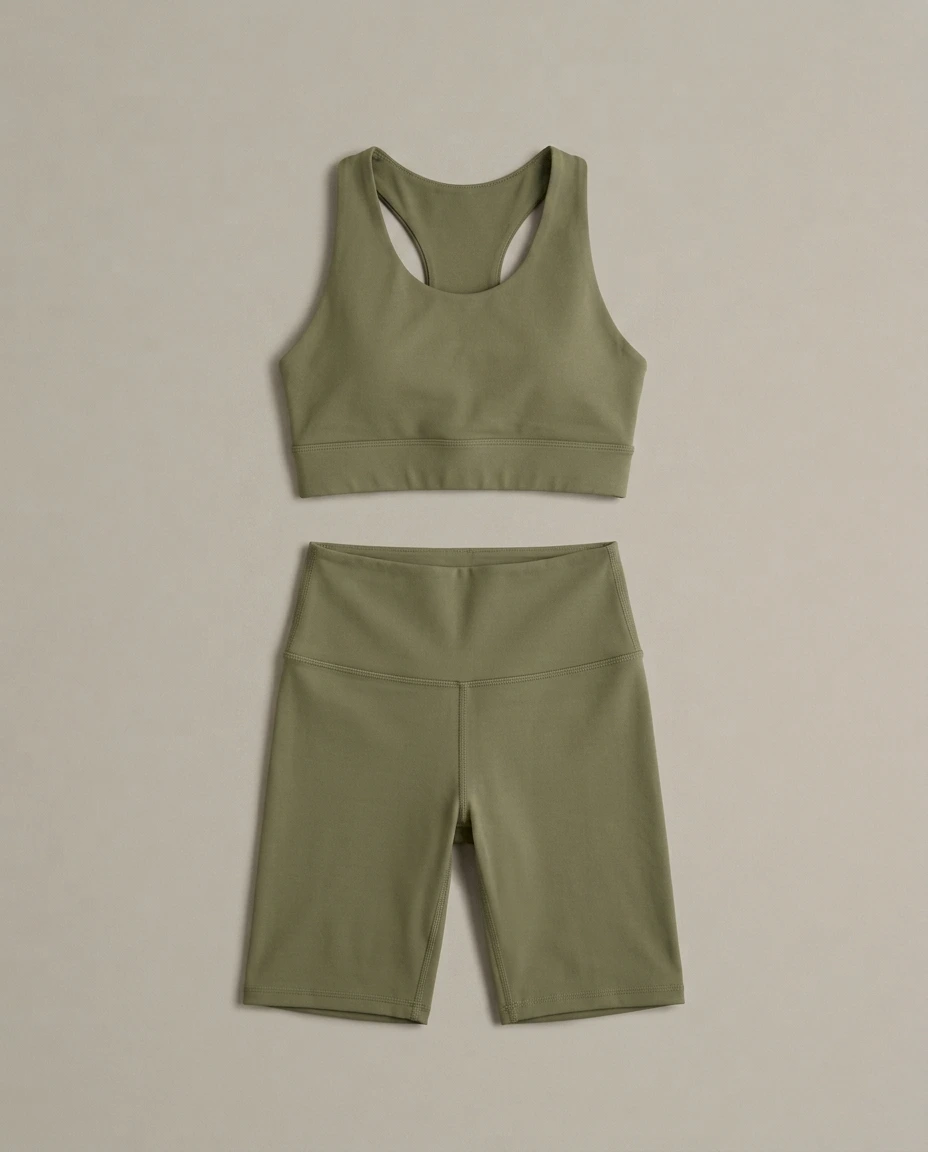
True North: The Athleisure-to-Street Bridge
Owned by Albero and Leela Cotton, with 25+ years of organic textile expertise. GRS recycled polyester, TENCEL, GOTS organic cotton. Functional design that transitions from sport to everyday.
True North is an athleisure brand with a specific focus on sustainability, owned by Albero and Leela Cotton, German companies with more than 25 years of experience in organic textiles. Their material approach uses three certified inputs: GRS-certified recycled polyester (produced from post-consumer PET bottles), TENCEL Lyocell from closed-loop wood pulp processing, and GOTS-certified organic cotton.
True North’s product positioning is explicitly transitional, designed for sport, outdoor use, and everyday life. The pieces are intended to be worn to the gym and then to a coffee meeting, reducing the total number of garments needed and the associated production footprint.
The GRS recycled polyester is worth noting: it does not eliminate microplastic shedding (recycled polyester sheds microplastics identically to virgin polyester), but it removes petroleum extraction from the supply chain for that input. For stretch performance in leggings and fitted tops, this remains the most common compromise position across the sustainable sportswear sector, one True North makes transparently rather than obscuring.
Best for: yoga, running, outdoor, everyday athleisure | Leggings, running shorts, sports tops, fleece layers | Women and men
Other Sustainable Sportswear Brands Worth Exploring on SLYGAD
The sportswear section on SLYGAD carries verified brands across multiple material approaches and price points. A selection worth filtering for:
- MANDALA — Specialises in yoga and movement wear, often using natural and organic fibres, with an emphasis on comfort and freedom of movement. Strong women’s range.
- The View Yoga — Yoga-focused brand. Natural materials, mindful design. Available for both women and men on SLYGAD.
- People Tree — Fair Trade pioneer, one of the longest-running ethical fashion brands globally, with organic cotton sportswear and activewear basics. Available in extended sizes.
- Girlfriend Collective — Uses recycled ocean plastics (ECONYL and similar certified recycled synthetics) rather than natural fibres. A legitimate recycled-material option if you need maximum performance stretch. Not natural-fibre based, but recycled and certified.
- CALAMOON — Women’s activewear focused on a minimal environmental footprint. GOTS and Oeko-Tex certified materials.
- DEDICATED — Swedish brand known for graphic organic cotton basics, including casual sport and athleisure. GOTS certified, wide size range.
- JAN ‘N JUNE — German brand using GOTS organic cotton and TENCEL, with a broad women’s range including sport-adjacent styles.
- KOMODO — UK brand using bamboo, organic cotton, and TENCEL. Fair trade certified, PETA vegan, certified B Corp. Sport and yoga range available.
- nice to meet me — Available in both women’s and men’s sportswear on SLYGAD. Sustainable materials, European production.
- DIRTS — Dutch brand with a men’s sport and outdoor focus, using sustainable materials including organic cotton and recycled fibres.
How to Filter on SLYGAD for Sportswear
SLYGAD’s filter system is the fastest way to narrow results to what matters to you:
By certification: GOTS (organic from field to garment), Oeko-Tex (tested for 100+ harmful substances), Fair Wear Foundation (labour standards), PETA Vegan, Recycled Claim Standard (verified recycled content)
By material: Organic cotton, TENCEL/Lyocell, hemp, linen, recycled polyester
By price: The sportswear range runs from approximately €20 for True North basics to €150+ for premium certified pieces
By activity: Use the sub-categories (leggings, sport tops, shorts, yoga pants) rather than browsing the full range. Sportswear on SLYGAD has 773 women’s items; sub-category filtering is the practical approach
What to Do With Activewear That You Already Own
If you currently own synthetic sportswear, which most people do, the most responsible immediate action is not to throw it away and replace it. That accelerates the waste problem rather than addressing it. The more responsible sequence:
- Use what you have. Wear it until it genuinely needs replacing.
- Wash it less frequently. Microplastic shedding happens during washing. Airing out sportswear after light use rather than washing after every session reduces shedding and extends garment life.
- Use a microplastic filter bag. Brands like Guppyfriend make wash bags that capture synthetic microfibres shed during machine washing. Not a perfect solution, but a meaningful reduction in what reaches the water system. For more eco-friendly washing solutions, check out our laundry page.
- When replacing, choose natural fibre alternatives. SLYGAD’s verified sportswear section is where to go.
Our Verdict
Sustainable sportswear is harder than sustainable T-shirts. The technical requirements of clothing designed for movement create legitimate challenges for natural fibre alternatives, and the brands doing this honestly, like Boldwill, ORGANICATION, and True North, acknowledge where compromises still exist rather than claiming perfect solutions that don’t yet exist.
The honest position: for yoga, gym training, cycling, hiking, and most forms of general fitness, well-designed organic cotton, TENCEL, and hemp sportswear perform comparably to synthetic alternatives. You will not notice the difference during a vinyasa flow or a spin class. You may notice that you sweat slightly differently, that the fabric feels softer against your skin, and that washing it doesn’t release plastic into the water system.
For high-intensity endurance sports like marathon running, competitive cycling, and triathlons, the performance gap is real and worth acknowledging. The best honest answer for that use case remains recycled-content synthetic (GRS-certified), which keeps petroleum out of the production chain while acknowledging that synthetic microplastics remain an unresolved issue.
SLYGAD’s verification framework means every brand in the sections above has been assessed against real criteria rather than self-declared sustainability claims. Filter by what matters to you, read the brand descriptions, and check the certification icons. The information is there.
Shop Sustainable Sportswear
Women’s Sportswear
| Category | Shop |
|---|---|
| Sport Tops | Shop Women → |
| Sport Bras | Shop Women → |
| Sport Leggings | Shop Women → |
| Yoga Leggings & Pants | Shop Women → |
| Sport Shorts | Shop Women → |
| All Women’s Sportswear | Browse All → |
Men’s Sportswear
| Category | Shop |
|---|---|
| Sport Tops | Shop Men → |
| Sport Trousers | Shop Men → |
| Yoga Leggings & Pants | Shop Men → |
| All Men’s Sportswear | Browse All → |
Green Goods Gallery earns a small commission if you purchase through these links, at no extra cost to you. We only recommend marketplaces and brands we genuinely believe in, and the slow fashion principle from our sustainable fashion page still applies here: buy only what you need, and look second-hand first.