


Sustainable Oral Care Products: Your Complete Dental Care Guide
A complete sustainable oral care routine from brushing to between-teeth cleaning to the thing you’ve probably never thought about with products that don’t cost the planet.
The Routine, In Order
A complete oral care routine doesn’t start and end with a toothbrush. It also doesn’t need to generate a pile of plastic every three months. Here’s how to build one that doesn’t:
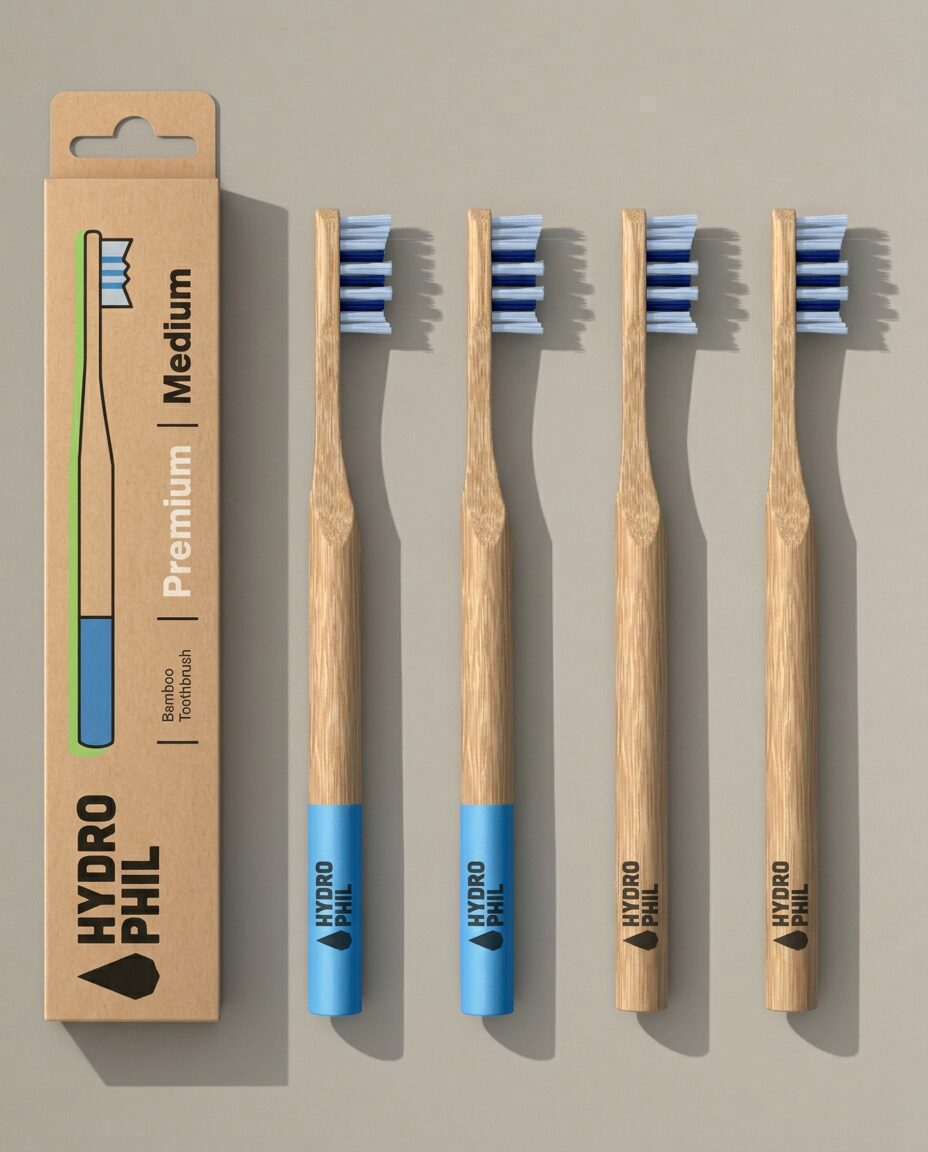
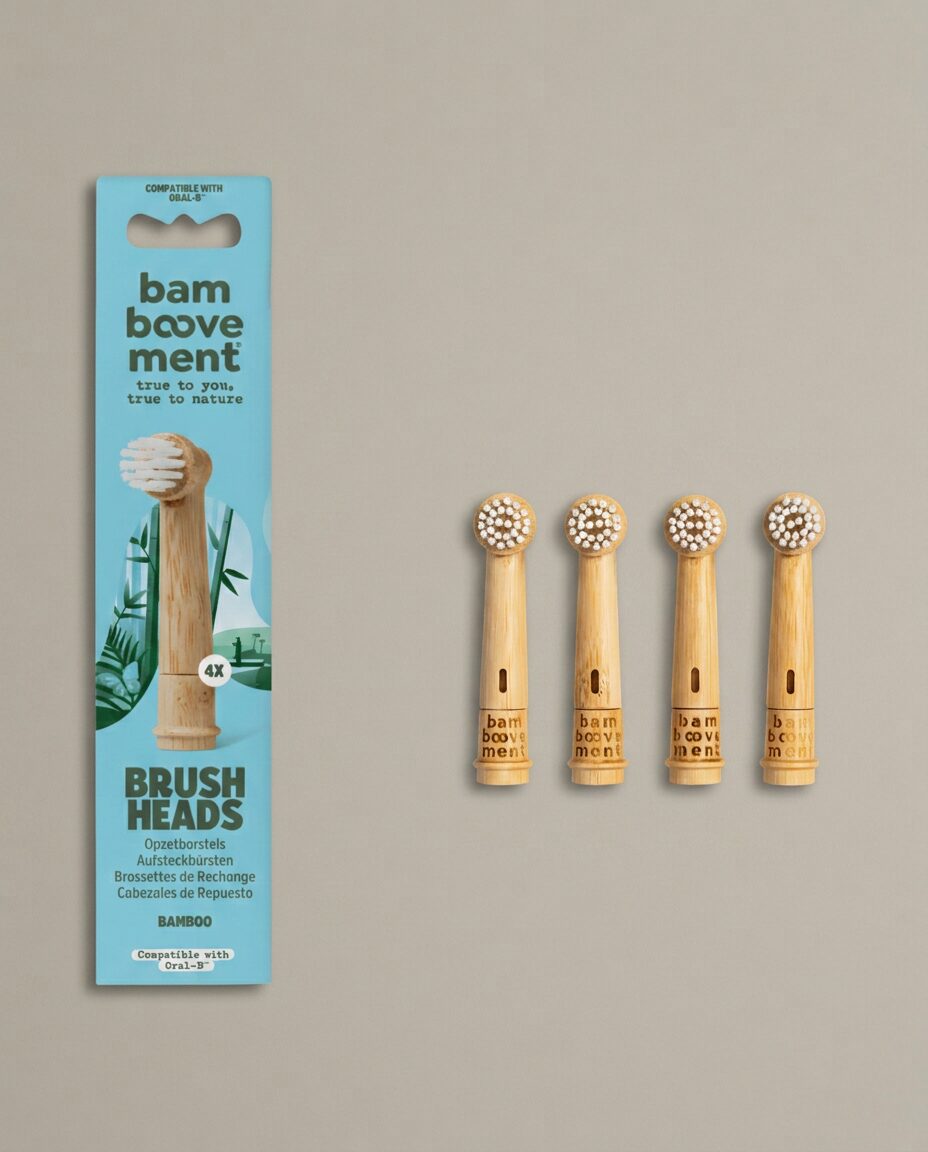
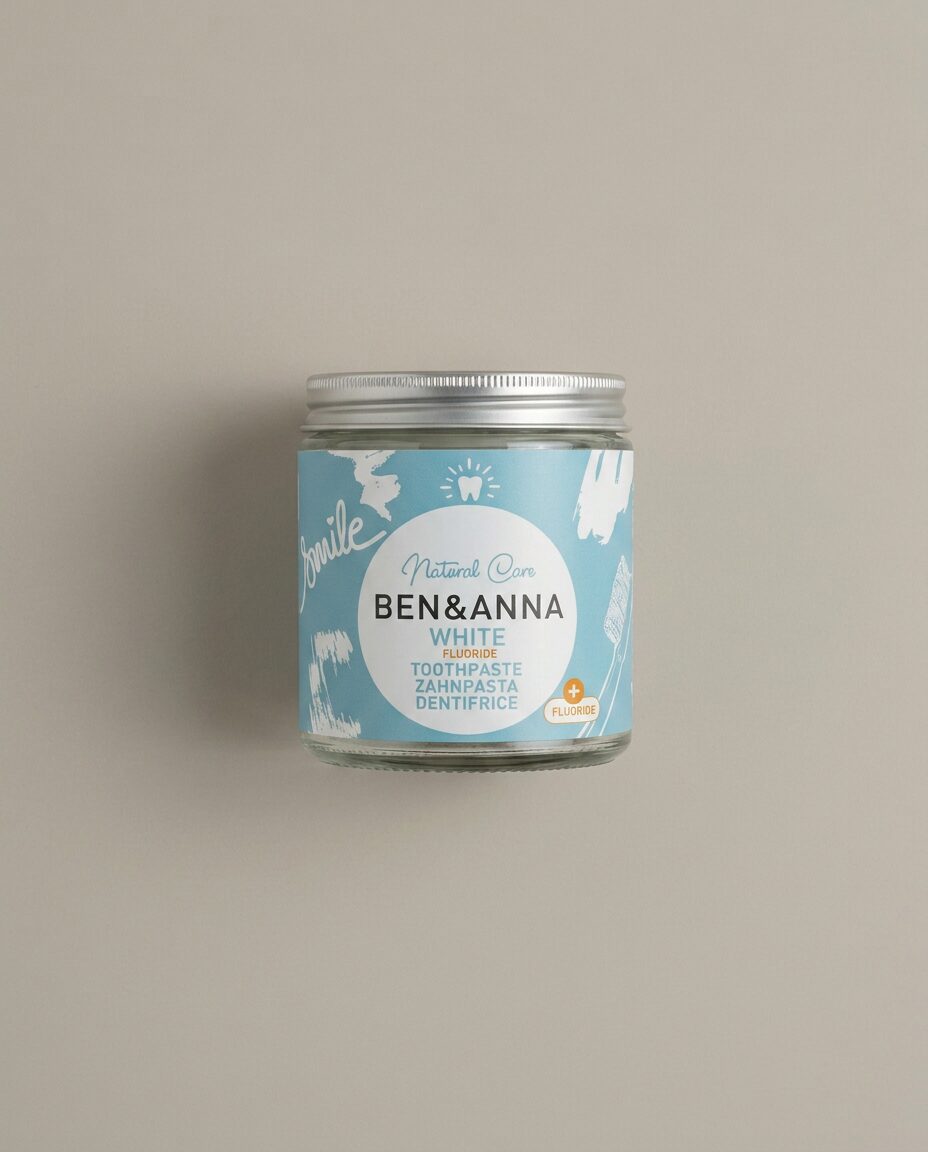
- Step 1 — Brush (Hydrophil bamboo toothbrush or Bamboovement brush heads for electric toothbrush users + Ben & Anna toothpaste in glass)
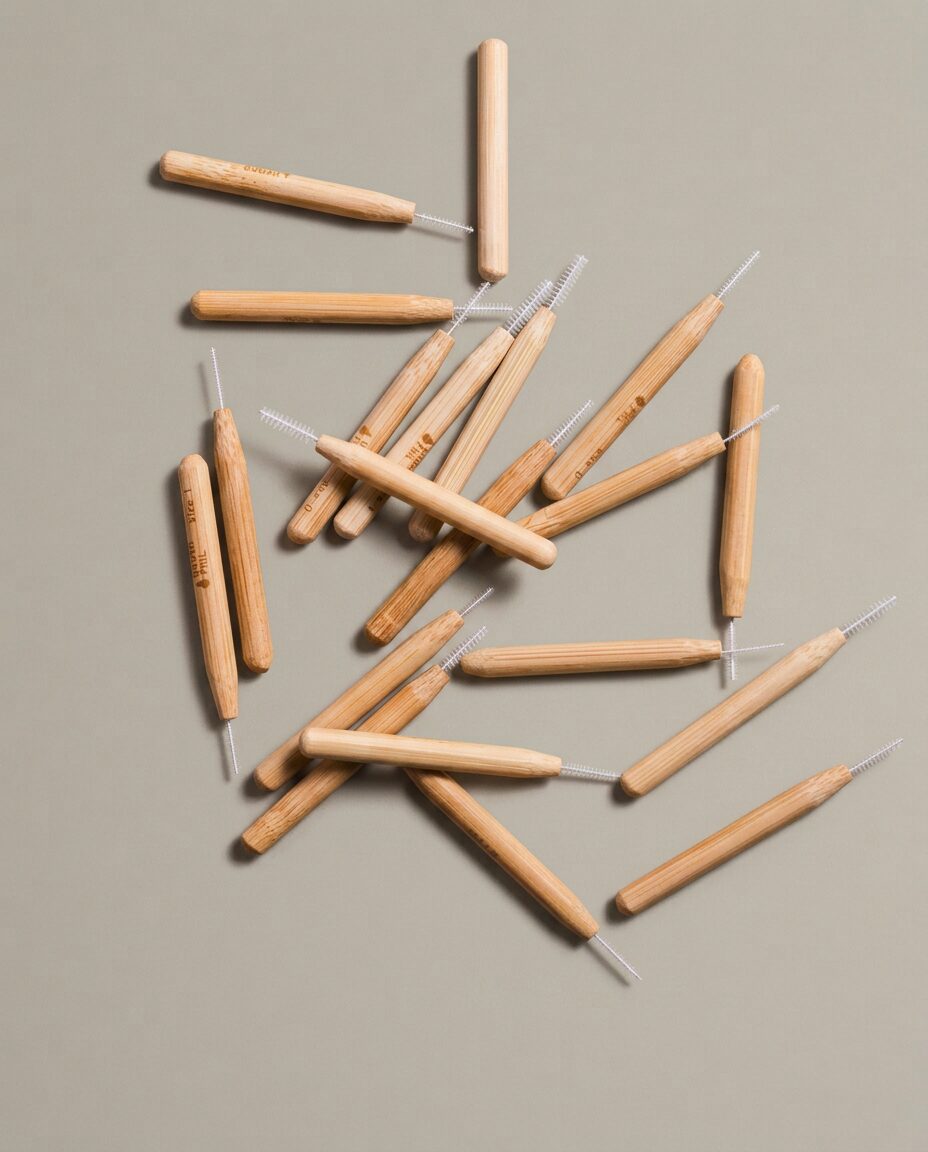
- Step 2 — Clean between teeth (Hydrophil bamboo interdental sticks)
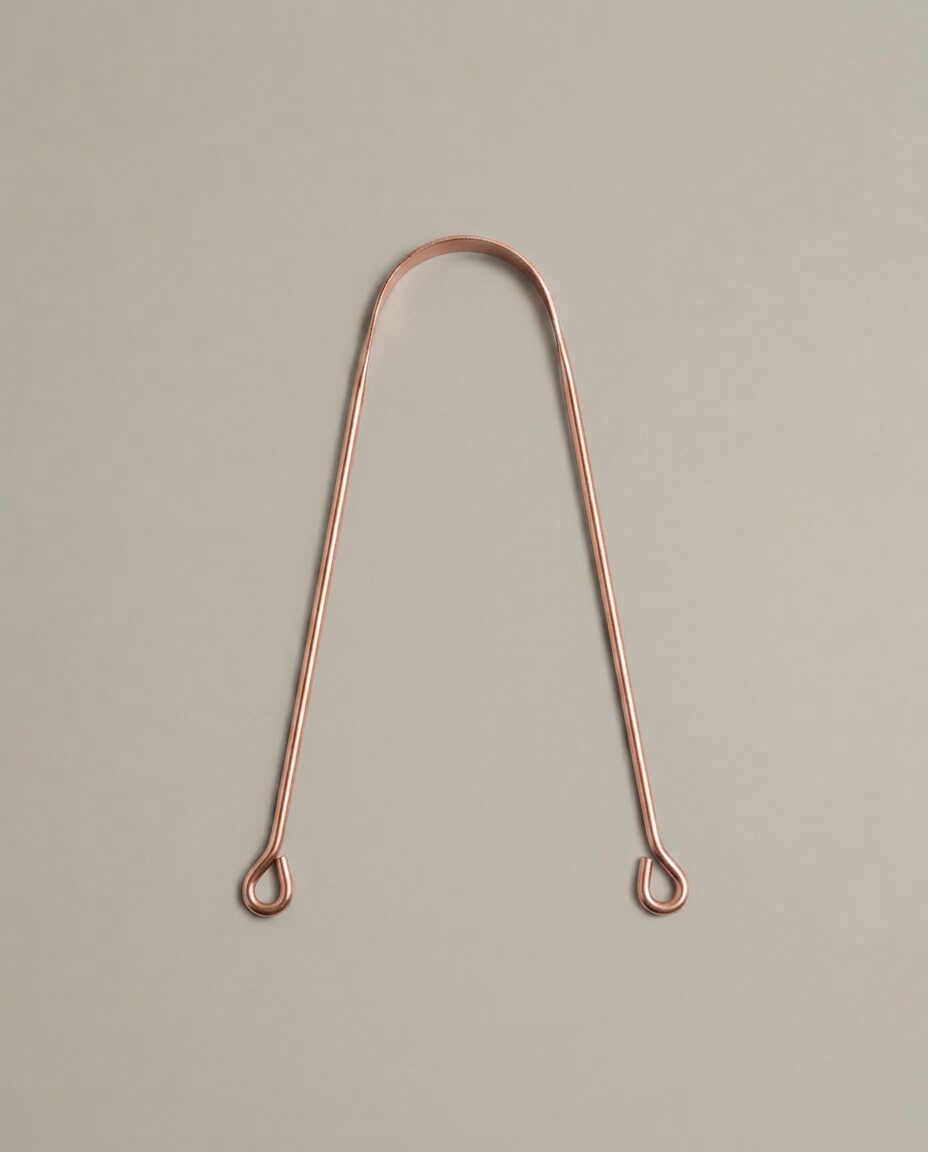
- Step 3 — Scrape your tongue (Beewise copper tongue scraper)
That’s the full routine. Each product below is explained in that order — what it is, why it exists, what to watch out for, and what real users say.
The Problem with Conventional Oral Care
Every conventional toothbrush is made almost entirely from polypropylene plastic and nylon, neither of which biodegrades in any meaningful timeframe. The average person replaces their toothbrush four times a year. That’s four pieces of single-use plastic per person, per year, destined for landfill forever. Globally, it adds up to roughly 4.7 billion plastic toothbrushes discarded annually.
The toothpaste tube underneath is a laminated, multi-layer plastic that most recycling facilities reject because the plastic-aluminium composite cannot be separated efficiently. The interdental pick with the small plastic handle lasts about a week and has no end-of-life pathway other than landfill.
Nobody in the conventional oral care industry designed these products to be disposed of responsibly, because nobody had to. They designed them to be convenient and cheap to produce. The result is a daily hygiene habit that generates a quiet, continuous stream of persistent waste.
The alternatives on this page do not compromise on hygiene. They are not niche wellness products. Two are made by Hydrophil, a German brand whose whole reason for existing is to produce water-neutral, plastic-free hygiene products; one is made by Ben & Anna, a German vegan couple who couldn’t find a natural deodorant they liked and ended up building a whole personal care line; and one is a single piece of copper from Amsterdam that will outlast everything else on this list.
Step 1A: Hydrophil Bamboo Toothbrush For Adults and Kids
🪨 Moso bamboo handle — biodegradable, grown without irrigation or pesticides
🌵 Castor oil-derived bristles — plant-based, BPA-free, petroleum-free
🌍 First climate-neutral toothbrush in Europe — certified by ClimatePartner
🐄 100% vegan — PETA certified, no animal testing
♻️ Recycled cardboard packaging — plastic-free
💧 Water-neutral — natural colours that leave no chemical residue in water
What it actually is
A bamboo-handled toothbrush with medium-soft bristles derived from castor oil — the oil pressed from Ricinus communis, the castor bean plant — rather than petroleum-based nylon. The handle is Moso bamboo, varnished with solvent-free AURO natural lacquers, packaged in recycled cardboard.
One Moso bamboo plant, over its two-year growth phase, absorbs approximately 18 metric tonnes of CO2 from the atmosphere and can yield up to 100 toothbrushes. The plant doesn’t require replanting. It regenerates from its root system. The growing region near Lishui provides ideal conditions without artificial intervention.
The bristle caveat and why it matters
Almost every bamboo toothbrush on the market uses petroleum-based nylon bristles, which are not compostable. Hydrophil’s castor oil-derived bristles are a meaningful improvement: they are plant-based, BPA-free, and petroleum-free, and will break down in compost over roughly 12 months rather than persisting as microplastics. They are not identical to conventional nylon in performance, but in practice, the cleaning quality is indistinguishable for normal dental hygiene.
End of life: snap or cut the toothbrush head off. The bamboo handle goes into the home compost or organic waste. The bristle head goes into residual waste. It is not the perfect zero-waste product, but it is vastly better than a conventional plastic toothbrush on every material dimension.
Reviews
“We have not regretted switching to bamboo. The handle is easy to use and the bristles are a really good firmness — medium so not too rough on your gums but you feel you’re getting a great clean.” — Verified buyer, Babipur
“It cleans really well and the bristles don’t hurt my gums. A great eco swap, definitely worth giving a try for anybody thinking of switching.” — Verified buyer
One honest note: a minority of users report that the bristles splay faster than conventional nylon after several weeks of use. If this happens, replace at 8–10 weeks rather than the standard 12. The bristle material is genuinely different from petroleum nylon, which means its wear characteristics are slightly different too.
Step 1B: Bamboovement Bamboo Brush Heads, Oral-B and Sonicare Compatible
🪨 FSC® 100% certified bamboo — responsibly sourced, 99% plastic-free construction
🌵 Castor oil-derived bristles — plant-based, BPA-free, petroleum-free
🔄 Fits most Oral-B® electric toothbrushes — works with what you already own
🎯 Laser-engraved unique icon per head — tells them apart in a shared bathroom
✅ Dentist-tested and approved
🏆 B Corp certified — Bamboovement achieved B Corp status in 2024
What it actually is
If you already own an Oral-B® electric toothbrush, the conventional upgrade path generates around four small plastic brush heads per person per year, indefinitely. These are Bamboovement’s answer to that: bamboo brush heads designed to fit the same rotating mechanism, with the same castor oil-derived bristles found on the Hydrophil manual brushes above, and a natural wax finish that is noticeably soft against lips and gums compared to conventional plastic.
This is genuinely novel. Electric toothbrush brush heads are one of the few oral care components that have had no credible plastic-free alternative until very recently — Bamboovement launched these in 2025, making them the first bamboo brush heads compatible with Oral-B® on the market. The bamboo is FSC® 100% certified, meaning the sourcing chain is independently verified. The 99% plastic-free figure refers to the brush head itself; the small central connection mechanism that attaches to the rotating handle is the remaining 1%, and there is no practical way around that with current engineering.
Each pack contains 4 brush heads, each with a different laser-engraved icon so multiple family members can identify their own without labelling or guessing.
One honest note on the electric toothbrush question
Using a bamboo brush head on an Oral-B® handle is meaningfully better than using a conventional plastic replacement head. But the electric toothbrush handle itself — the body you hold, with the motor and battery — is plastic and electronics, and will eventually become e-waste. If you already own one, these brush heads are the right choice. If you’re buying from scratch and are comfortable with a manual toothbrush, the Hydrophil bamboo brush above is the simpler, lower-footprint option: no battery, no motor, nothing to eventually dispose of beyond the handle and bristle head.
Both are better than a conventional plastic toothbrush. They’re just better in different ways and for different starting points.
Step 1C: Ben & Anna Natural Toothpaste White with Fluoride
🫙 Glass jar with metal lid — no plastic packaging
🦷 Contains fluoride (sodium fluoride) — effective cavity protection, dentist-recommended
🌿 No SLS, parabens, phthalates, microplastics, triclosan, or formaldehydes
🍍 Pineapple enzyme — natural whitening agent
🌊 Sea buckthorn and chamomile — enamel protection and gum care
🐄 Vegan, cruelty-free — NaTrue certified natural cosmetics
What it actually is
A natural toothpaste in a glass jar with a wooden spatula, fluoride included. This is important to state clearly: many natural toothpaste brands skip fluoride on the grounds of naturalness, which is a choice that runs against the consensus of every major dental authority globally. Ben & Anna offer both fluoride and fluoride-free versions — we’re recommending the fluoride version because cavity prevention is not optional for most people.
Variants available: White (peppermint), Orange (mild citrus), Black (charcoal + activated whitening), and Sensitive. All are available with or without fluoride. The White variant is the closest to a conventional toothpaste taste experience and the easiest first swap for people who are attached to “minty fresh.” Other variants are currently not available on Amazon. We’ll update our links when they become available.
The ingredients, explained
Hydrated Silica is the abrasive. It is the same gentle polishing agent used in many mainstream toothpastes, responsible for removing surface stains without damaging enamel. The RDA (relative dentine abrasivity) score places it in the safe range for daily use.
Xylitol is a naturally occurring sugar alcohol that actively inhibits the growth of Streptococcus mutans, the main bacteria responsible for cavities. It is derived from plant sources and sweetens the paste without feeding bacteria, the opposite of conventional sugar.
Lauryl Glucoside is the foaming agent, a non-ionic, plant-derived surfactant that replaces SLS (Sodium Lauryl Sulfate), which is the ingredient in conventional toothpaste most associated with mouth ulcer risk in sensitive individuals.
Pineapple Enzyme (Ananas Sativus Fruit Extract) contains bromelain, a protease that breaks down protein-based stains on tooth surfaces. This is the whitening mechanism, enzymatic rather than chemical bleaching.
Sea Buckthorn (Hippophae Rhamnoides) is rich in vitamins A, C, and E. In the formula, it supports gum tissue and enamel protection.
Chamomile and Aloe Vera provide anti-inflammatory support for gum tissue and mucous membranes.
Sodium Fluoride at approximately 320 ppm provides cavity protection. This is on the lower end of the fluoride concentration. Standard adult toothpastes run 1,450 ppm — so it is appropriate for everyday use and safe for households where children also use the jar.
How to use it
The jar comes with a small flat wooden spatula. Take a pea-sized amount on the spatula, transfer to your brush. If you live alone and are comfortable doing so, dipping the brush directly works fine too; just keep the brush clean. The texture is very close to conventional toothpaste and brushes identically. Adjust to the absence of the petroleum-derived gloss in the first few uses.
One honest note
The jar format means you can’t squeeze the last bit out from the bottom the way you do with a tube. When the jar looks empty, there are usually 3–5 more uses stuck to the sides and bottom. Use a spoon or the spatula to collect it. And yes, the wooden spatula is a mild annoyance if you’ve never used one. Most users abandon it within a week and just dip the brush.
Step 2: Hydrophil Bamboo Interdental Sticks
🪨 100% bamboo handle — biodegradable
🔩 Metal wire + BPA-free nylon bristles — the same construction as conventional interdental brushes, just without the plastic handle
📐 4 sizes — ISO 0 (0.40 mm), 1 (0.45 mm), 2 (0.50 mm), 3 (0.60 mm)
🧼 Reusable for 7–14 days — rinse and store between uses
📦 Plastic-free cardboard packaging
What it actually is
A bamboo-handled interdental brush, the tiny cylindrical brush you push between your teeth, in four ISO standard sizes. The construction is identical to conventional interdental brushes: a thin metal wire core wound with nylon bristles. The difference is the handle, which on a conventional product is a short plastic stick, and here is a short bamboo stick.
This matters because the handle is the part that ends up in the bin. The bristle assembly — wire and nylon — still goes into residual waste regardless of brand or material. Hydrophil is transparent about this. The bamboo handle can be separated and composted; the bristle head cannot.
Choosing your size
Size matching matters more than people expect. The interdental brush should slide into the gap between your teeth with light pressure — not force. If it does not fit without forcing, go smaller. If it fits easily and barely touches the tooth surfaces on either side, go larger. Most people have gaps of different sizes in different areas of their mouth, which is why the pack contains a single size: buy the size your dentist recommends, or start with Size 1 or 2 and adjust from there.
If you’ve never used interdental brushes at all: your dentist has been recommending them and you have been nodding politely. They are right. Flossing and interdental brushing remove plaque from surfaces a toothbrush cannot reach, and the evidence for reduced gum disease is strong. The bamboo handle version removes one objection from the habit-forming equation.
End of life
Use for 7–14 days. Rinse under water after each use and store dry. When finished, snap the bamboo handle off and compost it. The bristle assembly goes into residual waste. Do not attempt to separate individual bristle fibres — it is not necessary and not possible in any practical sense.
Reviews
“This was an eco swap to replace my husband’s usual plastic interdental brushes. They are just as good, if not better. They come in plastic-free packaging too.” — Verified buyer, Babipur
“These are fantastic! Before making the swap I was using these awful plastic things and they’re kinder on my gums. Better for the environment and still able to look after yourself.” — Verified buyer
Step 3: Beewise Copper Tongue Scraper
🟤 100% pure copper — naturally antimicrobial, no plastic content
♾️ Lasts indefinitely — buy it once, keep it for years
🦠 Removes bacteria, debris, and dead cells that a toothbrush does not reach
👅 Improves taste perception — removing the bacterial film from taste buds is real
📦 Ships plastic-free from Amsterdam
What is tongue scraping and why should you care
Your tongue is a porous surface covered in papillae, the little bumps that contain your taste buds. Overnight and throughout the day, bacteria, food particles, and dead cells accumulate on that surface in a visible film: the white or yellowish coating you sometimes notice on your tongue in the morning.
A toothbrush is designed to clean enamel, a hard, smooth surface. It is not designed for the soft, irregular surface of the tongue, and it does not remove this bacterial layer effectively. A tongue scraper is a U-shaped tool drawn from the back of the tongue to the front.
This is not alternative wellness speculation. Studies confirm that tongue scraping significantly reduces volatile sulfur compounds (VSCs), the specific molecules responsible for bad breath. Tongue scraping outperforms tooth brushing for this purpose. More than that, the bacterial layer on the tongue contributes to plaque formation on teeth over time. Removing it daily is a meaningful part of oral hygiene, not an optional extra.
Why copper specifically
Copper is inherently antimicrobial. It disrupts the cellular membranes of bacteria and kills or inhibits their growth on contact. This property has been recognised in Ayurvedic tradition for millennia and confirmed by modern microbiology. What it means practically: a copper scraper does not require the same level of cleaning between uses as stainless steel or plastic, because bacteria do not survive on its surface the way they do on inert materials. It is also more gentle on tongue tissue than harder metals, and softer in contact than a plastic scraper.
Copper tarnishes over time. It will develop a patina. This is oxidation, not contamination, and does not reduce its antimicrobial properties or make it unsafe. Rinse under warm water after each use. If you want to restore the shine, rub with a cut lemon and salt for 30 seconds.
How to use it
Do this before brushing, first thing in the morning, on an empty stomach.
- Hold one end of the U-shape in each hand.
- Place the curved edge at the back of your tongue — go as far back as is comfortable, not further.
- Apply light pressure and draw the scraper from back to front in one smooth stroke.
- Rinse the scraper under running water.
- Repeat 3–5 times, covering the centre and both sides of the tongue.
- Rinse your mouth, then brush as normal.
The first use will likely produce a visible coating on the scraper. This is normal, slightly disgusting, and exactly the point.
Meet the Brands
Hydrophil
Three friends, Christoph, Sebastian, and Wanja, met while volunteering for Viva con Agua de Sankt Pauli, a non-profit focused on clean water access. In 2013, after running a blog about water scarcity and pollution, they decided to build something instead: a hygiene brand whose products were water-neutral, vegan, and Fairtrade from the first principle.
“Hydrophil” comes from hydrophilic — water-loving. The products are manufactured near the Moso bamboo growing region in Lishui, China, keeping supply chains short. Bamboo is grown without artificial irrigation or pesticides and is processed locally before shipping. The bristle material is derived from castor oil rather than petroleum. Packaging is recycled cardboard, plastic-free.
10% of all Hydrophil profits go back to Viva con Agua, funding clean drinking water projects in the Global South. They are PETA-certified vegan and cruelty-free, and were the first toothbrush brand in Europe to be certified climate-neutral.
Bamboovement
Brothers Joshua and Ainu grew up off-grid in the Basque Pyrenees, then watched a seagull entangled in plastic wash up on a shoreline. In 2019, they founded Bamboovement in Amsterdam to build personal care products that work as well as their plastic equivalents without the persistent waste. Their product line runs from bamboo toothbrushes to FSC-certified razors, and in 2025 they became the first brand to produce bamboo brush heads compatible with Oral-B® electric toothbrushes, a gap that had somehow remained unfilled for decades. They achieved B Corp certification in 2024 and hold FSC® 100% certification for their bamboo sourcing. Currently stocked in over 1,000 locations across Europe, including Etos and Dille & Kamille.
Ben & Anna
Ben and Anna are an actual couple, living in rural Germany, who built a personal care brand out of frustration with what existed. They started with deodorant because they couldn’t find one that was aluminium-free, vegan, and worked. Then they expanded from there into toothpaste, shower products, and more. Everything is made from ingredients of natural origin, certified to NaTrue natural cosmetics standards, vegan, and packaged in glass or aluminium rather than plastic.
Their toothpaste range comes in a glass jar with a small wooden spatula. Yes, the spatula is slightly unnecessary if you live alone and have no problem with your own toothbrush dipping into the jar. They include it for hygiene and household-sharing reasons.
Beewise
Beewise is an Amsterdam-based brand with a specific focus: replacing everyday plastic bathroom and kitchen products with plant-based, zero-waste alternatives. Their product range spans personal care and home, and every order ships plastic-free, reusing boxes and packing materials wherever possible. Their copper tongue scraper is what it is: a single piece of pure copper, anatomically shaped, lasting indefinitely with basic care. Nothing more complicated than that.
Our Verdict
The oral care category is one of the highest-frequency plastic generators in the household. Most people brush twice a day, replace their toothbrush every 3 months, use a tube of toothpaste monthly, and dispose of interdental brushes weekly. None of that waste is necessary in the material forms it currently takes.
Hydrophil is one of the most credible bamboo oral care brands on the European market; genuinely climate-neutral, Fairtrade, and transparent about what its products can and cannot do. Ben & Anna’s toothpaste is the most practical glass-jar toothpaste available that does not sacrifice fluoride for aesthetics. The copper tongue scraper is a permanent replacement for a disposable plastic object. You buy it once, and it outlasts every other item on this page.
If you use an Oral-B electric toothbrush, Bamboovement’s brush heads are the right swap. It’s the first bamboo option that actually fits the rotating mechanism, from a B Corp-certified Amsterdam brand that has been doing this since 2019. The handle you already own stays in use; only the head gets replaced, and now that head doesn’t have to be plastic.
The complete set is a full eco oral care routine. The only concession worth acknowledging honestly: the interdental bristle assemblies still go into residual waste, because the wire-and-nylon structure cannot currently be separated from the bamboo handle for composting. Hydrophil is transparent about this. It is still significantly better than an all-plastic interdental brush, but it is not zero-waste at the end of life.
Starting from scratch? Go with the Hydrophil manual toothbrush and Ben & Anna toothpaste, no battery, no motor, nothing to eventually become e-waste. Already own an Oral-B? The Bamboovement brush heads are your entry point. Either way, add the interdental sticks when your current ones run out, and buy the tongue scraper once and stop thinking about it.
Shop the Full Routine
- Hydrophil Bamboo Toothbrush — Adults →
- Hydrophil Bamboo Toothbrush — Kids →
- Shop Bamboovement Brush Heads →
- Ben & Anna Natural Toothpaste with Fluoride →
- Hydrophil Bamboo Interdental Sticks →
- Beewise Copper Tongue Scraper →
Green Goods Gallery earns a small commission if you purchase through these links, at no extra cost to you. We only feature products we genuinely believe in.