
Eco-Friendly Menstrual Care Products: Cups, Pads, Tampons, and Period Underwears
Your period products contain plastic. They also touch the most absorbent tissue in your body. Three levels of switches with eco-friendly menstrual care products. Pick your comfort zone and start there.
The Science Behind Conventional Menstrual Care Products
Modern disposable menstrual products are largely made from synthetic materials. According to a 2025 peer-reviewed study published in PMC Women’s Health, pads and tampons have constantly evolved as new synthetic materials were invented and are now made of over 90% plastic.
Conventional pads typically contain:
- Polyethylene plastic — the leak-proof backing layer, non-recyclable and non-biodegradable
- Superabsorbent polymers (SAPs) — petroleum-derived crystals that provide the gel-like absorbency
- Chlorine-bleached pulp — standard chlorine bleaching produces dioxin and furan by-products, chemical compounds classified as persistent organic pollutants by the Stockholm Convention
- Synthetic fragrances — added to mask odour, unnecessary, and a known cause of contact dermatitis in vulval tissue
- Latex — in the adhesive wings, a common allergen
Conventional tampons often contain:
- Rayon — a synthetic fibre derived from wood pulp, highly absorbent but prone to shedding micro-fibres into vaginal tissue, and associated with faster drying of the vaginal mucosa
- Pesticide residues — cotton is one of the world’s most heavily sprayed crops; non-organic cotton contains residues of pesticides that persist through processing
- Plastic applicators — conventional plastic or so-called “plant-based plastic” applicators that do not biodegrade
- Synthetic security veils — thin plastic films used to prevent fibre shedding, adding to plastic content without disclosure
None of this is in a warning label. The EU does not currently require full ingredient disclosure for menstrual products. You have been using an unlabelled product in close contact with highly absorbent tissue, multiple times a month, for decades.
The Waste Problem
In the European Union alone, 49 billion single-use menstrual products are consumed annually. A person can expect to use approximately 10,000 menstrual products in their lifetime.
Disposable pads are estimated to take 500 to 800 years to break down in a landfill, and materials such as plastic never truly biodegrade.
In a lifetime, a single person who menstruates will use somewhere between 5,000 and 15,000 pads and tampons and is expected to throw away roughly 400 pounds of period product packaging, as cited by Global Citizen.
The three options on this page address different points on the waste and ingredient spectrum. None requires you to change your entire routine at once.
Level 1: Natracare — Organic Cotton, No Plastic
Founded in 1989. The first certified organic tampon brand in Europe. Still run by its founder, Susie Field.
🌿 100% GOTS-certified organic cotton — no rayon, no synthetic fibres, no pesticide residues
🚫 No SAPs, no plastic backing, no synthetic fragrance, no latex, no dyes
🧪 Totally Chlorine Free (TCF) bleaching — no dioxin or furan by-products
♻️ Industrially compostable pads and liners — certified to EN 13432 (Seedling Mark)
🌱 Tampons are 100% home compostable — cotton biodegrades; do not flush
📦 Cardboard applicator option — biodegradable and recyclable; not plant-based plastic
🏅 GOTS, Nordic Swan, Seedling Mark, EPD certified — the most certified period brand in Europe
🔬 Publicly available heavy metals test results — zero detectable traces in 2024 independent audits
Why Natracare Exists
In 1989, Susie Field read research linking chlorine bleaching of menstrual product pulp to dioxin contamination and decided to make something better. Natracare became the first brand in Europe to make certified organic tampons, and has remained independently owned ever since. The product range has never contained rayon, synthetic additives, plastic applicators, fragrances, or SAPs. Every ingredient is listed on the packaging, something most mainstream brands still do not do.
Their certification stack is one of the most thorough in the category:
- GOTS (Global Organic Textile Standard) — the gold standard for organic textiles, independently verified by the Soil Association (licence GOTS-11347). (See Natracare certifications page)
- Nordic Swan Ecolabel — all pads and liners carry the Scandinavian environmental approval, audited across the product lifecycle
- Seedling Mark (EN 13432) — Ultra pads, Ultra Extra, Maxi pads and panty liners are certified industrially compostable
- EPD (Environmental Product Declaration) — Natracare was the first period product brand to publish a scientifically validated lifecycle carbon assessment for their products
- Heavy metals testing — independently tested annually; 2024 results show no detectable traces of heavy metals across all tampon variants
The Products
Organic Cotton Tampons — Non-Applicator
The simplest format: 100% GOTS-certified organic cotton, no applicator, no plastic anywhere in the product. The cotton is long-fibre, which means it holds together throughout use without shedding, unlike rayon, which sheds shorter fibres into vaginal tissue. Natracare uses a Totally Chlorine Free (TCF) bleaching process, which does not produce dioxin or furan by-products.
Available in Regular, Super, and Super Plus absorbencies. The tampon expands widthwise rather than lengthwise, important for comfort and fit.
End of life: 100% compostable. Home compost or organic waste. Do not flush. 100% compostable. Home compost or organic waste. Do not flush.
The TSS note: Natracare states that their 100% cotton tampons have never been linked to any reported case of Toxic Shock Syndrome. TSS has historically been associated with high-absorbency rayon or rayon-cotton blend tampons. Cotton does not carry the same risk profile, but standard tampon safety guidance applies regardless: change every 4–6 hours, use the lowest absorbency for your flow, and do not sleep in a tampon.
Natracare Cotton Tampons Regular →
Natracare Cotton Tampons Super →
Natracare Cotton Tampons Super Plus →
Organic Cotton Tampons with Cardboard Applicator
The same 100% GOTS-certified cotton tampon, with a biodegradable cardboard applicator. Natracare is direct on one important point: plant-based plastic applicators (sold by some brands as a sustainable alternative) do not biodegrade — Greenpeace confirmed they have the same molecular structure as petroleum plastic. The Natracare applicator is cardboard: recyclable and compostable. The applicator has a rounded tip and a twist-to-loosen mechanism before insertion.
Natracare Cotton Tampons Regular with Applicator →
Natracare Cotton Tampons Super with Applicator →
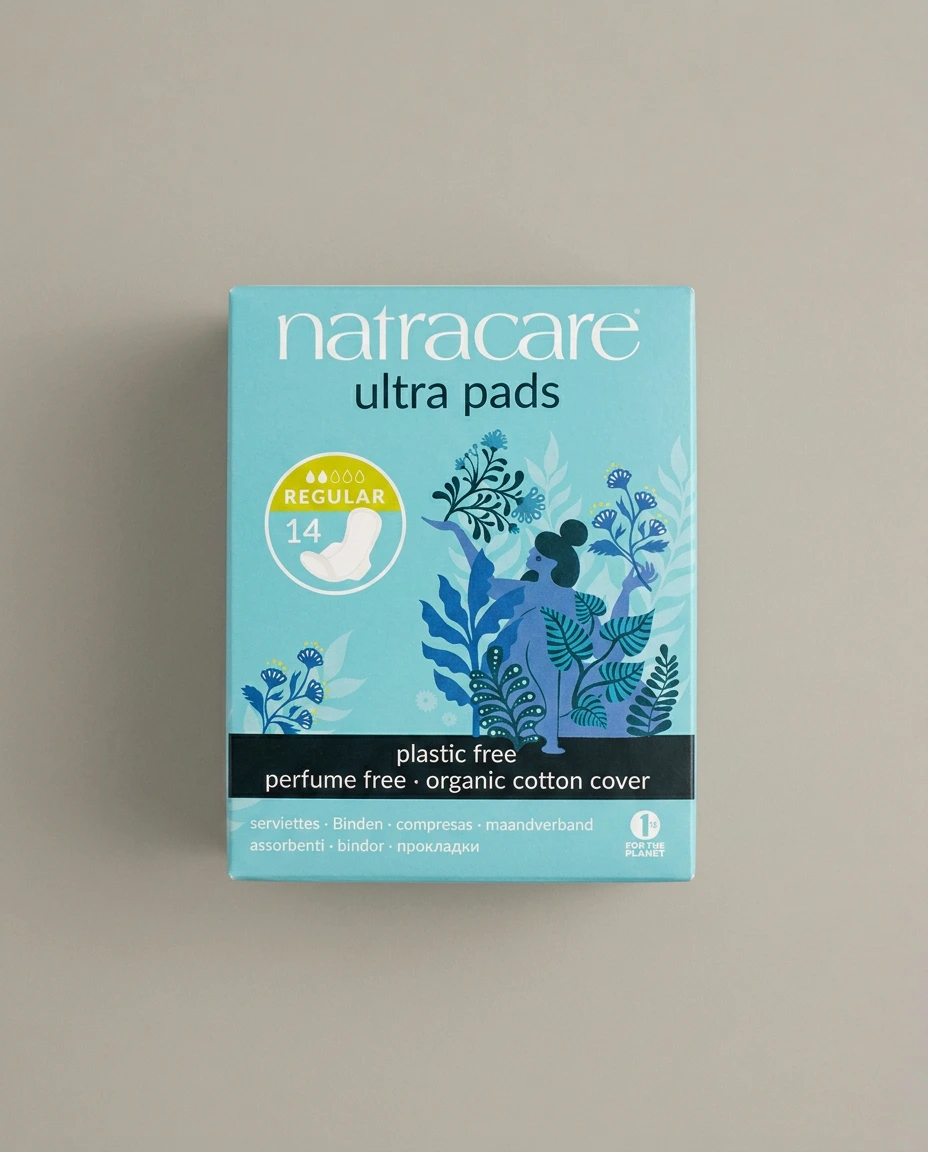
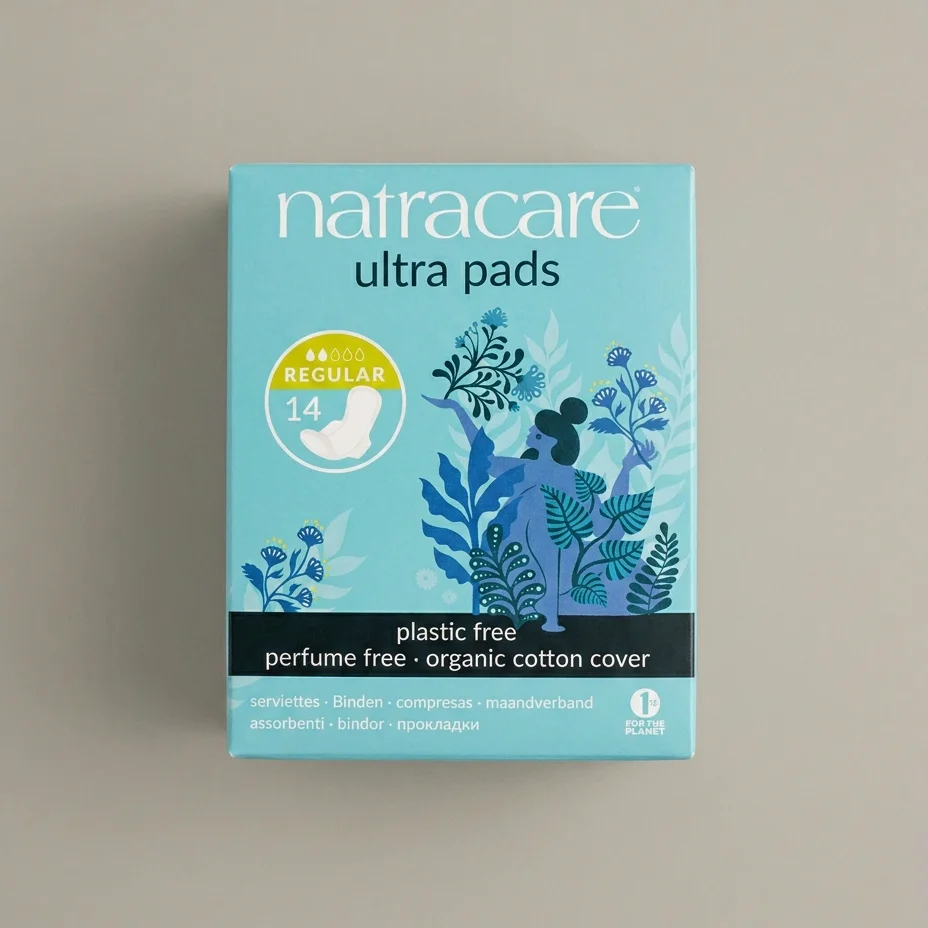
Ultra Pads Regular — 14 pack
The top layer is 100% GOTS-certified soft organic cotton — the surface that sits against skin. The absorbent core is chlorine-free wood pulp (no SAPs, no synthetic polymers). There is no polyethylene backing; the leak-proof layer is made from plant-based materials. No latex, no fragrances, no dyes.
The pads and liners carry the Seedling Mark for industrial compostability. Most commercial composting facilities in the Netherlands accept these. If you don’t have access to industrial composting, they go into regular waste, where they will break down significantly faster than plastic-backed conventional pads.
Also available: Ultra Extra (longer, higher absorbency), Maxi Night pads.
Natracare Ultra Pads Regular →
Curved Panty Liners — 30 pack
The highest-volume everyday purchase in the Natracare range. Organic cotton top layer, chlorine-free pulp core, no plastic, no fragrance. The curved shape follows the body contour. Nordic Swan certified, industrially compostable.
For anyone who uses liners daily, for discharge, light protection, or as backup with a cup, this is one of the easiest high-frequency swaps on this page. The cost difference versus conventional liners is marginal.
What Real Customers Say
“Finally a tampon that doesn’t leave me feeling dry and irritated. I’ve been using Natracare for three years and won’t go back.” — Verified buyer, deonlinedrogist.nl
“The only tampon that doesn’t cause itching for me. I have sensitive skin and conventional tampons were a nightmare.” — Verified buyer
“I switched to these after reading about what’s in conventional tampons. My only regret is not switching sooner.” — Verified buyer, Trustpilot
Level 2: Lunette Menstrual Cup — One Cup, Ten Years
Made in Finland since 2005. Medical-grade silicone. Highest safety rating from the Danish Consumer Council. One for one donation with every purchase.
🏭 Made in Finland — 20 years of manufacturing, monitored by the Finnish Health Authority
🧪 100% medical-grade silicone — the same material classification as surgical implants
🚫 BPA-free, PFAS-free, latex-free, fragrance-free, non-toxic
🔬 Highest safety rating (“A”) — Danish Consumer Council THINK Chemicals independent test, 2023
💧 Collects, doesn’t absorb — preserves natural vaginal pH and mucosa; no dryness
⏱️ Up to 12 hours wear — including overnight, swimming, exercise
♾️ Lasts up to 10 years — replaces 2,400–4,800 disposable products per lifetime
💶 ~€30–35 — pays for itself within 3–4 cycles versus disposables
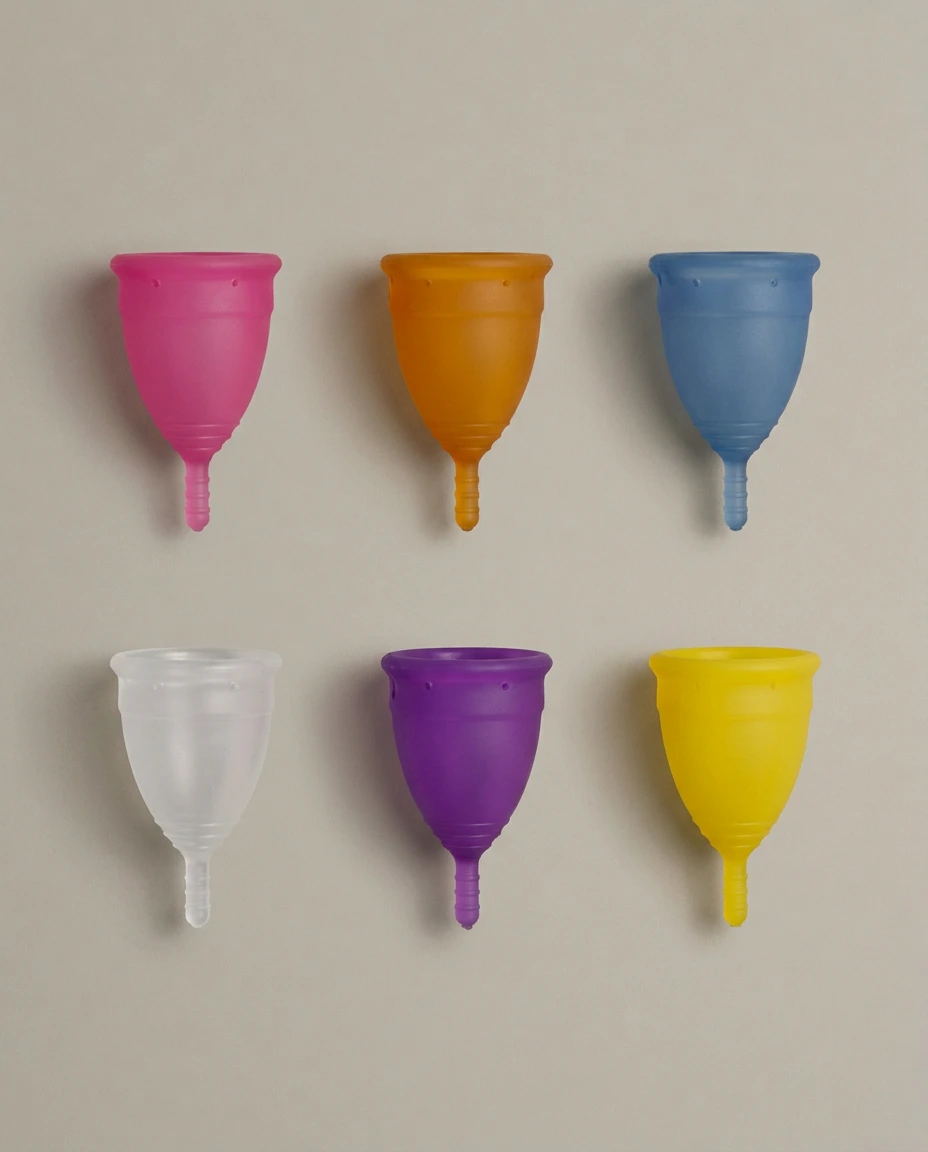
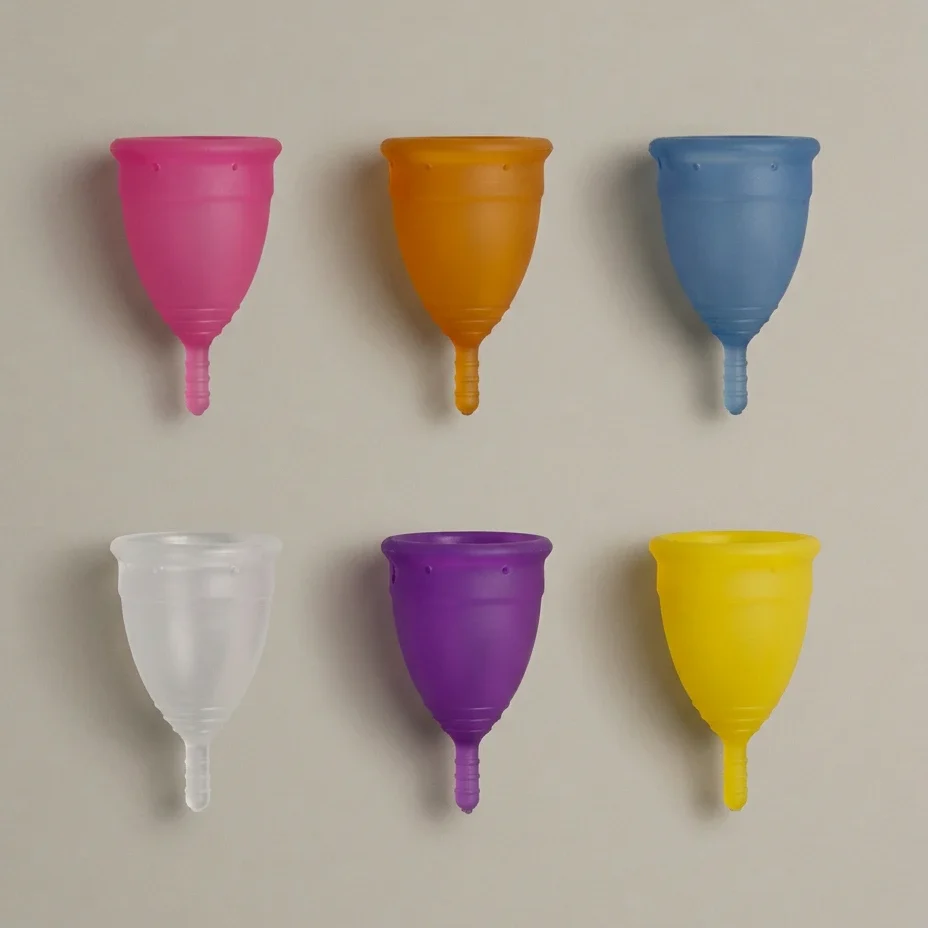
🎨 6 colours, 2 sizes — comes with a washable linen storage pouch
🌍 One-for-one donation — every cup purchased funds one donated through The Cup Foundation
The Environmental and Financial Case
A menstrual cup is the most significant reduction in menstrual waste available. One cup replaces, over its ten-year lifespan, somewhere between 2,400 and 4,800 individual tampons or pads. The financial case is equally direct: at an average spend of €8–12 per month on disposables, a single Lunette cup (approximately €30–35) pays for itself within three to four cycles.
This is not marketing arithmetic. It is the actual comparison.
Safety — What the Evidence Shows
The Lunette cup received the highest safety rating (“A”) in a 2023 independent chemical safety assessment by the Danish Consumer Council THINK Chemicals (Tænk Kemi), with no unwanted chemicals detected. It is FDA-approved, BPA-free, PFAS-free, latex-free, and made from 100% medical-grade silicone — the same material classification used in surgical implants and long-term medical devices.
Unlike tampons, a menstrual cup collects rather than absorbs. This distinction matters: tampons absorb everything indiscriminately, including the natural vaginal mucus that maintains pH balance and prevents infection. A cup collects menstrual fluid without disrupting the vaginal environment or drying the mucosa. For people who experience dryness, irritation, or altered discharge linked to tampon use, this is the most direct solution.
Choosing Your Size
Size 1 — 41mm diameter × 47mm length (without stem), 25ml capacity, softer silicone
Best for: light to normal flow; first-time cup users; teenagers; sensitive bladder (softer silicone adapts better); anyone who has not given birth vaginally; anyone with strong pelvic floor muscles (softer = less pressure)
Size 2 — 46mm diameter × 52mm length (without stem), 30ml capacity, firmer silicone
Best for: normal to heavy flow; those who have given birth vaginally; anyone wanting maximum capacity between empties; higher cervix position
Both models can be worn for up to 12 hours and are suitable for overnight use. Both come with a washable linen storage pouch.
Not sure which model? Start with Model 1. It’s softer, easier to insert for first-time users, and can be used across light and normal flow days. If you find capacity is insufficient on heavy days, adding a Model 2 for those two or three days is a straightforward solution.
Honest Caveat: The Learning Curve
The Lunette cup is not difficult to use. It is different from what you are used to, and it takes time.
First-time insertion feels unfamiliar. Most users report that it takes two to three cycles to feel fully confident with the fold, insertion angle, and seal-check. After that, virtually every long-term user describes not being able to feel it at all when worn correctly.
The cup should sit low in the vagina, below the cervix, and form a seal against the vaginal walls. The correct removal technique is to pinch the base (not pull the stem) to break the seal before removing. The stem is a guide for locating the cup, not a handle.
Detailed instructions are included with every cup. Read them before your first use. The Lunette FAQ also covers specific scenarios: IUD compatibility (consult your doctor; the cup can be used with an IUD with the correct removal technique), low cervix position, cup movement during exercise, and more. (Lunette FAQ)
How to Care For a Menstrual Cup
Before first use and between cycles: boil in water for 5–7 minutes to sterilise. During your period: empty 2–4 times daily, rinse with cold water (cold first prevents staining), then wash with warm water and mild unscented soap. Do not use: vinegar, bleach, strongly scented soaps, or oil-based products. These degrade silicone.
Store in the linen pouch (not in a sealed container — silicone needs to breathe).
Make the Experience Complete
Lunette also makes three accessories worth knowing about if you buy the cup. The Cup Cleanser (100ml, made in Finland) is a pH-balanced, vegan liquid wash specifically formulated for silicone cups. Regular hand soap can cause irritation and silicone degradation over time, and this replaces that problem with a single drop of lemon and eucalyptus scented concentrate that keeps the cup hygienic without disrupting your natural pH.
The Water-Based Lubricant is a five-ingredient pH-neutral gel (water, xanthan gum, lactic acid, sodium hydroxide, sodium benzoate) designed to ease cup insertion and is safe for use with silicone, condoms, and sex toys.
And the Yoni Wipes are 100% viscose intimate wipes, fragrance-free, pH-balanced, infused with Arctic lingonberry extract for gentle freshness, and fully compostable — useful on the go when changing the cup away from home. Note that the yoni wipes are for intimate skin only; for cleaning the cup itself without water access, Lunette makes a separate set of alcohol-based cup wipes designed specifically for that purpose.
Make the One for One Programme Complete
For every Lunette cup purchased, one cup is donated through The Cup Foundation to someone without access to menstrual products, supporting menstrual health education and reducing period poverty globally.
What Real Customers Say
“I was terrified to try a cup. Now I’ve been using my Lunette for four years and I will never go back. My periods are easier, cheaper, and I don’t have to think about running out of supplies.” — Verified buyer, Amazon
“Once I figured out the fold that worked for me, it was a game changer. I forget I even have my period.” — Verified buyer
“The first two cycles were a learning curve. By the third, I was a convert.” — Verified buyer, Amazon.nl
“I was a tampon user for 20 years. I wish someone had told me about cups years earlier.” — Verified buyer
Buy a Lunette Menstrual Cup
Model 1 — Light to normal flow | Softer silicone | 41mm × 47mm | 25ml
Model 2 — Normal to heavy flow | Firmer silicone | 46mm × 52mm | 30ml
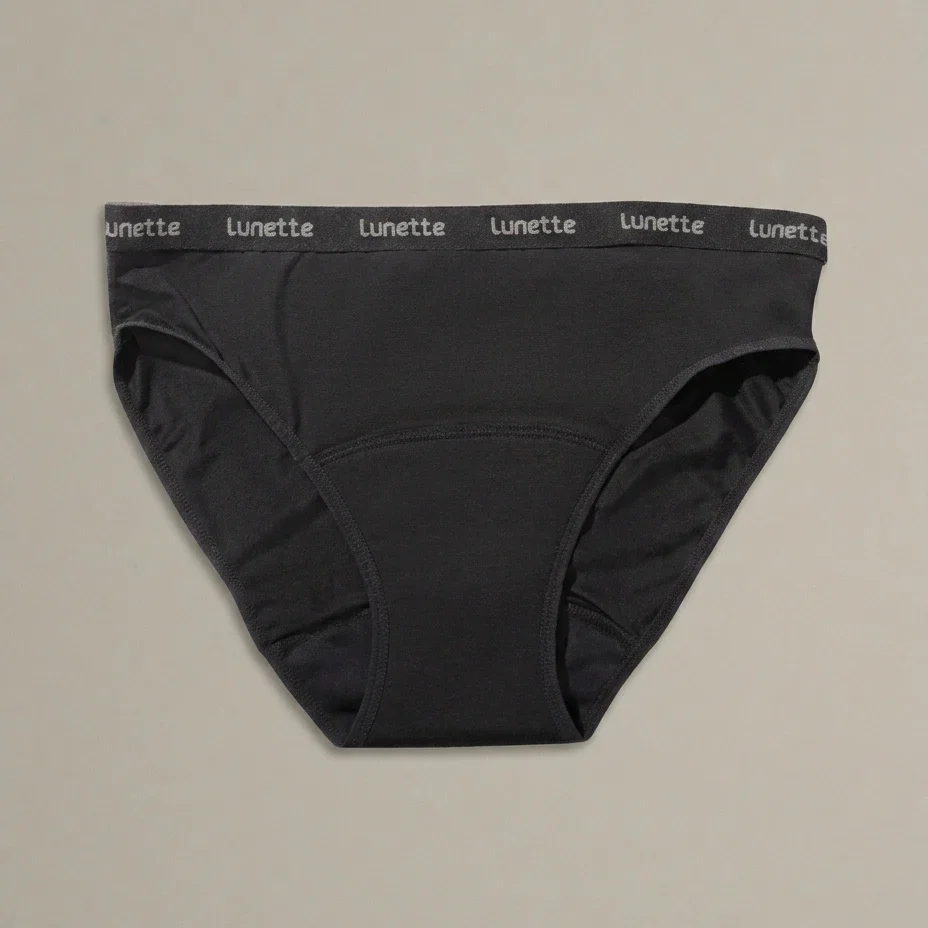
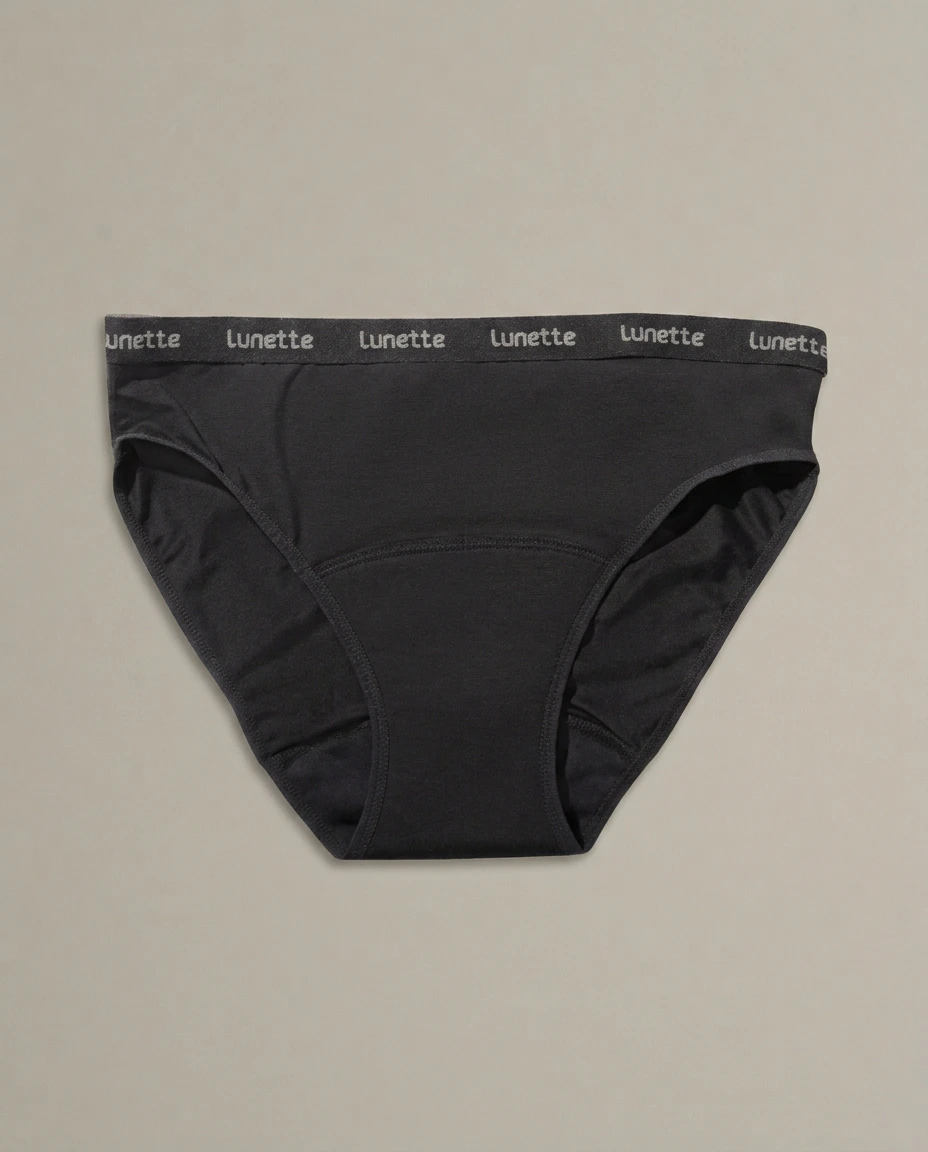
Bonus: Period Underwear — The Backup That Becomes the Main Event
🏅 OEKO-TEX Standard 100 certified — tested for 100+ harmful substances, including PFAS, heavy metals, and pesticide residues
🚫 PFAS-free — no “forever chemical” waterproof treatment; TPU membrane instead
🔁 Reusable for years — machine washable, cold rinse after use, hang dry
💧 Multi-layer absorbent gusset — moisture-wicking top, absorbent core, leak-resistant barrier
📅 Worn alone on light days — or as backup alongside a cup or tampon on heavier days
🌙 Suitable for overnight use — no worrying about the 8-hour tampon rule
🧺 Cold rinse + cold machine wash — do not use fabric softener; do not tumble dry
The PFAS Issue in Menstrual Care
Period underwear went through a reckoning in the early 2020s when independent testing found PFAS (per- and polyfluoroalkyl substances, the “forever chemicals”) in the waterproof lining of multiple mainstream brands. PFAS are added to create water-resistant barriers and have been linked to endocrine disruption, immune suppression, and certain cancers at elevated exposure levels.
The product featured here carries OEKO-TEX Standard 100 certification — an independent certification that tests finished fabrics for over 100 harmful substances, including PFAS, heavy metals, formaldehyde, and pesticide residues. When buying period underwear, OEKO-TEX Standard 100 is the minimum bar. GOTS certification (for organic cotton content) is the stronger standard.
What is Period Underwear? The Four Layers
Period underwear is reusable underwear with a built-in absorbent gusset. It can be worn alone on light days or as a reliable backup when using a cup or tampon on heavier days. When it’s done its job, you rinse it cold and wash it with your regular laundry.
Quality period underwear has a layered structure that does specific work at each level:
- Moisture-wicking top layer — draws fluid away from skin on contact, keeping the surface feeling dry. Usually cotton, bamboo, or Tencel.
- Absorbent core — locks in and holds fluid. The thickness and composition of this layer determines capacity (typically expressed in tampons’ worth of equivalent absorbency).
- Leak-resistant barrier — prevents breakthrough without trapping moisture. In PFAS-free products, this is typically a TPU (thermoplastic polyurethane) membrane, not a chemical treatment.
- Soft outer layer — the exterior fabric.
How to Use and Care
Wearing: use alone for light flow or as backup with a cup or tampon for heavier days.
Rinsing: immediately after use, rinse in cold water until the water runs clear. Never use hot water first — it sets stains into the fabric permanently.
Washing: machine wash on cold or 30°C with your regular laundry. Do not use fabric softener (it coats the absorbent fibres and reduces effectiveness over time). Do not tumble dry, hang dry instead.
Lifespan: with proper care, a good pair of period underwear lasts several years. The absorbent layer gradually reduces capacity over many washes, but this happens slowly.
How to Think About Your Switch
The products on this page serve different people at different stages. There is no wrong answer. There is only starting somewhere.
If you want zero disruption to your current routine: start with Natracare. Same format, no learning curve, dramatically better ingredients, compostable end of life. The only difference you’ll notice is that the products feel slightly different in texture and that you have a list of recognisable ingredients on the box.
If you want to eliminate ongoing disposal waste: the Lunette cup is the highest-impact switch available. One purchase replaces a decade of disposables. The learning curve is real, short, and worth it.
If you want a comfortable, non-invasive option for light days or overnight: period underwear. Use alongside a cup during heavier days, and you cover the full cycle with two reusable products and no disposables at all.
Where We Source Some of These Products: De Online Drogist
Not everything here links to Amazon. For several products, we link to De Online Drogist, the largest online drugstore in the Netherlands, with over 40,000 products and a customer rating of 4.6 out of 5. They carry the natural and eco-friendly brands we feature at competitive prices, without the third-party seller lottery you sometimes get elsewhere.
Fair warning: the website is Dutch-only, so unless you speak the language, use a browser with a translator. Chrome and Edge both do it automatically — no excuses.
Order before 21:30 on a weekday and your parcel is shipped the next day within the Netherlands and Belgium. Free shipping kicks in at €25. They also deliver across the EU. Check their full shipping info for your country.
When you buy through our links, you support Green Goods Gallery’s mission to make eco-friendly options easier to find and choose — at no extra cost to you.
Our Verdict
The conventional menstrual care industry has built a market worth billions on products whose ingredients are not disclosed, in packaging that cannot be recycled, from materials that take centuries to break down, touching tissue that absorbs more readily than most skin on the body. This has continued not because there were no alternatives but because no one was required to tell you any of this.
Natracare has been making certified organic cotton alternatives since 1989. The Lunette cup has been made in Finland for twenty years. Period underwear has existed in quality form for more than a decade. These are not fringe products. They are established, well-tested, and available now.
The most important thing is not which option you choose first. It’s that you stop letting this be the one category in your life you haven’t looked at.
Shop Eco Menstrual Care
Green Goods Gallery earns a small commission if you purchase through these links, at no extra cost to you. We only feature products we genuinely believe in.